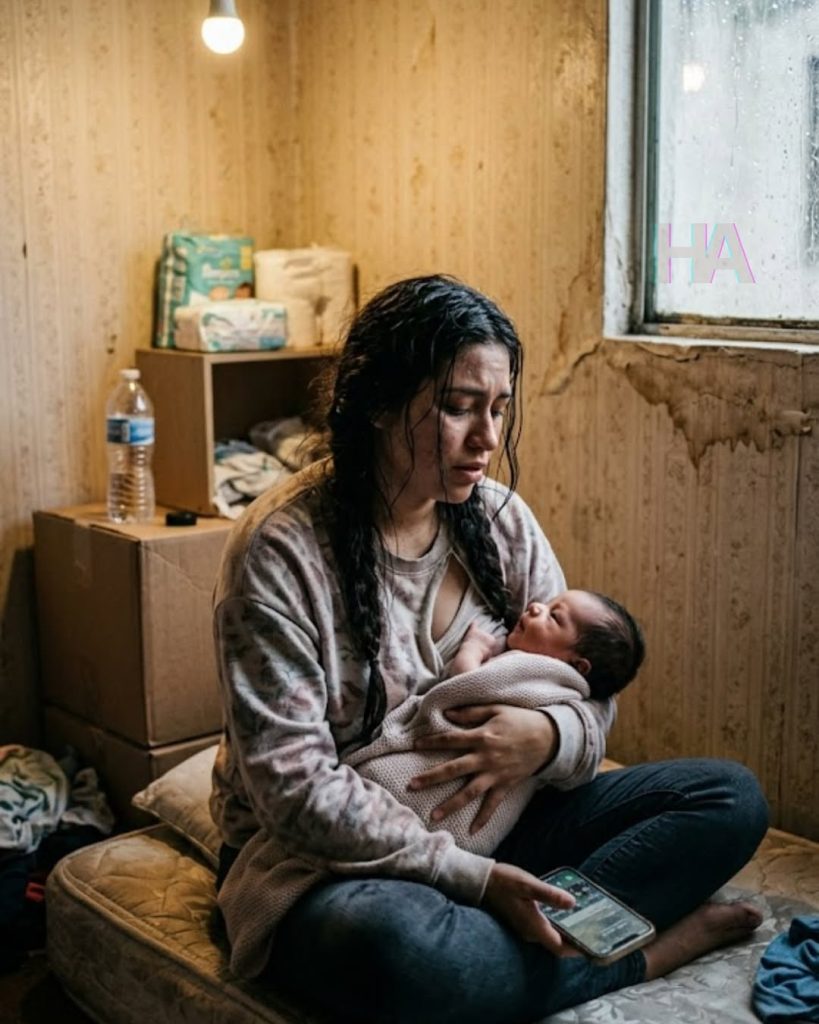
You still remember the night they threw you out because memory like that does not fade. It hardens. It settles into your bones like winter trapped under skin, waiting for the smallest crack to rise again.
Back then, you were sixteen years old and terrified.
Two pink lines had turned your whole life into a public trial before you had even figured out how to speak the truth out loud. In a small town, shame traveled faster than kindness. It moved through school hallways, grocery aisles, church pews, and neighborly smiles that curled sharp at the edges.
By the time you got home that afternoon, your parents were already waiting.
Your father stood near the kitchen table with his jaw locked so tightly it looked painful. Your mother would not even meet your eyes. The silence in that room had teeth. When your father finally spoke, every word landed like a stone thrown straight at your chest.
“You have humiliated this family,” he said. “From today on, you are no longer our daughter.”
You tried to explain.
You tried to tell them you were scared. That you needed help. That you did not know what to do. But your mother moved before you even finished speaking. She grabbed your worn school backpack, stuffed in whatever was on the chair and bed, and hurled it into the rain-soaked yard.
Then she pushed you out behind it.
The storm was vicious that night. Rain hammered the roof, ran off the gutters, and soaked your clothes in seconds. You stood there with one hand over your still-flat stomach and the other shaking at your side while the front door slammed shut so hard the sound rang through you like a verdict.
That was the last night you belonged to anybody.
You gave birth months later in a tiny room on the outskirts of a big city, far from the town that had erased you. The room was barely large enough for a narrow bed, a plastic chair, and a hot plate you prayed would not short out every time it rained. The walls sweated in summer and leaked cold in winter.
When labor came, it came like punishment.
There was no mother holding your hand. No father pacing the floor. No family waiting outside with flowers and tears. There was just pain, old blankets, the smell of damp concrete, and a nurse at the public clinic who looked exhausted but squeezed your shoulder once before everything split wide open.
Then there was your daughter.
Small. Furious. Alive.
You named her Valentina because the name sounded like strength dressed as grace. Because when they had stripped you of everything else, they had not taken your right to give your child a future.
Valentina became the reason you kept moving when your body wanted to collapse.
You worked with the stubbornness of someone who had learned early that hunger did not care about heartbreak. You took whatever jobs you could find. You cleaned tables, washed dishes, folded laundry for strangers, packed orders in back rooms that smelled like dust and tape.
You studied at night with your daughter sleeping beside you, one little hand often resting on your leg as if even in dreams she knew you were fighting the dark.
When she was two, you moved again. Bigger city. Harder streets. Better odds.
In that city, nobody cared who you had been. Nobody cared that you were the girl from a tiny town who got pregnant in tenth grade and became family gossip by sunset. In a city that large, pain was common traffic. Everyone was carrying something heavy.
You worked at a small restaurant in a rough neighborhood where the coffee was burnt, the regulars were loyal, and tips depended on how invisible you could make your exhaustion. During the day, you carried plates. At night, you finished school and taught yourself how business worked by reading every free article and used textbook you could get your hands on.
And somewhere between survival and sleep deprivation, you found your opening.
It started small. Ridiculously small.
A box of handmade hair clips. Some cheap rings. A few embroidered accessories. A couple of clothing pieces bought in bulk and resold online with better photos and smarter descriptions. You learned what people clicked on, what they ignored, what made them trust a stranger on a screen.
Then you learned supply chains.
Then branding.
Then customer psychology.
Then scale.
What began as a side hustle on a cracked phone while your daughter slept in the next room became a storefront. Then a brand. Then a company. Then multiple companies braided together under your name like they had always been waiting for you to claim them.
Six years after leaving that restaurant, you bought your first house.
Ten years after the world had called you ruined, you owned a chain of stores.
Twenty years after your parents told you that you were no longer their daughter, financial magazines called you one of the most self-made women in the country.
The numbers stopped sounding real after a while.
Millions became billions.
Your face appeared on covers. Your speeches were quoted in business journals. Universities invited you to talk about resilience, female entrepreneurship, reinvention. People who had never known hunger loved to call your life inspiring.
But inside you, there was still a room with rain on the walls.
Inside you, a sixteen-year-old girl was still standing in the yard while the front door closed.
That was the reason you came back.
Not for reconciliation.
Not for healing.
Certainly not for forgiveness.
You came back because some wounds do not ask for peace. They ask to be witnessed. They ask for the people who made them to finally see what survived in spite of them.
So on a bright afternoon twenty years later, you drove your newest Mercedes down the familiar road into the town that had once swallowed your name and spit it out as shame. The houses looked smaller than memory. The air smelled the same though, sun-baked dust, old trees, and distant cooking oil drifting from kitchen windows.
The closer you got to your old street, the tighter your chest pulled.
Then you saw it.
The house.
Still standing.
Still ugly in the same stubborn way. The iron gate was rusted now. The stucco had peeled and cracked. Weeds had taken over the yard like nature was slowly repossessing the place. The house looked less like home and more like a secret nobody had been brave enough to bury.
You parked, stepped out, and stood for a moment in silence.
Then you walked to the door and knocked three times.
A girl answered.
She looked about eighteen. Maybe nineteen. Young enough to still carry softness in her face, old enough to have learned caution. Her hair was pulled back carelessly. She wore a faded T-shirt and jeans, and there was a guarded politeness in the way she held herself.
Then she lifted her head fully.
And the world tilted.
Her eyes were your eyes.
Her nose. Your nose.
Even the tiny crease between her brows when she frowned in confusion was so eerily familiar that for a second your body forgot how to breathe. It felt less like meeting a stranger and more like being ambushed by your own reflection twenty years too late.
“Can I help you?” she asked.
Her accent hit you like a ghost.
Before you could answer, movement stirred behind her. Your mother stepped into the hallway first. Smaller now. Frailer. Her hair more gray than black. Then your father appeared behind her, his shoulders curved in on themselves like time had finally collected its debt.
The moment they saw you, both of them froze.
Your mother’s hand flew to her mouth.
Your father went pale.
For one cold, satisfying second, you let yourself feel it. The recognition. The shock. The regret you had imagined across years of sleepless anger. You smiled, and there was no warmth in it.
“Now you regret it, don’t you?” you said.
But before either of them could speak, the girl at the door suddenly turned, grabbed your mother’s hand, and clung to it with fierce urgency.
“Mom,” she whispered.
Then she looked straight at you.
“Please don’t hurt her,” she said. “She’s not my grandmother. She’s my mother.”
Everything inside you stopped.
The words did not register all at once. They struck in pieces, like shattered glass falling after the window had already broken. Not my grandmother. My mother.
You stared at the girl.
Then at your mother.
Then back at the girl again.
The blood in your ears roared so loudly you almost missed your father saying your name. Not the way he said it that night twenty years ago, full of disgust and fury. This time it sounded weak. Frightened. Like he had been waiting for this moment and dreading it equally.
“What did she say?” you asked, but your voice barely sounded human.
The girl swallowed hard. “My name is Elena,” she said. “And she is my mother.”
You laughed then, but it came out wrong. Too sharp. Too hollow. The kind of laugh people make when reality has become so absurd that the mind refuses to enter it. “No,” you said. “No, she’s not. She’s too old. She’s your grandmother.”
Elena’s face flickered with pain.
Your mother began to cry.
Not graceful tears. Not the gentle kind people dab away. These were ugly tears pulled from some ancient well she had tried to seal shut. She reached toward you, and instinct made you step back.
“Don’t,” you snapped.
Your father looked down at the floor. For the first time in your life, he looked like a man who knew he had no authority left.
“There are things you don’t know,” he said.
Your whole body stiffened. “Then start talking.”
They brought you inside.
The smell of the house hit first. Old wood. Cooking grease. Humidity. Time. Nothing had changed and everything had. The same narrow hallway. The same worn sofa. The same dining table where your father had pronounced you dead to the family. But the power in the room was different now.
Back then, you were the one begging to be seen.
Now they were the ones afraid of what you might do once you finally saw them clearly.
Elena sat on the edge of a chair with both hands twisted in her lap. She could not stop looking at you. You understood the feeling. You kept catching pieces of yourself in her face and wanting to reject every one of them.
Your mother stood instead of sitting, like she did not believe she had earned the right.
“After you left,” she began, voice shaking, “I found out I was pregnant.”
You stared at her.
The room felt suddenly airless.
“I was forty-one,” she continued. “I thought it was stress. I thought it was sickness. I did not know right away. By the time I knew, it was too late to pretend otherwise.”
Your father’s face crumpled with something close to shame.
“We had nothing then,” he said quietly. “Less than nothing. Debts from the farm. Medical bills from your grandfather. And after… after what happened with you, people started avoiding us too. The town judged us. It judged your mother. It judged the whole family.”
Anger flared so violently inside you that your hands curled into fists.
“The town judged you?” you repeated. “That’s your tragedy?”
He flinched.
Good, you thought.
Good.
Your mother kept talking, as if stopping now would kill her. “When Elena was born, she was very sick. Her lungs. Her heart. She needed care we could barely afford. I worked cleaning houses. Your father sold pieces of land one by one. For years, we were just trying to keep her alive.”
Your eyes moved to Elena. She dropped her gaze.
“She knows about me?” you asked.
Elena nodded slowly. “I always knew there was someone before me,” she said. “But they never told me everything. Only that there had been a daughter. A terrible mistake. A pain in the family.”
Your throat burned.
“A mistake,” you repeated.
Your mother broke then. “No. That’s not what I think. Not anymore. I was cruel. Cowardly. I cared more about what people said than what you needed. I punished my own child because I was terrified. And I have lived with that every day since.”
You looked at her for a long moment.
A thousand versions of this reunion had lived in your mind over the years. In some of them, they denied everything. In others, they begged. In a few darker ones, you imagined them broken and miserable enough to make your suffering feel balanced.
You had never imagined this.
A sister. A hidden life. A second daughter raised in the wreckage your absence left behind.
You turned to Elena. “How old are you?”
“Eighteen.”
Eighteen.
The number landed like a trapdoor opening beneath memory. Twenty years ago, you had been thrown out. Eighteen years ago, Elena had been born. There was almost no space between your exile and her existence.
“You replaced me,” you said before you could stop yourself.
Your mother shook her head desperately. “No. No, we did not replace you. We destroyed something we could never rebuild. Elena grew up in a house full of silence. Your father forbade your name for years because hearing it made him angry at himself. I used to stand in your room at night after she was asleep and cry.”
“Why didn’t you come find me?”
This time nobody answered fast enough.
So you did it for them.
“Because finding me would have meant admitting you were wrong.”
The silence that followed was answer enough.
You stood up.
Every nerve in your body screamed for motion. For distance. For escape. The house felt cursed. Too full of ghosts and explanations that arrived twenty years too late to save anything. You moved toward the door, but Elena rose too.
“Please,” she said.
You turned sharply. “Please what?”
Her face was pale. “Please don’t leave like this.”
You almost laughed again.
Like this.
As if there were any clean version of this scene. As if families shattered by cruelty and pride could be tied up with the right sentence and a glass of water.
“You don’t get to ask me for anything,” you said.
The words made her shrink, and immediately something deep inside you recoiled. She was not the one who had thrown you into the rain. She was not the one who had chosen reputation over a frightened child. But pain is not a skilled marksman. It fires wild.
“I’m sorry,” she said, and the tremor in her voice made the room feel even smaller. “I know I’m not part of what happened. But I grew up in this house. I grew up with the silence. I know what guilt sounds like through thin walls. I know what it looks like when somebody keeps a room locked for twenty years and dusts the doorframe anyway.”
You froze.
Your mother started crying harder.
There had been a room.
Your room.
Locked.
For twenty years.
Your father covered his face with both hands.
“I hated you for a while,” Elena said softly. “Not because of you. Because I thought there had been someone before me who was loved more. Someone whose shadow I could never get out from under. Then when I got older, I realized people do not mourn what they do not destroy.”
You said nothing.
She took a step forward, cautious as if approaching a wounded animal. “I wanted to meet you my whole life. But every time I asked questions, they fought. Mom cried. Dad got mean. So I stopped asking. Then last year, I found your photo.”
Your body tensed.
“What photo?”
“In a sewing tin under the bed,” Elena said. “You were wearing a school uniform and smiling like you still believed the world was kind. On the back, there was a date and one word written in Mom’s handwriting.”
Your mother closed her eyes.
“Hija,” Elena said.
Daughter.
The room blurred for a second.
Not because that one word fixed anything. It did not. It could not. But because people are rarely one thing for an entire lifetime. Monsters sometimes keep photos. Cowards sometimes grieve. Love and cruelty can live in the same house and poison each other until nobody knows which one is winning.
You left anyway.
There was nothing else you could do that day.
No speech grand enough. No revenge sharp enough. No forgiveness honest enough. You walked out of the house with Elena calling your name once behind you and your mother sobbing hard enough to sound ill. Your father did not follow. Maybe he knew some distances were finally beyond him.
You drove to the only decent hotel within forty miles and sat in the parking lot for nearly an hour without moving.
Your phone buzzed nonstop. Assistants. Board members. A media request. Valentina checking in from New York where she was managing one of the newer ventures. But you could not answer anyone. Not yet.
When you finally picked up the phone, you called only one person.
Your daughter.
Valentina answered on the second ring. “Mom?”
That one word nearly broke you.
“I’m here,” you said, though you were not sure where here was anymore.
She went quiet for a second. “It was bad?”
You stared at the hotel sign through the windshield until it doubled. “It was worse than bad,” you said. “It was strange.”
Valentina knew your history in pieces. Enough to understand the wound, not enough to feel its full architecture. You had never wanted to hand her that inheritance. Pain like yours had a bad habit of becoming family furniture if nobody dragged it outside.
“What happened?” she asked gently.
You told her.
Not everything.
Not the shape of Elena’s face or how it had felt to see your own features staring back at you from a doorway in the house that had exiled you. Not the locked room. Not the word written on the back of the photograph. Those details were still too raw, too close to the nerve.
But you told her enough.
When you finished, Valentina exhaled slowly. “Do you want me to come?”
The child you raised alone. The baby you gave everything to. The girl who had grown into a brilliant, elegant woman with your stubborn eyes and a softer heart than you sometimes knew what to do with.
“Yes,” you whispered.
She was there the next morning.
Watching Valentina step into the hotel lobby felt like watching the best part of your life arrive in human form. She hugged you long and tight, without questions at first, without advice. Just presence. You had built empires, but nothing in your life had ever made you feel richer than being held by the daughter they had told you would ruin you.
She pulled back and studied your face. “You didn’t sleep.”
“I met my sister.”
Valentina blinked once. “That sentence is chaos.”
You laughed, and this time it sounded almost real.
Over coffee you told her the whole story.
She listened with the kind of attention only people who love you without performance can offer. No interruptions. No rush to polish your pain into wisdom. When you finished, she set her cup down carefully.
“What do you want?” she asked.
It should have been a simple question.
Instead, it felt like a blade.
For twenty years, what you had wanted was clear. Success. Safety. Power. Enough money that nobody could ever push you into the rain again. But wanting something from your parents now was harder to name.
You wanted them to hurt.
You wanted them to understand.
You wanted your lost girlhood back.
You wanted time to reverse and your mother to open the door instead of closing it.
You wanted none of those things.
“I don’t know,” you admitted.
Valentina nodded. “Then don’t decide today.”
But the town decided for you.
By noon, people knew you were back.
Small towns never lose their appetite for other people’s storms. A waitress at the hotel smiled too brightly. A man at the gas station stared twice as long as politeness allowed. By afternoon, someone had posted an old photo of your childhood house next to a recent article about your company, and speculation spread like fire through dry grass.
Some people said you had returned to save your parents.
Some said you had come to buy the entire block and bulldoze the past.
Some said your father was sick and desperate.
The last one turned out to be true.
You found out that evening when Elena came to the hotel.
She looked nervous but determined, standing in the lobby with both hands clasped around a canvas bag. When she saw you, she seemed to reconsider all her bravery at once. Still, she walked over.
“I’m sorry to just show up,” she said. “I didn’t know if you’d answer a call.”
You hadn’t given her your number.
“You’re right,” you said. “I probably wouldn’t have.”
Valentina, who was sitting beside you, rose and introduced herself. Elena’s face changed when she realized who she was. Something like awe. Something like grief. It hit you then that Elena was seeing more than just a stranger and her daughter. She was seeing the life that could have been. The version of your story that had survived without them.
“I’m not here to defend them,” Elena said quickly. “I came because you should know the truth before the town turns it into a circus.”
You motioned for her to sit.
She did, perching on the edge of the chair the same way she had at the house.
“Dad has kidney failure,” she said. “He’s had it for over a year.”
You stared at her.
“He needs treatment we can’t afford,” she continued. “He’s been getting worse. Mom sold almost everything we had that still had value. They borrowed from relatives, then from people who shouldn’t lend money to anyone.”
Your stomach tightened.
“What kind of people?”
Elena looked down. “The kind who don’t wait politely.”
Valentina went still beside you.
A picture began assembling itself in your mind. The decaying house. The desperation in your father’s face. The tension humming beneath your mother’s tears. This was not just guilt. It was fear.
“Did they know I was back before I came?” you asked.
Elena hesitated.
That was answer enough.
You stood so fast the chair scraped.
“They found me,” you said.
“No,” Elena said, rising too. “Not exactly. They heard rumors. Articles. Business television. People from the town who saw you online. Dad started talking about you more. Mom told him no, that he had no right. They fought about it for months.”
“So he wanted money.”
“It’s not that simple.”
“It is exactly that simple.”
Elena’s eyes flashed then, and for the first time you saw anger in her too. “You think I don’t know what they did? You think I’m blind? I grew up with the consequences of that cruelty in every room of that house. I know what they owe you. But I also know this town. And if you don’t hear this from me, you’ll hear it from people who enjoy blood.”
You sat back down slowly.
“What are you saying?”
She took a breath. “A man named Tomas Varela has been lending Dad money. Not legally. Not kindly. He came by the house last week and said if the debt wasn’t paid soon, he’d take the property. And if there was resistance, he’d take something else.”
Your jaw hardened. “You.”
Elena did not answer.
Valentina cursed under her breath.
The room seemed to narrow around you.
Twenty years.
Twenty years you had carried rage like a private religion. Twenty years imagining the perfect moment to make your parents feel what they had made you feel. And now the universe, with its ugly taste for irony, had arranged it so that your first real choice after coming back was not whether to punish them.
It was whether to save them.
You looked at Elena carefully. “Why tell me?”
She swallowed. “Because I don’t want them to win by making you cruel too.”
The sentence hit harder than it should have.
You thought of the drive into town, the cold satisfaction, the rehearsed lines. Look at me now. See what you lost. See what your cruelty failed to kill. You had wanted that reckoning so badly that you had not noticed how revenge had already begun to shape your face from the inside.
Valentina touched your wrist lightly. “Mom.”
You closed your eyes for a second.
When you opened them, you said, “Take me to him.”
Tomas Varela’s office was above an auto parts shop on the edge of town, which seemed fitting. Men like him liked locations that looked forgettable from the outside. Inside, the place smelled like cigarettes, stale cologne, and other people’s fear.
He was younger than you expected. Mid-forties maybe. Expensive watch. Cheap soul.
He smiled when you walked in, and the smile sharpened when he recognized you.
“Well,” he said. “The prodigal success story.”
You ignored the chair he offered and stayed standing.
“You’re done with the Ramirez family,” you said.
His gaze flicked to Elena, then back to you. “Debt says otherwise.”
“Name the number.”
He leaned back, enjoying this too much. “The number changed when you walked through that door.”
Of course it did.
You had spent enough years in business to know the scent of opportunism disguised as leverage. Men like Tomas confused access with power. They thought if they could stand in the right room at the right time, they had become important.
“You’re making a mistake,” Valentina said coolly.
Tomas smiled at her too. “Runs in the family, apparently.”
You put one hand on the desk and bent just enough to let him see that the softness in your public interviews had never been the full truth of you. “Listen carefully,” you said. “You are not negotiating with frightened farmers in a dying town. You are not cornering a desperate girl with nowhere to go. You are speaking to someone who has lawyers in three countries and enough money to make your next decade vanish into paperwork and criminal exposure.”
His smile thinned.
“You threaten that family again,” you continued, “and I will spend an amount of money that would bankrupt your grandchildren just to keep you waking up afraid.”
Silence.
Then Tomas laughed, but it was a weaker sound now. “Big talk.”
You straightened. “No. Big proof.”