When I asked about the Hawaii summer vacation I had spent $22,000 funding for the entire family, my parents replied: “We already went last week. Only for family.” A month later, they asked me: “The rent is overdue! Did you send the money yet?” I answered: “Only for family, remember?”
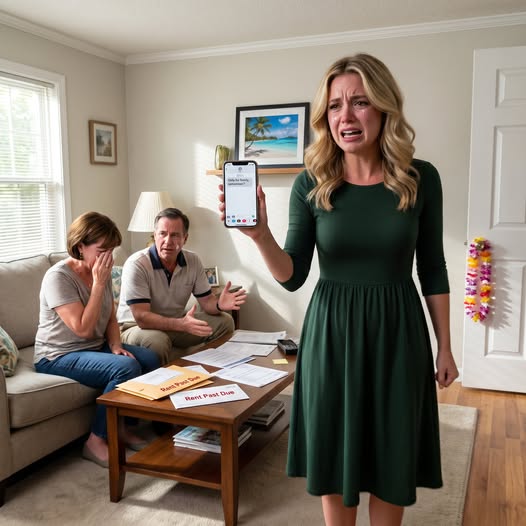
I paid twenty-two thousand dollars for a family trip to Hawaii—and was cut out of it through a text message.
Not before booking. Not during the planning stage. Not even after some explosive argument that would have at least made the cruelty feel honest. I mean I covered the flights, the beachside rental, the airport transfers, the luau package my mother insisted was “non-negotiable,” and the upgraded ocean-view rooms because my father said, If we’re doing this as a family, let’s do it right.
Then, two weeks before I was supposed to fly out and meet them in Maui after a work conference in Seattle, I called my mother to ask if they needed me to bring anything for the kids.
There was a pause.
Then she said, far too casually, “Oh. We already went last week.”
I thought I must have misheard.
“What?”
“We already took the trip,” she said. “It worked better for everyone.”
I was standing in my office in Denver with a pen in one hand and a contract draft open on my laptop, staring through the glass wall at a city that suddenly blurred.
“You already went,” I repeated.
“Yes.”
“With the booking I paid for.”
Another pause. Then came the line that still twists my stomach when I remember it.
“Well,” my father said when he took the phone, “it was only for family.”
Only for family.
I don’t think I spoke for a full three seconds.
My name is Rachel Mercer. I was thirty-seven, single, on partner track at a commercial real estate firm, and apparently not family enough for the vacation I had funded. My younger brother, Caleb, went with his wife and their two kids. My older sister, Lindsey, went with her husband and teenage daughter. My parents posted sunset photos, smiling beach dinners, and one especially painful picture of all of them in matching white linen at the luau I paid for.
I didn’t know any of that yet.
Not until after the call.
At first, there was just the sentence. Only for family.
Then the full meaning hit all at once.
They had used my money to take the trip without me.
I leaned against my desk and asked, very quietly, “What does that mean?”
My father gave the dry sigh he used whenever he thought I was overreacting to something he had already decided. “Rachel, you’re always working. It would have been awkward with your schedule. The kids wanted just immediate family.”
Immediate family.
Meaning my siblings, their spouses, their children, and my parents.
Meaning the daughter who paid still didn’t count.
My mother cut in with that false-soft tone she always used when the truth looked bad in daylight. “Don’t make this bigger than it is.”
That was the exact moment something inside me went cold.
Not broken.
Cold.
Because this wasn’t confusion. It wasn’t an oversight. They had planned it. Coordinated it. Packed for it. Boarded planes with my card covering the reservations, and not one of them—not one—felt obligated to tell me before posting photos from a balcony I paid for.
So I smiled.
They couldn’t see it, but I smiled anyway.
“I understand,” I said.
And that was the last easy sentence I gave them.
A month later, when my mother called in a panic asking if I had sent the rent money yet, I answered with the only words they had left me.
“Only for family, remember?”
And then, finally, they understood what exclusion costs when the useful daughter stops paying for it…
Part 2
The rent money wasn’t a random request.
That was what made the whole situation almost elegant.
For the past eighteen months, I had been quietly covering part of my parents’ rent on the townhouse they moved into after selling the family home. Officially, they had “downsized for freedom.” In reality, my father had overestimated the sale, underestimated the cost of maintaining the lifestyle he believed he deserved, and quietly begun depending on me to close the gap between their income and their pride.
It started as “just a few months.”
Then it became routine.
I automated two thousand dollars on the first of every month into my mother’s account because she cried the first time she asked and said, “You know your father hates needing help.” What she meant was: you know he’d rather take your money quietly than ask your brother for anything openly.
Caleb never contributed because “the kids are expensive.”
Lindsey never contributed because “teenagers have needs.”
I contributed because I was unmarried, earned well, and had spent my entire adult life being cast as the child with enough margin to absorb everyone else’s deficits.
The Hawaii trip should have broken that pattern sooner than it did.
But family systems are messy things. Even after that call, even after the photos surfaced and I sat in my Denver apartment scrolling through beach dinners, snorkeling shots, and captions about “perfect family time,” part of me still wanted to believe they would eventually realize what they had done. That maybe shame would show up on its own if I gave it enough silence.
It didn’t.
A month passed.
Then, on the first of the next month, I didn’t send the transfer.
At 9:08 a.m., my mother called.
Not to apologize. Not to ask how I was. Not to revisit Hawaii.
Straight to the money.
“Rachel, the rent is overdue,” she said. “Did you send the payment yet?”
I was in my kitchen pouring coffee, phone tucked between my shoulder and ear, sunlight cutting through the blinds in thin white lines.
“No,” I said.
A pause. Then, sharper: “Why not?”
There are moments when a line you’ve only thought once arrives fully formed, exact and complete. This was one of them.
“Only for family,” I said. “Remember?”
Silence.
Then my mother inhaled like I’d slapped her. “Oh, don’t start that again.” Again.
As if being excluded from a vacation I paid for was just a petty mood I was dragging out for attention. I set the coffee pot down and leaned against the counter. “You told me the trip was only for family. I’m honoring that category.”
My father got on the line almost immediately, which told me he had been listening the whole time.
“This is childish,” he snapped.
“No,” I said. “It’s accurate.”
That made him angrier.
He launched into the familiar script. I was being dramatic. I was punishing everyone over a misunderstanding. The kids wanted a simple trip. My work schedule was complicated. It wasn’t personal. Money shouldn’t be weaponized inside families.
That last one almost made me laugh.
Money shouldn’t be weaponized. From the people who used my money to create a family memory and then told me I didn’t qualify for it.
“I paid twenty-two thousand dollars for that trip,” I said. “And you told me I wasn’t family.”
“We never said you weren’t family,” my mother cut in.
I closed my eyes and repeated her exact words. “Only for family.” Nothing came back for two full seconds. Because she knew.
She knew there was no softer version left to hide behind. Then my father made the mistake that ended whatever patience I had left. “You have no idea what pressure we’re under.”
I opened my eyes and looked around my clean, quiet kitchen—the one I paid for, the one I kept stable, the one no one in my family ever entered unless they needed something from me.
“No,” I said. “I just know exactly when you remember I exist.” And then I hung up.
That afternoon, Caleb texted me.
Mom says you’re blowing up over Hawaii. Seriously? I replied with one line: You mean the trip I financed and wasn’t allowed to attend? He never answered.
Lindsey called once and tried to play peacemaker, which in our family usually meant asking the hurt person to be more convenient for everyone else. She said Mom was stressed, Dad was humiliated, and could I please not make rent “the hill I die on.”
No. Because it wasn’t about rent anymore. It was about visibility.
And after years of paying quietly, I had finally decided that if I was going to be treated like an outsider, I would stop funding the illusion that I belonged. That was when the real panic started.
Part 3
By the third day, my parents stopped sounding offended and started sounding afraid.
That shift always reveals more truth than the anger that comes before it.
My father called from his own number instead of letting my mother handle the requests. He sounded tired, which meant the landlord had probably called twice and whatever small reserves they pretended to have were already gone.
“We need to be practical,” he said.
I almost smiled.
Practical was my role in the family. Not loved. Not celebrated. Not included. Practical. The daughter who could always be relied on to do the math after everyone else made decisions based on ego, favoritism, or convenience.
 PART2: When I asked about the summer vacation in Hawaii that I had paid $22,000 for the whole family, my parents replied: “We already went last week. Only for family.”