Melissa’s smile disappeared first. My mother looked at Mara, then at the folder, then back at me.
“Who is this?”
“My attorney,” I said.
Dad arrived behind them, red-faced and breathing hard.
“Rachel, don’t make a scene.”
Mara stepped forward.
“Mr. and Mrs. Carter, you are being formally notified that you have no ownership interest in this residence. You are also being served with a demand for repayment of misappropriated funds, fraudulent credit use, and expenses connected to unauthorized occupation.”
Mom blinked.
“Misappropriated?”
I laughed once. It pulled painfully at my stitches.
“You stole from me.”
“We borrowed,” Dad barked.
“You signed my name.”
His jaw tightened. Melissa went pale. Mara opened the folder.
“We have bank records, credit statements, text admissions, and a handwriting comparison prepared for filing. We also have hospital security footage showing Mrs. Carter leaving a minor child unattended for nearly three hours.”
Mom’s face collapsed for one second. Then the performance began. Tears. Shaking hands. A broken whisper.
“Rachel, sweetheart, I was overwhelmed. Melissa was crying. I thought Eli was with a nurse.”
“No,” I said. “You told me Melissa needed you more.”
The porch went silent. Across the street, Mrs. Alvarez stood with her garden hose frozen in midair. Melissa snapped.
“This is insane. You’re really going to destroy Mom over one mistake?”
I turned to her.
“One mistake?”
My voice sharpened.
“The salon loan. The car payments. The credit card you used for designer bags while I skipped physical therapy to save money. The rumors that I was unstable so nobody would believe me. You didn’t target a weak woman, Melissa. You targeted a tired one.”
Her mouth opened. Nothing came out. Dad pointed at me.
“You’ll regret this.”
Mara lifted her phone.
“That sounded like a threat. Would you like to clarify before I add it to the file?”
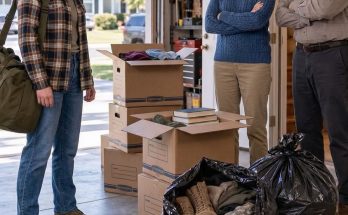
He lowered his hand. For the first time in my life, my father looked old. Not powerful. Not frightening. Just old. Mom tried the door one last time with her useless key. Click. Scrape. Failure. That tiny sound was sweeter than applause.
“You can collect your belongings from the storage unit listed here,” Mara said, handing her a paper. “The first month has been paid. After that, it is your responsibility.”
“You put our things in storage?” Mom whispered.
“No,” I said. “I rescued my house from them.”
Melissa lunged for the paper, but Mara moved it out of reach.
“And Melissa,” Mara added, “the salon creditor will be receiving corrected information about the forged guarantor documents.”
Melissa staggered back.
“You wouldn’t.”
I looked at her expensive sunglasses, her perfect nails, and the emptiness behind her eyes.
“I already did.”
Sirens sounded faintly from the corner. Mom spun toward the street.
“What did you do?”
“What you taught me,” I said. “I called for help.”
A police cruiser rolled up slowly. Not dramatic. Not wild. Real. Controlled. An officer stepped out and began asking for statements. Mara handled most of it. I stood barefoot on my porch, one hand resting carefully over my stitches, the other holding Eli’s dinosaur cup. Mom cried harder when she realized tears no longer worked like currency. Dad refused to answer questions. Melissa kept saying, “This is family,” as if that word could erase a paper trail. It could not.
The investigation took weeks. The lawsuit took months. My parents were ordered to repay part of the money they had taken. Dad’s retirement account was garnished. Melissa lost the salon after the lender discovered the forged documents. My mother was barred from unsupervised contact with Eli after the hospital report and security footage became part of the custody safety filing. They told everyone I had become cruel. Maybe I had. Or maybe cruelty was leaving a child alone on a hospital bench and expecting his mother to apologize for being angry.
Six months later, the house felt different. Lighter. The guest room became Eli’s art room. Sunlight spread across the floor where my father’s recliner used to sit. The locks shone. The cameras stayed. One evening, Eli painted three crooked figures: me, him, and a giant yellow sun.
“No grandma?” I asked softly.
He shook his head.
“Grandmas don’t leave kids.”
I kissed his hair. Outside, my mother came once to the end of the driveway, holding that old key like a relic from a dead kingdom. She did not come any closer. She knew better now. I closed the curtains, turned the new lock, and sat beside my son in the warm, quiet house I had finally taken back.