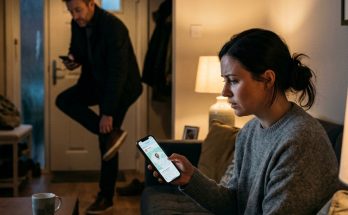
My DIL’s rule: 48 hours’ notice to visit.
I followed it.
Then I asked to drop off my grandson’s birthday gift.
“No. Not 48 hours.”
I left it on the porch.
My son called me “passive-aggressive.”
I stopped visiting.
I stopped asking.
Six months of silence passed.
Then last week, my son called, panicked:
“Mom, can you come get Noah?”
I sat up.
“What happened?”
“Just—please. Can you come now?”
The irony hit me immediately.
No 48-hour notice.
No calendar request.
No polite scheduling.
Just panic.
“What’s wrong with Noah?”
“He’s okay.”
“That doesn’t sound okay.”
My son, Ethan, exhaled hard.
“Lauren and I are at the hospital.”
My stomach dropped.
“Is she hurt?”
“No. Her mother is.”
I grabbed my keys.
“How bad?”
“Bad enough that we may be here all night.”
“I’m leaving now.”
Then Ethan said:
“Mom?”
“Yes?”
A pause.
“I know this is last-minute.”
I almost laughed.
Instead, I said:
“I’ll be there in twenty minutes.”
When I pulled into their driveway, Noah was sitting on the front step with a backpack.
He was nine now.
He looked taller than the last time I’d seen him.
That hurt more than I expected.
He ran toward me.
“Grandma!”
I hugged him so tightly he laughed.
“Can we get pizza?”
“Absolutely.”
Ethan came outside.
He looked exhausted.
“Thank you.”
I nodded.
Then he glanced toward the house.
“Lauren said not to go inside.”
I stared at him.
“What?”
“She just… wants privacy.”
Even during an emergency.
Even after calling me to rescue them.
I was still apparently allowed only as far as the driveway.
Fine.
I took Noah home.
We ordered pizza.
Built a blanket fort.
He showed me six months’ worth of school projects I’d missed.
Then, while brushing his teeth, he said:
“Mom says you don’t like us anymore.”
I froze.
“What?”
He shrugged.
“She says that’s why you never come.”
I knelt beside him.
“Noah, I love you very much.”
“Then why don’t you visit?”
There are questions children ask that adults have no good way to answer.
I wasn’t going to make him responsible for his parents’ conflict.
So I said:
“Sometimes grown-ups misunderstand each other.”
He frowned.
“That’s dumb.”
“Yes.”
“It is.”
The hospital visit stretched into two days.
Lauren’s mother needed surgery.
So Noah stayed with me.
On the second evening, Ethan came to pick him up.
He stood in my kitchen while Noah packed.
“You two had fun?”
“Very.”
He looked around.
The refrigerator was covered in Noah’s drawings.
“You kept all that?”
“He made them yesterday.”
Ethan smiled faintly.
Then he noticed something on the counter.
The unopened birthday gift.
The one I’d left on their porch six months earlier.
I had found it sitting outside my own door three days later.
Returned.
No note.
No explanation.
Ethan picked it up.
“You still have this?”
“You sent it back.”
“I didn’t.”
I looked at him.
“What?”
“I never saw it.”
My stomach tightened.
“Then who returned it?”
He stared at the package.
Lauren.
Neither of us said her name.
We didn’t need to.
Ethan put the gift down.
“Mom…”
“No.”
“What?”
“I’m not doing this in front of Noah.”
He nodded.
After Noah left, Ethan stayed.
That surprised me.
He sat at my kitchen table.
For several seconds, neither of us spoke.
Then he said:
“I thought you were angry about the rule.”
“I was hurt by how it was used.”
“She just wanted boundaries.”
“I respected the boundary.”
“You left the gift anyway.”
“On the porch.”
“After she said no.”
“It was his birthday, Ethan. I wasn’t trying to force my way inside.”
He rubbed his face.
“I know.”
“No, you didn’t. You called me passive-aggressive.”
He looked ashamed.
“I did.”
“And then I stopped asking.”
“I noticed.”
“Did you?”
That came out sharper than I intended.
“Because six months passed.”
He looked down.
“I thought you’d call eventually.”
I laughed once.
“So did I.”
Silence.
Then he said:
“Lauren told me you kept pushing.”
I stared at him.
“Pushing what?”
“Visits. Drop-ins. Calls.”
“I called twice in six months.”
His face changed.
“What?”
“I have the phone records.”
Ethan looked genuinely confused.
Then I understood.
He wasn’t lying.
He really believed something very different had been happening.
“What did she tell you?”
He hesitated.
“That you were constantly asking to come over.”
“I wasn’t.”
“She said you complained about the 48-hour rule to relatives.”
“I didn’t.”
“She said you showed up twice without notice.”
“I drove past your house once on my way to the pharmacy.”
Ethan sat very still.
Then I asked:
“Did Lauren tell you I returned Noah’s gift?”
He looked at the box again.
“Yes.”
“I didn’t.”
His jaw tightened.
Something had shifted.
Not toward me exactly.
Toward doubt.
He went home.
The next morning, he called.
His voice sounded different.
“Can I come over?”
“Do I get 48 hours’ notice?”
The words escaped before I could stop them.
Ethan sighed.
“I deserve that.”
I almost apologized.
Then I didn’t.
“Come over.”
He arrived alone.
No Lauren.
He had a folder in his hand.
“I checked some things.”
“What things?”
“Messages.”
He sat down.
“Lauren blocked your number on Noah’s tablet.”
I stared at him.
“What?”
“She blocked you on his account.”
That explained why the video calls I’d tried months ago never connected.
Then Ethan showed me screenshots.
Messages Lauren had sent to her sister.
She’s finally backing off.
Ethan thinks his mom is being dramatic.
If she stays gone long enough, maybe he’ll stop expecting family visits altogether.
My chest tightened.
“Why?”
Ethan looked miserable.
“I don’t know.”
But there was more.
One message said:
Once Mom moves in, I don’t need his mother hovering around.
I looked up.
“Her mother was moving in?”
“She wanted her to.”
Suddenly the rule made more sense.
This hadn’t been about privacy.
It had been about choosing which grandmother got access.
Ethan turned the page.
Another message.
His mom is useful for gifts, but I don’t want her becoming Noah’s favorite.
I stopped reading.
That one hurt.
Not because it was cruel.
Because it revealed something small and petty had been allowed to damage six months of a child’s relationship with his grandmother.
“What happens now?” I asked.
Ethan shook his head.
“I don’t know.”
“Don’t make me your marriage counselor.”
“I’m not.”
He looked at me.
“I came to apologize.”
That surprised me.
“I should’ve asked you what happened instead of assuming Lauren was telling me everything.”
“Yes.”
“I called you passive-aggressive when you were trying to respect a rule that wasn’t being applied fairly.”
“Yes.”
He almost smiled.
“You’re enjoying making me say this.”
“No.”
I paused.
“Maybe a little.”
For the first time in months, we both laughed.
Then his face became serious.
“Will you come over Sunday?”
I thought about it.
Not because I wanted to punish him.
Because I had spent six months learning not to chase invitations.
“Is Lauren okay with that?”
Ethan looked away.
“That’s complicated.”
“No.”
“What?”
“I won’t come into your home as a weapon in your argument with your wife.”
He looked back at me.
“If I’m invited, I need to actually be invited.”
He nodded slowly.
“Fair.”
Three days later, Lauren called me herself.
First time in six months.
“Can we talk?”
Her voice sounded stiff.
“Okay.”
“I know Ethan showed you the messages.”
“Yes.”
She exhaled.
“I handled things badly.”
“That’s one way to put it.”
She went quiet.
Then she said:
“I was jealous.”
I hadn’t expected honesty.
“Of me?”
“Yes.”
“Why?”
“My mother and Noah have never been close.”
That surprised me.
Lauren continued.
“He always asks for you. Your cookies. Your stories. Your house.”
I said nothing.
“And when my mom said she might move closer, I wanted Noah to bond with her.”
“So you pushed me out.”
“I thought temporarily.”
“Six months.”
“I know.”
“That’s a long temporary.”
She started crying.
Not loudly.
“I know.”
I didn’t rush to comfort her.
But I listened.
Then I asked:
“Why the 48-hour rule?”
“I really did want a boundary.”
“That’s fine.”
“But then I started using it whenever I didn’t want you around.”
“That’s not a boundary.”
“No.”
“It’s control.”
She was silent.
Then:
“Yes.”
I appreciated that answer more than any excuse she could’ve made.
She asked me to come Sunday.
I said I would.
When I arrived, Noah opened the door before I knocked.
“Grandma!”
He dragged me inside.
Lauren stood in the kitchen.
She looked nervous.
On the counter was a cake.
And beside it, the birthday gift.
Still wrapped.
I stared at it.
Lauren said:
“I thought maybe he could finally open it with you here.”
Noah tore into it.
A model train set.
He screamed.
“Grandma!”
I laughed.
Ethan smiled.
Lauren did too.
For a little while, it felt normal.
But I had learned something.
Normal wasn’t the goal anymore.
Honest was.
Before I left, Lauren walked me to the door.
“I don’t expect you to trust me right away.”
“Good.”
She nodded.
“I am sorry.”
“I believe you.”
That wasn’t forgiveness.
Not yet.
But it was a beginning.
Then she said:
“Next time, you don’t need 48 hours.”
I looked at her.
“Yes, I do.”
She seemed surprised.
“I thought you’d hate that rule now.”
“I don’t.”
I smiled.
“Good boundaries are fine. They just have to apply honestly.”
She nodded.
“Twenty-four?”
I laughed.
“Forty-eight is fine.”
Part 2 — The Rule We Kept
We kept the rule.
That was the part nobody expected.
No surprise drop-ins.
No appearing at the door because “family shouldn’t need permission.”
Forty-eight hours when possible.
Emergencies were different.
But the rule changed in one important way.
It applied to everyone.
Me.
Lauren’s mother.
Friends.
Relatives.
Everyone.
And when someone couldn’t make a planned visit, nobody treated it like rejection.
It took time.
Lauren and I were polite before we were comfortable.
Comfortable before we were close.
Ethan stopped trying to carry messages between us.
If Lauren had an issue with me, she called me.
If I had a concern, I called her.
It was awkward.
It was also healthier than smiling through resentment.
Then something unexpected happened.
Lauren’s mother recovered from surgery and did move closer.
Her name was Patricia.
For years, Lauren had talked about her as though she were competition.
When I finally spent time with Patricia, I discovered she was funny, blunt, and completely uninterested in competing with me.
One afternoon she said:
“Lauren spent six months trying to make Noah like me more?”
I nodded.
Patricia rolled her eyes.
“That child barely likes my cooking.”
I laughed.
She continued:
“You know what he asked me the first time I babysat him?”
“What?”
“Whether you could come too.”
We both laughed.
Eventually, Patricia and I started attending Noah’s school events together.
He didn’t need one favorite grandmother.
He needed adults who showed up.
Lauren eventually understood that.
About a year after everything happened, Noah had another birthday.
This time I got a text from Lauren three weeks ahead.
Birthday dinner, Saturday at 5. We’d love you there.
I replied:
I’ll be there.
Then another message arrived.
Also, Patricia is bringing dessert, so don’t compete with her pie.
I wrote:
Tell her my cookies fear no pie.
Lauren sent back a laughing face.
Small thing.
But after everything, it felt huge.
At the party, Noah opened gifts.
Then suddenly he disappeared upstairs.
He returned carrying the model train I’d given him the year before.
“Grandma, look.”
He had built an entire little town around it.
Cardboard houses.
Tiny roads.
A station.
Then he pointed to one small building.
“That’s your house.”
I smiled.
“And this?”
I pointed to another.
“Grandma Pat’s.”
Then he showed me a bridge connecting them.
“So I can go to both.”
I looked at Lauren.
Her eyes filled.
Children make complicated adult problems look embarrassingly simple.
There had always been room for both of us.
Years later, when Noah was old enough to hear the story, he asked:
“Did Mom really block you?”
Lauren covered her face.
“Please don’t tell this story at dinner.”
I laughed.
“She did.”
Noah shook his head.
“That’s so weird.”
Lauren looked at me.
“I was going through something.”
“You were being ridiculous.”
“I was.”
We could laugh by then.
But we never pretended it hadn’t mattered.
Six months is a long time in a child’s life.
I missed a school play.
A lost tooth.
A soccer tournament.
Ordinary moments you don’t get back.
That was why I never went back to chasing access.
I showed up when invited.
I made invitations of my own.
And I kept a life outside my son’s family.
Friends.
Trips.
Book club.
Volunteering.
I stopped measuring my worth by how often my children needed me.
Ironically, once I did that, our relationship got better.
Ethan called because he wanted to talk, not because he needed something.
Lauren sent me photos without turning them into requests.
Noah started calling me himself when he got old enough.
And if I couldn’t visit?
Nobody punished anyone.
The 48-hour rule still exists.
It’s become something of a family joke.
Last Christmas, Noah—now a teenager—texted me:
Grandma, can I come over tomorrow?
I replied:
Violation. Only 24 hours’ notice. Request denied.
Three seconds later:
I have cookies.
I wrote:
Emergency exception granted.
He showed up laughing.
Sometimes people hear the word “boundary” and think it means distance.
It doesn’t have to.
A healthy boundary tells people how to come closer without hurting each other.
The problem was never forty-eight hours.
The problem was using a rule to make one person feel unwanted while pretending it was about respect.
I learned that.
Lauren did too.
And now, whenever I arrive at their house, I still knock.
Even if they know I’m coming.
Even if the door is unlocked.
Because love doesn’t need unlimited access to be real.
Sometimes love looks like an open door.
And sometimes it looks like waiting for someone to open it.
THE END