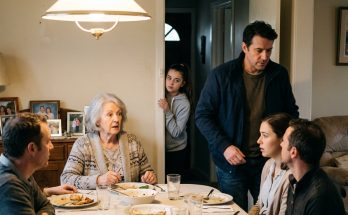
The room became silent. Clara pressed both hands over her face. Then she looked at us.
“This is exactly why I didn’t want to come back.”
Mom’s expression collapsed.
“Because I mentioned pie?”
“No, Mom.”
Clara’s voice shook.
“Because five minutes after seeing me, you’re already trying to rebuild the girl I used to be.”
“I thought familiar things would help.”
“I don’t even like cherry pie anymore.”
Mom stared at her.
“But Sarah always loved it too. You girls liked all the same things.”
Clara gave a short, bitter laugh.
“There.”
She pointed toward Mom.
“That. Exactly that.”
Something cold moved through me.
“What are you talking about?”
Clara turned toward me.
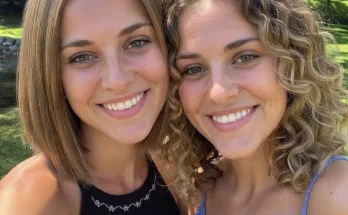
“Growing up, everything was Sarah and Clara.”
I frowned.
“You got a better grade, people compared us. You made a team, people asked why I didn’t. You won something, everyone looked at me like I was the defective version.”
“I never asked anyone to do that.”
“I know.”
“Then why are you looking at me like this was my fault?”
“Because you never had to think about it.”
Her voice cracked.
“You walked into a room and got to be Sarah. I walked into the same room and became Sarah’s twin.”
Mom started crying.
“I never knew you felt that way.”
“Neither did I completely.”
Clara gripped the edge of the counter.
“Not until after the accident.”
At first, losing her memory had terrified her. But later, something unexpected happened. For the first time in Clara’s life, nobody compared her to me. Nobody asked where her twin was. Nobody mentioned what Sarah liked or how Sarah performed. She began discovering things simply because she enjoyed them. Gardening. Different foods. New friends. A life that didn’t contain me as a reference point.
I stared at her.
“So when you remembered us, you decided to stay gone.”
“At first, I was scared.”
“And afterward?”
Clara swallowed.
“Afterward…I chose myself.”
I took a step back.
“You chose yourself by letting us bury you?”
“I know how terrible that sounds.”
“It sounds terrible because it was terrible.”
She nodded.
“I know.”
Mom reached toward her. Clara instinctively pulled away.
“I loved you all,” she whispered. “But I was terrified that if I came back, I’d stop being Clara again.”
I stared at her.
“And the price for becoming Clara was letting me spend ten years believing my sister was dead?”
She wiped her cheeks.
“I looked you up four years ago.”
That hurt almost more.
“You found me?”
“Yes.”
“What did you see?”
“Your house. Your job. Your friends.”
“And because I looked happy, you stayed away?”
“I wanted to know whether you were okay.”
“Curious enough to search for me, but not curious enough to call?”
She lowered her head.
“No.”
Clara explained that rehabilitation had given her routines long before her memories returned. By the time she remembered enough to identify her old family, she had already started building another life. Then every passing year made returning more difficult. She kept telling herself we had healed. That appearing again would destroy everything. That perhaps leaving us alone was kinder.
“You could have told us you needed distance,” I said.
“I know.”
“You could have come home and said, ‘I need my own life.’”
“I know.”
“You could’ve asked me to stop comparing us.”
“I know.”
“But instead, you allowed me to mourn you.”
Her eyes filled.
“That’s the part I can’t defend.”
“Then don’t.”
She nodded.
“I was selfish.”
Finally. No excuses.
“I wanted freedom. And every year I stayed away made it harder to admit what I had done. Eventually, I started telling myself returning would hurt everyone more than staying gone.”
“And seeing pictures of me living my life made that easier.”
Her face crumpled.
“Yes.”
I turned away. Then I looked at her again.
“I understand wanting to be your own person.”
Clara watched me carefully.
“I understand hating comparisons. I even understand being terrified that coming home would erase the person you became.”
She swallowed.
“But I will never understand why my grief had to pay for your freedom.”
Clara started crying.
“I know.”
“No. Listen.”
She did.
“You do not get to disappear again whenever being my sister becomes uncomfortable.”
She nodded.
“And I don’t get to drag you backward and expect you to become the twenty-year-old Clara I remember.”
Another nod.
“So what happens now?” she whispered.
“For once, I decide.”
She waited.
“We start small.”
“What does that mean?”
“You don’t disappear. You don’t decide what information I can handle. And you don’t make decisions for me because you think you know what’s best.”
“Okay.”
“Mom and Dad get to be angry too. I’m not going to protect you from their questions.”
“That’s fair.”
“I’m not trying to be fair.”
I picked up my purse.
“I’m trying to figure out how to have a living sister after spending ten years believing she was dead.”
Clara wiped her face.
“So what do you want from me?”
“For now?”
“Yes.”
I opened the door.
“Lunch. Thursday.”
Rebuilding a relationship with Clara wasn’t dramatic.
There was no magical reunion. No single conversation fixed everything. We started with lunch. Then another lunch. Then coffee. Sometimes we talked about the past. Sometimes we deliberately didn’t. I learned that Clara drank tea more often than coffee now. She liked gardening. She hated cherry pie. She had friends whose names meant nothing to me but who had been beside her during years when I believed she was dead.
And she learned things about me too. She discovered that I had changed careers twice. That I hated driving in thunderstorms now. That I no longer listened to half the music we loved at twenty. For the first time, we were meeting each other as adults instead of assuming twinhood meant we already knew everything.
Mom struggled more. She kept trying to restore old traditions. Old foods. Old memories. Dad handled it differently. He mostly listened. One afternoon, Clara apologized to him. Dad stared at her for a long time. Then he said,
“I’m glad you survived.”
Clara started crying.
“But I’m angry you let us believe you didn’t.”
She nodded.
“I know.”
Dad continued,
“Both things can be true.”
Those words stayed with me. Because that was exactly what I had been trying to understand. I could love Clara and still resent what she had done. Mom could be grateful her daughter was alive and still mourn the ten years stolen from her. Clara could have genuinely suffered from comparison growing up while still being responsible for the pain she caused by staying away. None of those truths canceled the others.
Three weeks after Clara returned to our lives, I stopped at a bakery before meeting her for lunch. The cashier recognized me.
“The usual? Two blueberry scones?”
I looked through the glass display. For ten years, I had automatically bought things in pairs. Two mugs. Two pastries. Two of anything that felt incomplete alone. It had become a private ritual of grief I hadn’t even realized I was performing. I looked at the blueberry scones. Then I shook my head.
“No. Just one blueberry.”
The cashier reached for the bag. Then I noticed a chocolate croissant. Clara had ordered one the previous week.
“And one of those too.”
The cashier placed them in two separate bags. One blueberry scone. One chocolate croissant. Different. I smiled. That felt right. Because Clara and I weren’t continuing where we had stopped at twenty. There was no old version of our relationship waiting to be restored. She had spent ten years becoming someone I didn’t know. I had spent ten years becoming someone without her. We couldn’t erase either life. And maybe we shouldn’t.
When I reached the café, Clara was already sitting outside. She looked up as I approached.
“You brought food?”
“Obviously.”
I handed her one of the bags. She opened it.
“Chocolate?”
“You ordered it last time.”
She smiled.
“You remembered.”
I sat across from her and opened my own bag. For a moment, neither of us spoke. Ten years earlier, I would have expected us to order exactly the same thing. Because we were twins. Because everyone assumed twins wanted the same things. Maybe Clara had even believed it too. Now she had chocolate. I had blueberry. Two different people sitting at the same table.
And for the first time in our lives, neither of us needed to disappear in order for the other one to exist.