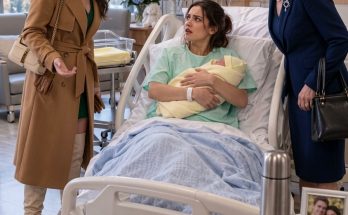
At sixty-nine, I needed a hip replacement.
Nothing dramatic.
Arthritis.
Years of standing at bookkeeping jobs, climbing porch steps, walking uneven ground, and pretending pain was age instead of a medical problem.
The orthopedist showed me the X-ray.
“You’ve been compensating a long time.”
I laughed.
“That seems to be a theme.”
The surgery was elective, not emergency, but quality of life had narrowed.
I stopped walking to the creek as often.
Stairs hurt.
Sleep became poor.
The old Doreen might have delayed because surgery meant expense and dependence.
The new Doreen had health insurance, reserves, and the ability to hire help.
Money did not make surgery pleasant.
It removed several bad choices.
I did not need to move in with relatives.
I did not need Denise or Wade to become caregivers unless we mutually wanted that.
My sister June stayed the first week.
A home-health service came for the tasks they were qualified to handle.
Neighbors brought food.
Denise offered to stay overnight.
I said no, but asked if she could drive me to one follow-up appointment.
“Yes.”
No offense.
No proof of relationship measured by sacrifice.
At the appointment, she sat in the waiting room reading a magazine.
I thought about Harold’s letter.
I do not want my wife forced to negotiate with my children for permission to live after I am gone.
He had imagined financial independence.
I had interpreted it mainly as housing and bills.
Now I understood care.
The Cardinal money let me choose assistance without turning family relationships into necessity.
That made every bit of voluntary help feel warmer.
After surgery, I spent six weeks away from Route 9.
Mason’s office handled a routine inspection issue.
Leah reviewed one notice.
The land did not require my body standing at the gate to remain mine.
That was another transition.
For years, I had guarded the property almost emotionally because everyone once called it worthless.
Now systems could handle what systems should handle.
Insurance.
Contracts.
Professionals.
I could heal.
Wade visited with soup.
He sat on my porch and said:
“Dad would hate that you paid strangers to do things we could do.”
I smiled.
“Your dad paid people all the time.”
“Not if family was available.”
“That was one of his annoying qualities.”
Wade laughed.
Then became serious.
“Do you ever think he left you the land because he knew we wouldn’t help?”
I considered.
“No.”
“Really?”
“He left it because he wanted me secure and because he thought I understood the property. That is different from saying he believed you were bad people.”
Wade looked relieved.
I realized he had carried that question for years.
A will can feel like a dead person’s final ranking.
Sometimes it is simply allocation.
“Your father loved you,” I said.
“I know.”
“Then let the will be a will.”
He nodded.
I needed the same advice.
For a long time, Harold’s gift had become proof he valued me despite the children’s treatment.
That proof helped when I was raw.
I no longer needed it.
Fourteen years of marriage existed whether the land was worth two dollars or two million.
If Cardinal’s route had shifted and the offer vanished, Harold’s choice would still have meant what it meant.
That realization finally separated my marriage from the market.
The property’s value had amplified conflict.
It did not create love.
My recovery went well.
Physical therapy hurt.
I complained.
June told me I was dramatic.
I told her she could go home.
She stayed.
By spring I walked the creek again.
Slowly.
New hip, old rock.
The station hummed beyond the trees.
A Cardinal truck passed on the access road.
The driver waved because he knew me.
I waved back.
No one in that scene knew about the parking-lot laughter, the lawsuit, or Harold’s envelope.
Good.
The land did not have to perform history every day.
It could simply be property supporting my life.
That was what Harold had intended.
Not a revenge trophy.
Security.
I finally let it become one.
The hip surgery also made me revisit my emergency documents. Medical power of attorney. Health-care preferences. Contact list.
I had assumed estate planning was mainly about death. Surgery reminded me incapacity can be temporary and still require clarity.
I chose June as primary medical agent while she was able, with my niece Marcy as backup. Not Denise or Wade simply because they were Harold’s children.
When I told them, neither was offended.
That was progress for all of us.
I also gave the hospital only the information people actually needed. Denise could receive general updates if I approved. Wade too. They did not need full portal access.
Defined roles kept care from becoming another test of love.
After surgery, I made one mistake.
Pain medication left me groggy, and when Denise offered to organize my bills for the week, I almost handed her a box of financial papers without thinking.
Then I stopped.
“Could you just put the mail on the desk? Marcy is handling bills if I need help.”
Denise said, “Sure.”
No hurt.
Old Doreen would have either surrendered all access to prove trust or refused all help to prove independence.
Now I could accept soup and a ride while keeping finances with the person assigned.
Boundaries had finally become practical rather than emotional.
When I recovered, I thanked everyone specifically for what they did. June for the first week. Denise for the follow-up ride. Wade for groceries. Home health for clinical support.
No vague family story where one person’s labor disappears into “everyone helped.”
Specific gratitude helped care end cleanly when the need ended.
Physical therapy also taught me a lesson I disliked: money can purchase access to excellent care, but it cannot perform the exercises.
I still had to show up, hurt, repeat, rest, and do the boring work.
That grounded me. Financial security solves certain problems powerfully. It does not make a body obedient or grief disappear.
I stopped talking about the land as if it had “saved” me. It gave me options. People and effort did the rest.
I also hired someone to inspect the remaining property while I recovered, with clear instructions about what required immediate notice and what could wait. Delegation felt easier once I stopped equating personal oversight with ownership. The land remained mine even when another person checked the gate.
After the hip healed, I stopped using pain as a reason to avoid the property entirely. I returned gradually, with a walking stick at first. Recovery became another lesson in proportion: protect what is healing, but do not let protection become a permanent smaller life once the danger has passed.
The first bill after surgery arrived with an insurance adjustment I did not understand. Old me would have paid quickly to avoid feeling ignorant. Instead I called, asked for an explanation, confirmed the amount, and then paid. Financial confidence had become less about knowing every answer and more about refusing to be embarrassed by a question. Harold’s land gave me money; years of handling it gave me that habit.
Click here to continue reading: PART 12: Writing my own estate plan forced me to decide whether I would repeat Harold’s secrecy or give the people I loved enough clarity to prevent another fight after I was gone
Harold left me the one property his children mocked, and the sealed envelope in Bernard’s office proved he had known exactly why the “worthless” dirt mattered
Part 11 of 16