Marcus retired when Ethan was thirty-six.
The barbershop organized small party.
Ethan insisted we go.
Marcus had gray hair now.
Fitting for barber.
He laughed when Ethan arrived with Noah.
“This the kid?”
“The next one.”
Noah looked confused.
Marcus said:
“I cut your dad’s hair when he had a head shaped like a basketball.”
Ethan protested.
Good.
No surveillance story immediately.
Later, after crowd thinned, Ethan asked Marcus to step outside.
I stayed inside with Noah.
They talked alone.
Ethan told me later.
“I always thought you saved me,” he said.
Marcus answered:
“I told you years ago, no.”
“I know. But I finally understand what you mean.”
“What do I mean?”
“You noticed. Then you told the person who could act.”
Marcus nodded.
“That’s usually enough.”
Ethan said:
“If you had ripped it off and chased the guy, maybe evidence would’ve been lost. If you had said nothing, we’d never know. You did exactly your part.”
Marcus smiled.
“That sounds like therapy.”
Apparently all wise phrases do.
Ethan gave him gift:
A high-quality set of gardening tools because Marcus planned to garden.
Not plaque.
No “hero barber” trophy.
Marcus appreciated.
He had never wanted spotlight.
This meeting mattered because Ethan’s understanding of help had matured.
As a child, he wanted to be entire solution.
Marcus modeled something else:
Notice.
Escalate appropriately.
Let next responsible person act.
No ownership.
That became how Ethan led at work.
If employee reported possible privacy flaw, he did not expect reporter to fix entire platform.
Security team.
Legal.
Product.
Management.
Shared roles.
One person raising concern mattered.
No one had to become hero.
Around this time, I began to have my own health changes.
Nothing dramatic.
Arthritis.
Blood pressure.
I was sixty-eight.
Ethan offered every appointment.
“No.”
Some.
Yes.
He learned from his own parenting and our history not to overtake.
If I asked, came.
If not, trusted.
This felt precious.
After Daniel died, I had done everything alone partly because no network.
Now I had Ethan, friends, doctors, neighbors.
Not one.
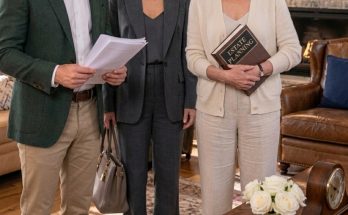
I started estate planning updates.
My assets were modest compared with Ethan trust.
House.
Retirement.
Savings.
Life insurance minimal now.
I named Ethan beneficiary of most, some charity.
He said:
“I don’t need it.”
“Not your decision while I’m alive.”
He laughed.
Correct.
I also appointed professional executor? Estate simple; could name Ethan, but burden. I chose him with option to appoint professional assistance. Perhaps better professional fiduciary to preserve son role. But costs. I had enough. I chose local trust company as executor, Ethan beneficiary.
He said:
“Mom, I can handle paperwork.”
“I know.”
“Then why pay?”
“Because I want you grieving, not fighting utility accounts.”
He rolled eyes.
But respected.
This echoed Michael’s trust.
Professionals can protect relationships.
I wrote healthcare directive.
Ethan primary medical agent because he knew wishes.
Different role.
I explained.
He understood.
No secrecy.
No mysterious box.
That was important.
I showed where documents were.
Not exact every account? Enough.
No posthumous scavenger hunt.
Michael’s hidden envelope had been necessary maybe, but I did not want repeat.
Ethan told me:
“Dad probably thought he had more time.”
“Yes.”
We both understood.
Life does not promise.
Clear now.
At Marcus’s retirement party, Ethan introduced Noah:
“This is the man who noticed something weird when I was a kid.”
Noah immediately:
“What?”
Ethan looked at me.
I said:
“Your dad can tell you later.”
He smiled.
“Later.”
Good.
No dramatic reveal at age six.
Marcus tousled Noah’s hair, then asked permission jokingly:
“Can a retired barber touch your hair?”
Noah said no.
Marcus withdrew instantly.
No offense.
Everyone laughed.
Consent can be ordinary, not solemn.
That moment felt like full circle without forcing.
Marcus retired.
The shop continued under younger owner.
Ethan changed barbers eventually because he moved.
No loyalty obligation.
Another relationship could finish naturally.
He sent Marcus holiday card some years.
Then less.
Gratitude did not require permanent closeness.
This too mattered.
People who help at crucial moments do not automatically become lifelong family.
They can remain important because of one thing.
Enough.
Marcus’s retirement also reminded me that people can help profoundly without becoming permanent emotional caretakers.
For years, I sent him holiday cards.
Then missed one.
Felt guilty.
Why?
Because he had noticed the device.
Did gratitude require lifelong maintenance?
No.
I called once instead.
He was delighted.
Then years passed.
The relationship naturally thinned.
That did not reduce what he had done.
This was important because people often confuse gratitude with obligation.
Ethan had to learn the same with Marcus, Dr. Chen, Helen Park, even police officers.
They entered during need.
They did their roles.
Some remained.
Some did not.
No debt.
When Marcus died later, the grief was real despite distance.
But neither of us thought:
We should have visited more because he helped us.
We had thanked.
We had lived.
That is enough sometimes.
This lesson affected how Ethan received help in adulthood.
If someone assisted during crisis, he stopped believing he had to repay with equal favor forever.
He could say thank you.
Reciprocate when appropriate.
Then let relationship be what it was.
Healthy communities rely on help that is not always balanced one-to-one.
Sometimes you help a stranger and another stranger helps you years later.
That is not debt.
It is society.
Marcus had simply noticed and spoken.
That small act joined a chain.
He did not own the outcome.
Neither did we own him.
My own estate-planning conversations with Ethan gave us a chance to correct another family pattern: using paperwork only after trust has already broken.
Michael had written important instructions quietly.
Thomas and Grant had treated company documents as obstacles.
I wanted documents to be normal.
So I invited Ethan to one meeting with my attorney—not to negotiate inheritance, but to understand roles.
The attorney explained:
Professional executor handles administration.
Ethan receives notices as beneficiary.
Healthcare agent authority starts only under defined conditions.
Financial fiduciary acts under the power document if activated.
No one gets to improvise because “family knows best.”
Ethan joked:
“Our family should put that on a plaque.”
Maybe.
I also told him what I did not want.
No preserving my house as a shrine.
No keeping every object because guilt.
No spending his own money to upgrade care just to prove love if my funds covered.
No secret promises to me about never using assisted living.
He looked uncomfortable.
“You want to talk about that now?”
“Yes.”
Because now was calm.
That is the best time.
End-of-life planning should not be punishment for a health scare.
It is maintenance.
Like insurance.
Like passwords.
Like a will.
Ethan eventually appreciated.
Years later, when real decisions came, we had already spoken.
That spared him guessing.
The whole family history had taught us the cost of guessing what someone “would have wanted.”
Clarity is kindness when given early enough.
Click here to continue reading: PART 13: When I became the one who needed help, Ethan had to prove that protecting me did not mean taking over — the same lesson I had once struggled to teach myself with him
The black disc behind Ethan’s ear was not the only thing watching us — a second device on my front door revealed that someone had been studying our routines for weeks
Part 12 of 16