At eighty-four, I was diagnosed with early Alzheimer’s disease.
Not shocking by then.
Still hard.
Ethan cried in car.
I cried at home.
Then we followed plan.
Professional fiduciary activated more fully after capacity assessments for complex finances.
Not all decisions disappeared overnight.
Capacity is task-specific.
I could choose meals, visitors, clothing, many medical preferences.
Complex investment management shifted.
Ethan became more involved medically.
He asked before attending appointments while I could decide.
Good.
I had spent decades teaching him this.
Now he practiced when stakes personal.
Some days, I told the surveillance story accurately.
Other days, I mixed details.
I said Marcus was police officer.
He was barber.
I said camera was in kitchen.
It was door.
I said Grant was Michael’s cousin.
Brother.
Ethan corrected at first.
Then geriatric specialist said:
“Correct facts when they affect safety or important understanding. Not every historical detail needs correction.”
This was hard for an engineer.
He likes accuracy.
But constant correction can become exhausting and humiliating.
So if I said:
“Marcus found camera behind my ear,”
Ethan might answer:
“He found the little device behind Ethan’s ear—your son’s ear.”
Wait I might confuse myself as Ethan? Could happen but too much. Better:
I said, “Marcus found a camera behind Ethan’s ear.”
He would say gently:
“It was a small tracker, Mom.”
If I seemed distressed, he reassured:
“It’s over. Everyone is safe.”
That mattered more.
One afternoon I asked:
“Is Grant outside?”
He had been dead five years.
Ethan’s face changed.
“No. Grant can’t come here.”
True enough.
No need force death news repeatedly if it would shock.
Sometimes he said:
“He’s not coming. You’re safe.”
Good.
Privacy also changed.
Care staff needed access to my room.
Medication.
Safety checks.
I could no longer lock every door independently.
This could have felt like nightmare.
The facility used clear policies.
Staff knocked.
Announced.
No hidden monitoring except agreed common-area systems.
If fall-risk sensor considered, family and I were informed.
No covert camera.
Consent where possible, surrogate decision if needed.
Systems matter.
Ethan asked:
“Would Mom want a room sensor?”
The sensor detected motion/fall risk without video.
I had expressed desire to stay safe while minimizing intrusion.
He approved after team explained.
This was not Grant’s tracking.
Purpose, consent history, governance, and transparency changed.
Ethan struggled emotionally.
“Same concept, different ethics.”
Exactly.
Technology itself not moral.
Use.
One day Marcus, retired long ago, died.
His daughter found Ethan’s contact among old cards and sent notice.
Ethan told me.
I did not remember Marcus at first.
Then:
“The barber?”
“Yes.”
“The good one?”
“Yes.”
I cried though memory fuzzy.
Ethan attended memorial virtually.
He sent family note:
Marcus noticed something unusual and told my mother discreetly. That small act protected us. I remain grateful.
No hero exaggeration.
Perfect.
At eighty-five, Noah graduated college in information science, influenced partly by father but own path.
He worked in civic technology.
Not surveillance trauma destiny.
He liked making public systems easier.
He visited me and fixed my tablet.
Family curse.
He showed old school project about digital consent.
I did not remember.
I said:
“Smart kid.”
He laughed.
“Thanks.”
Sometimes forgetting lets younger people receive simple praise without history.
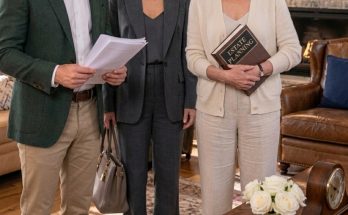
My estate planning had been finalized before significant decline.
No surprises.
House sold.
Care funded.
Remaining assets modest but sufficient.
Some to Ethan.
Some to local child-advocacy organization and widow support.
Why child advocacy?
Not because every story must become charity.
I had supported over years because helped us during forensic interview.
A practical thank you.
No foundation named after us.
No “Ethan Safety Fund.”
I did not want incident branding.
Ethan agreed.
My personal papers included Michael’s letter, Grant’s final letter, police records, trust summaries.
Would descendants need all?
We decided legal retention periods and historical relevance.
Some sensitive records destroyed securely when no longer needed.
Keep a concise family summary.
Why?
Because boxes of trauma can become inheritance too.
Noah did not need graphic case files.
Truth could be preserved without burden.
We kept:
Michael’s letter.
Grant’s final apology.
One photo of Marcus’s shop? Not necessary.
A short timeline.
No device.
The black disc remained police property then disposition destroyed after case.
Good.
No creepy keepsake.
At eighty-six, I sometimes asked Ethan to check behind his ear.
He would smile.
“Nothing there.”
“Good.”
Then I forgot.
He told me later that those moments hurt but also showed how deeply protective fear had entered me.
I wish I could say it vanished before cognition did.
Not completely.
Healing does not erase every imprint.
It makes life larger around it.
Mine had been.
Decades of work.
Friends.
Travel.
Grandson.
Ordinary breakfasts.
Arguments.
Gardens.
The device behind an ear occupied minutes.
The story occupied years.
Life occupied more.
That was enough.
As my memory worsened, I sometimes became suspicious of staff in ways that embarrassed Ethan.
A necklace misplaced.
A sweater moved.
“Someone took it.”
Often not.
Dementia can create certainty without evidence.
Ethan faced cruel irony.
His childhood had taught him to take strange suspicions seriously.
Now he had to avoid validating every fear automatically.
He learned to say:
“Let’s look.”
Not:
“No one took it, Mom.”
Not:
You’re confused.
Search.
Ask staff.
Sometimes item found.
Once a sweater actually was in wrong laundry cart.
My concern had basis, just not theft.
This approach preserved dignity and facts.
He told me later—perhaps I forgot—that it reminded him of the black disc.
A strange thing should be checked.
But checking is not same as assuming worst.
This was the core lesson returning in old age.
Evidence first.
Respect person.
Do not dismiss because vulnerable.
Do not accuse because afraid.
That balance served us one last time.
Alzheimer’s also changed the meaning of secrets.
Staff sometimes used gentle redirection.
They did not tell me every upcoming medical issue hours in advance if it would only cause repeated anxiety and I could no longer retain the explanation.
At first Ethan worried this was deceptive.
The geriatric team explained:
“We do not lie about important choices. We time information so she can participate meaningfully without making her suffer the same fear repeatedly.”
That distinction mattered.
Consent does not require dumping information at the least useful moment.
When I could understand, I was told.
When I could decide, I decided.
When I could not, my directive and agent guided.
Ethan had grown up with the rule:
No adult should keep dangerous secrets from a child.
Old age required more nuance.
Information has purpose.
Capacity matters.
Timing matters.
He learned not every withheld detail is manipulation.
The ethical question is:
Whose interests does the withholding serve?
Grant withheld and distorted information to gain control.
Care staff sometimes simplified because repeated explanation caused distress and no decision was needed yet.
Different.
This nuance prevented Ethan from becoming suspicious of every clinical judgment.
He still asked questions.
Good.
But he could collaborate.
That made my later care calmer.
Click here to continue reading: PART 16: In the end, what Marcus found behind Ethan’s ear mattered less than what we learned afterward — that protecting a child means noticing danger without teaching him to live as if danger is everywhere
The black disc behind Ethan’s ear was not the only thing watching us — a second device on my front door revealed that someone had been studying our routines for weeks
Part 15 of 16