The letter did not become easier on the second reading.
It became worse.
The first time, I had read it as a husband discovering a diagnosis.
The second time, I read it as a divorced man discovering how carefully the divorce had been designed.
Rachel had chosen phrases for me.
You deserve a full life.
I need space.
We became different people.
I love you enough to let you go.
At the time, I thought those sentences were honest but vague.
Now I could see the machinery behind them.
She knew I would fight a sentence that sounded like sacrifice.
So she called it freedom.
I sat in the hospital cafeteria with the yellow pages spread on the table.
One line stopped me.
I made the divorce sound like freedom because I knew you would fight a sentence that sounded like sacrifice.
I closed my eyes.
That was Rachel.
Not cruel.
Strategic.
She had always known how to phrase things for me.
At the shop, if she wanted me home by seven, she did not say stop working.
She said the chicken would dry out.
If she wanted me to call my brother, she said he sounded lonely.
She moved people through language.
Usually gently.
This time, the same skill took three years from both of us.
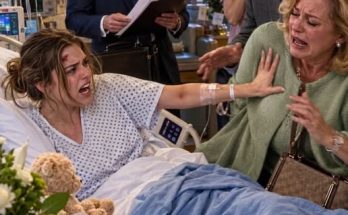
When I returned to the room, she was awake.
“You read it again.”
It was not a question.
“Yes.”
“You look worse.”
“Thank you.”
She almost smiled.
Then I sat.
“Did you want me to chase you after the divorce?”
Her face changed.
“No.”
“Really?”
She thought.
“I wanted you to want to.”
“That is not the same answer.”
“I know.”
There it was.
An impossible test.
She wanted me to love her enough to fight.
But not enough to discover why she was leaving.
She wanted proof without pursuit.
Distance without abandonment.
A clean break that somehow confirmed the bond.
“That wasn’t fair,” I said.
“No.”
“You understand that now?”
“Yes.”
“Why not then?”
She looked at the blanket.
“Because then I was scared all the time.”
That answer was too broad.
I waited.
Rachel told me about the first oncology appointment.
A surgeon explaining recurrence risk.
A nurse handing her a binder so thick she could barely fit it in her purse.
A social worker asking about family support.
She had said husband.
Then crossed it out before anyone could read.
She went home and watched me repair the porch swing.
That was the night she decided to ask for the divorce.
Not because the doctor told her she was dying.
Because nobody could tell her how many good years she had.
Uncertainty terrified her more than a bad answer.
“I could handle terrible,” she said.
“I could plan terrible. I couldn’t handle maybe.”
So she converted maybe into something she could control.
Divorce.
Move.
Tulsa.
New doctor.
New apartment near Linda.
A life where I was not allowed to become caregiver by default.
“You made certainty out of me losing you.”
“Yes.”
That was ugly.
Also honest.
Maria came in to adjust medication.
She asked Rachel whether she wanted pain medicine.
Rachel said no.
Maria looked at her face.
“Are you sure?”
Rachel hesitated.
Then said yes.
Maria explained what was available.
Did not force it.
Left the choice.
I noticed because I was watching everything differently now.
Information.
Choice.
Consent.
A nurse could offer help without taking over.
Why had we been so bad at that with each other?
After Maria left, Rachel asked for the letter.
I hesitated.
Then handed it over.
She read the first page and winced.
“I sounded dramatic.”
“You wrote a hospital letter before filing for divorce.”
“Fair.”
She asked whether I wanted a copy.
“I photographed it.”
She laughed.
“Of course you did.”
We were both trying to preserve evidence of ourselves now.
That made me sad enough to stop joking.
I asked about the ring.
Her left hand was bare.
“I left it on your pillow because I knew if I wore it back to Tulsa, I’d keep pretending the divorce was temporary.”
“Was it?”
“Legally? No.”
“That’s not what I asked.”
“I don’t know.”
Honest.
I preferred honest uncertainty to another noble lie.
Rachel told me the wedding had been a mistake from the moment she accepted Karen’s invitation.
She knew I would be there.
Nearly declined.
Linda convinced her one dinner would not destroy three years of distance.
Then Karen seated us together.
Then played our wedding song.
Then Rachel saw me wearing the old tie clip from our twenty-fifth anniversary.
“You noticed that?”
“I noticed everything.”
She said the dance made three years disappear too quickly.
Coming back to the house felt inevitable.
Leaving the ring was her attempt to restore separation by morning.
Then she went home and cried for two days.
I told her I had stared at that ring every morning.
Kept it in the top drawer beside my socks.
“I thought it meant goodbye.”
“It did.”
I looked at her.
She added, “I just didn’t know which goodbye.”
“No more sentences that sound like funeral programs.”
She laughed.
Then coughed hard enough for the monitor to change.
I stood.
She waved me down.
“I’m fine.”
“Let the nurse decide that.”
Maria arrived.
Checked oxygen.
Listened.
Adjusted nothing.
Rachel glared at me.
“What?”
“You’re going to be unbearable.”
“I was unbearable before.”
“Yes.”
There it was.
Normal marital rhythm returning inside a room where we were not married.
Dangerous.
Comforting.
I asked whether she regretted the divorce.
Rachel took a long time.
“I regret not telling you the truth.”
“Different question.”
“I know.”
She looked toward the window.
“I don’t know whether we would have survived four years of this as husband and wife.”
“You didn’t let us try.”
“No.”
“That’s the part I can’t forgive yet.”
She nodded.
“Then don’t.”
That was the first time she did not ask me to be happy.
Just honest.
Two days later, she asked me to go home for forty-eight hours.
At first I heard rejection.
Then she explained.
“You have a shop.”
“I have employees.”
“You also have a life.”
“That phrase caused enough trouble.”
She smiled weakly.
“Then call it a schedule.”
I went.
The drive home felt wrong.
Still, I went.
That choice became proof that staying did not require constant physical presence.
Rachel later admitted she had rehearsed the divorce conversation for weeks.
Not the truth.
The cover story.
That hurt.
She had practiced sentences about drifting apart because those sentences sounded believable enough to end a marriage without inviting medical questions.
I asked whether she ever came close to saying cancer aloud.
“Yes.”
“When?”
“When you held my hand after I asked for the divorce.”
That stopped me.
I remembered her holding my hand.
Who does that?
At the time, I thought it was tenderness.
It had also been restraint.
She said if I had asked one more question that night, she might have told me.
I became angry all over again.
“You can’t make this my fault because I didn’t ask the magic question.”
“I’m not.”
“Good.”
She nodded.
That was another trap we learned to avoid.
People who hide truth sometimes imagine the other person nearly discovered it, then use that near-discovery to reduce guilt.
No.
The responsibility to disclose remained with the person who knew.
Rachel accepted that eventually.
So did I.
The hand-holding memory stayed painful, but clearer.
She had loved me while leaving.
That did not make leaving fair.
The letter eventually went into our safe with other important papers.
Not framed.
Not displayed.
It was not a love letter.
It was a record of a frightened decision.
For months, I reread it whenever anger returned.
Then Dr. Grant asked why.
“To remember.”
“You remember.”
Fair.
I stopped.
Memory did not need constant reinforcement.
The letter had done its job.
It revealed what Rachel could not say.
After that, our conversations mattered more than the paper.
Keeping evidence can protect truth.
Repeatedly reopening evidence can also keep a wound from closing.
I learned the difference slowly.
Rachel later said the hardest part of rereading her old letter was seeing how certain she sounded. Fear had borrowed certainty’s voice. We both learned to distrust decisions that felt most urgent precisely when the facts were least complete.
Click here to continue reading: PART 3: I walked into her hospital room angry enough to blame love for every lost year
The nurse finally told me what Rachel had hidden since the year before our divorce
Part 2 of 16