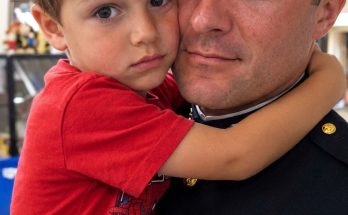
My husband took our three sons fishing, but none of them came home.
Six years later our oldest daughter found his old cellphone.
“Mom,” Sophie whispered, “I think I know what happened.”
My husband, Daniel, had loved that lake.
He knew the weather, the coves, the dangerous shallows.
Before every trip he checked the engine and the fuel.
Our boys teased him for packing two of everything.
That Saturday I watched them load his truck.
There were coolers, rods, life jackets, and a battered tackle box.
I took their photograph in the driveway.
Our three sons crowded around their father, laughing about who would catch the biggest fish.
I could not have known it would become the picture I kept beside my bed.
Daniel promised they would be home Sunday evening.
Sunday passed.
I called his phone until the battery on mine nearly died.
I called our oldest boy.
No answer.
Our other sons were too young to have phones.
At midnight I contacted the police.
The next day officers found Daniel's truck by a boat ramp.
The trailer was empty.
Hours later a damaged boat washed onto the far shore.
Divers and volunteers searched for weeks.
Nothing was recovered that could tell us precisely what happened to the four of them.
Investigators considered a boating accident the most likely explanation.
Eventually, the searches stopped.
I raised our three daughters in a house that had become painfully quiet.
Sophie grew older much faster than she should have.
She sometimes packed lunches for her sisters when I could not get out of bed.
I told her she did not have to become another parent.
She said she knew.
But she was still the one who noticed when milk ran out.
Daniel's younger brother, Dean, appeared almost every week.
He repaired leaking taps, drove the girls to appointments, and told me not to keep asking questions.
“An accident is an accident,” he said.
He seemed certain in ways I could never understand.
Six years later, Sophie persuaded me to sort the clothing we had kept untouched.
We made three piles on the bedroom floor.
Keep.
Donate.
Decide later.
Most things went into the third pile.
I was in the kitchen when Sophie found Daniel's old cellphone in a zipped pocket of his winter coat.
He had reported losing that device years before the trip.
We had bought him a replacement.
The old phone had been turned off for years.
Sophie connected it to a charger and, after a long wait, got it working.
The date on one video made her hands shake.
It was recorded the day before the fishing trip.
The first face on the screen belonged to Dean.
I gripped the kitchen counter.
The image showed Daniel standing in a garage.
Dean was beside a workbench holding a plastic fuel fitting.
They were arguing.
“The line is cracked,” Daniel said.
Dean shook his head.
“I told you I'd replace it.”
“You said that last month.”
“Don't make a federal case out of it.”
Daniel brought the camera closer to the fitting.
A narrow split ran along one side.
Then he turned the phone toward himself.
“If something goes wrong, I want a record of what I found.”
My hands began to shake.
Sophie paused the video.
“Mom, there's more.”
The last seconds were difficult to hear.
Daniel said he would not take the boys out until the repair was done.
Dean claimed he had a replacement part and would install it before morning.
The screen went dark.
I had believed the damaged boat held no answers.
Now it seemed someone had known about a problem before our family disappeared.
I called the detective whose card I still kept in an envelope beside the photograph.
I told him what we had found.
He asked us not to alter the phone or confront Dean.
Then he asked whether we could bring it to the station.
Sophie looked at me across the kitchen table.
For six years Dean had been the person who told us to stop searching.
Now the only thing I wanted was to know why.
Before Daniel disappeared, Sunday evenings had a sound of their own.
The truck would pull into the driveway after dark.
The boys would tumble out carrying muddy shoes and stories that grew louder with each telling.
Daniel would pretend the fishing had been disappointing, then produce a cooler with whatever they had caught.
I would complain about the smell.
They would promise to clean everything.
They rarely cleaned as much as they promised.
That was the sort of ordinary irritation I would have given anything to experience again.
The three girls waited for their brothers to return because the boys always brought them something.
A smooth stone.
A feather.
Once, a cracked piece of driftwood shaped like a horse.
Our youngest daughter kept that driftwood on a shelf until she was a teenager.
When the boys didn't return, she carried it around the house for days.
She asked whether the horse had been lost too.
I did not know how to answer.
For a long time, the world outside our house seemed offensively normal.
People mowed their lawns.
The mail came.
School buses stopped on the corner.
Our neighbors had birthday parties and bought new cars.
I went through the motions because three little girls still needed breakfast.
I learned the words people use when they are trying to be gentle.
Unlikely.
Presumed.
No longer an active search.
Those words arrived in official letters and careful conversations.
I kept each paper in a blue folder.
Sometimes I took the folder from the drawer simply to prove that someone had tried to find them.
I was grateful for the search teams.
I was grateful for the volunteers who brought coffee to the shore.
But gratitude did not erase the terrible silence when the final search boat returned without them.
Dean became our most frequent visitor in the months afterward.
He arrived with grocery bags and a toolbox.
He repaired a fence gate Daniel had meant to fix.
He cleared snow from the driveway.
He taught Sophie how to check the air pressure in her bicycle tires.
He was useful in ways that made me ashamed of my resentment.
Why did he always leave when I mentioned the lake?
Why could he talk about Daniel's favorite music but never about the boat?
I told myself grief made people strange.
His brother was gone too.
Maybe talking about the accident hurt him.
Once I asked whether Daniel had mentioned any trouble with the engine.
Dean said the boat had been perfectly sound.
“Your husband took care of his equipment,” he told me.
It was exactly what I believed.
I should have felt reassured.
Instead I wondered how Dean could sound so certain.
Another time, I found him staring at the driveway photograph.
He was holding a wrench he had brought to repair the sink.
His face looked tired.
When he noticed me, he placed the picture facedown on the table.
“I can't look at that,” he said.
Then he asked whether I had considered replacing the kitchen curtains.
The change of subject was so abrupt that I remembered it for years.
As the girls grew older, each one grieved differently.
Sophie wanted facts.
She asked about currents and weather reports.
She searched old news stories and marked details in a notebook.
Our middle daughter avoided the lake altogether.
She joined the school choir because rehearsals gave her something predictable to attend.
Our youngest sometimes talked about her brothers as if they were away at camp.
Her teachers worried that she was not accepting what had happened.
A counselor helped us understand that children can return to questions at different stages of life.
I learned to answer honestly without pretending certainty.
“We believe there was an accident,” I would say.
“We don't know exactly how it happened.”
For years I could not bear to move the boys' belongings.
Their beds stayed made.
A basketball remained under a desk.
The oldest boy's phone charger hung from a socket.
I kept the charger even after the phone itself was no longer useful.
It was proof of the days when he had been here to need it.
When Sophie suggested sorting through the rooms, I thought she was asking me to forget.
She explained that she wanted room to remember them differently.
“I don't want their bedrooms to feel like places we're not allowed to enter,” she told me.
She was right.
We began with an old wardrobe rather than their beds.
There were scarves, coats, boxes of photographs, and camping supplies.
Sophie found the phone in a pocket where it should not have been.
At first she thought it belonged to one of her brothers.
Then she recognized the scratched case.
Daniel had dropped it outside the grocery store years before the accident.
One corner had a small white mark where the plastic chipped.
I remembered how annoyed he had been.
He had told us the phone was missing shortly afterward.
When it turned on, Sophie found pictures of ordinary things.
The dog asleep under the table.
A birthday cake.
A blurred photograph of the yard.
Then the video with Dean's face.
What frightened me most was not the image of an argument.
It was hearing Daniel's voice again.
He sounded close enough to call from the next room.
Sophie touched the screen.
For a moment neither of us was ready to press play again.
The photograph had stayed on the mantel for years after the search ended.
Sometimes visitors stopped in front of it and asked about the boys.
I told them their names and ages.
I described their favorite school subjects and the jokes they made at dinner.
Most people expected me to say something about tragedy.
I wanted them to know these children had lives before their disappearance.
Our oldest son loved drawing maps.
He could spend an afternoon labeling imaginary islands in a notebook.
Our middle son loved animals and often returned from the lake with stories about birds he had seen.
Our youngest insisted he was going to catch a fish larger than his father.
Daniel encouraged their differences.
He let them argue about fishing spots and then taught them how to listen to one another.
At home, he repaired things carefully.
He kept spare batteries in a drawer and labeled every box in the garage.
After the accident I spent months looking at the supplies he left behind.
A full first-aid kit.
A weather radio.
A flashlight with fresh batteries.
They made it difficult to accept that something had gone wrong so badly.
I had to remind myself that preparedness reduces danger without removing it.
That understanding did not quiet the part of me that kept wondering whether someone had overlooked a warning.
On the day Sophie found the old phone, she had planned to meet a friend for coffee.
She canceled when she saw the video date.
I told her she did not have to give up her plans for me.
She said this was something she needed to understand too.
We sat together while the battery indicator flickered on the screen.
The phone felt strangely heavy in my hands.
It held ordinary family photographs and a few messages from years before the accident.
I did not read through every private conversation.
We focused on the recording that seemed connected to the disappearance.
When Daniel's voice came through the speaker, Sophie whispered, “I forgot how he sounded.”
I put an arm around her.
So many years had passed that she had begun to doubt her own memories.
Now the voice was there again, speaking about a repair.
It was both a gift and a terrible shock.
We watched the video once more, then turned the phone off and placed it in a padded box.
I knew the next people who saw it needed to be investigators, not curious relatives.
That night I put the blue folder on the kitchen table and opened it again. I found the original search notice, a map with pencil marks, and a letter from the sheriff thanking volunteers for their efforts. Sophie stood beside me and read the dates. She had been a child when those letters arrived. Now she was old enough to understand how little certainty they contained. We did not make a list of suspects. We made a list of questions. Who had serviced the boat? What did the broken part look like? Did investigators know about the repair argument? Would the old evidence still be available? Sophie wrote carefully and left space beside every question for an answer. Some spaces would remain empty. I wanted her to understand that before we began. She closed the notebook and asked whether I regretted finding the phone. I told her the discovery frightened me, but I could not regret hearing her father's voice. We sat together until the kitchen clock struck midnight. Then I put the papers away. Whatever answers came next, we would face them as a family.
Click here to continue reading: PART 2: A Recorded Argument Was Not the Same as Proof of Murder
The Old Phone Showed a Face I Had Trusted for Six Years
Part 1 of 3