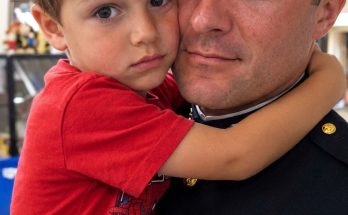
I left my toddler with my seventeen-year-old son while I worked a double shift at the hospital.
In the middle of the afternoon, the police called.
“Come home immediately,” the officer said. “You need to see what your older son has done.”
My husband had died three years earlier.
Since then, the boys and I had been finding our way through one difficult month after another.
Logan was seventeen.
Andrew was still a toddler.
I worked as many hours as the hospital would offer because bills did not stop arriving when someone died.
I worried about how much responsibility I placed on Logan.
He had been in trouble with the local police over a few foolish teenage mistakes.
He had once been caught trespassing near an abandoned warehouse with friends.
Another time he had argued with an officer after a noisy gathering in the park.
Nothing had led to serious charges.
But I could see that he expected every uniform he encountered to assume the worst of him.
That morning I kissed Andrew's hair and reminded Logan where I had left lunch.
“Call me if you need anything.”
“I know, Mom.”
I asked whether he was comfortable watching his brother.
He said yes.
I left for work believing we would have an ordinary day.
The officer's call came while I was helping prepare a patient for discharge.
For several seconds I could not make sense of his words.
“Is Andrew hurt?” I asked.
“He's safe. Please come home so we can explain.”
I arranged coverage and drove faster than I should have.
My hands were damp against the steering wheel.
When I turned into our street, I saw a patrol car in the driveway.
An officer stood beside the porch holding Andrew.
My little boy was wrapped in a blue blanket.
He reached for me the moment he saw the car.
I ran to him.
“What's happening?”
The officer let me take Andrew and asked if I was his mother.
Then he introduced himself as Officer Bennett.
“Your older son is inside,” he said. “He's been through a lot today.”
Logan stood beside the couch with his hair disheveled and a stain on his shirt.
His hands were trembling.
I snapped at him before I knew the facts.
“What did you do?”
His eyes filled with tears.
“Mom, I tried to call you.”
Officer Bennett stepped between us gently.
“Ma'am, let me explain.”
I looked at Andrew.
A small bandage was wrapped around his forearm.
My stomach tightened.
“Was he injured?”
“Minor scrapes,” the officer said. “The paramedics examined him.”
He pointed toward the kitchen.
The back door stood open.
A broken screen leaned against the wall.
A chair had been knocked over.
I had left that morning without noticing anything wrong.
Bennett told me that a man had tried to enter through the rear of the house while Logan and Andrew were inside.
Logan heard the screen tear.
He moved Andrew into the hallway and called emergency services.
Then he blocked the kitchen door as the stranger pushed inside.
There had been a struggle.
Logan had managed to get Andrew out through the front door to a neighbor.
A witness called the police as well.
The stranger ran before officers arrived.
“Logan did exactly what he should have done by getting his brother to safety,” Bennett said.
I could barely breathe.
Logan looked down at the carpet.
“I'm sorry about the door.”
I crossed the room and held him.
“Don't apologize for a door.”
He stood rigid for a moment.
Then his shoulders began to shake.
Officer Bennett waited while we gathered ourselves.
He explained that investigators were collecting statements and searching for the person who entered.
There was no guarantee of an immediate arrest.
There were also questions about the circumstances of the attempted entry.
The officer said Logan's call had been clear and useful.
It had helped dispatchers understand that a young child was in the home.
My son stepped back and wiped his face.
“Mom, I thought he was coming for Andrew.”
I could not tell him that his fear had been unreasonable.
I looked at the broken screen and understood how quickly an ordinary morning could have changed everything.
Then Bennett asked if we had somewhere safe to stay while the door was repaired.
I looked at Logan.
I knew we needed to decide what happened next together.
Before the police call, I had been thinking about an entirely different kind of problem.
The hospital schedule showed two open shifts the following weekend.
I was deciding whether to take one.
A leaking pipe under the kitchen sink needed repairs, and Andrew had outgrown his winter coat.
Logan needed a new pair of shoes for school.
I had begun measuring our life in extra hours.
One additional shift meant groceries.
Two shifts might cover the repair.
Three shifts left me so exhausted that I sometimes fell asleep while reading Andrew a story.
Logan noticed more than I wanted him to.
He learned to cook pasta.
He folded his brother's small pajamas.
He made peanut-butter sandwiches and remembered which cups Andrew preferred.
At first I praised him for being responsible.
Then I began relying on his help without asking.
That was how the arrangement became normal.
When I told coworkers how wonderful Logan was with his brother, I spoke with pride.
I did not mention that he had sometimes missed time with friends because I couldn't afford another babysitter.
One Wednesday he asked whether he could stay after school to work on a project.
I said I needed him home by four.
He said he understood.
Later I heard him tell a friend on the phone that he couldn't go.
He did not sound angry.
That almost made me feel worse.
After my husband died, neighbors helped in every way they could.
They brought casseroles.
They offered rides.
They collected donations for the funeral.
But the help faded as life returned to its usual rhythm for everyone else.
Our grief did not follow the same schedule.
Logan had been fourteen when his father died.
He used to play basketball with him in the driveway after dinner.
For months afterward, the ball stayed in the garage.
The first time Logan picked it up again, he threw it so hard against the pavement that it bounced into the street.
A neighbor complained.
I scolded him for losing his temper.
Only later did I realize he had been trying to play alone a game that used to belong to two people.
The trouble at the abandoned warehouse came later.
He and several boys went inside because one friend wanted photographs of the graffiti.
The building was unsafe, and a patrol officer ordered them out.
Logan talked back.
I was frightened when the police brought him home.
I told him he was ruining his future.
He stared at the floor and said nothing.
A few months later came the argument in the park.
By then Logan believed officers would recognize him as the boy from the warehouse.
He acted defensive before anyone accused him of anything.
I tried to correct that pattern with lectures.
I rarely asked what he was afraid of.
On the morning I left him with Andrew, he was making toast.
The kitchen radio played a weather report.
Andrew sat at the table dragging his spoon through oatmeal.
Logan asked whether I wanted him to make me breakfast.
I said there wasn't time.
I hugged Andrew and reminded Logan of the emergency numbers.
He pointed to the sheet on the refrigerator.
“I know, Mom.”
I told him I trusted him.
I meant it.
But I also knew he had heard the worry in my voice every time a police car passed our house.
At the hospital, the morning became busy immediately.
A patient needed transport.
A supply order had been delayed.
The nurse in charge asked whether I could stay later than expected.
I said I would try.
I planned to call Logan during my break.
When the break came, another patient needed assistance, and I postponed the call.
It felt like an ordinary choice.
I had no idea what was happening at home.
Later, while driving back after Officer Bennett's call, I remembered every warning I had ever given Logan.
Don't follow friends into trouble.
Don't lose your temper.
Don't argue with the police.
I had never imagined an officer would call because my son had done something brave.
When I saw the patrol car, my mind filled in the worst story before I stepped out of my own vehicle.
I hated the way fear made me look at him.
He was standing in the house where he had just protected his brother.
And the first thing he heard from me was an accusation.
That memory stayed with me long after we learned what had happened.
It became one of the things I knew I needed to repair.
When Logan was younger, he loved helping his father fix things.
They built a birdhouse together from scraps of wood.
His father taught him to measure twice and cut once.
After the funeral, the unfinished projects in the garage became painful to look at.
I almost sold the tools.
Logan asked me not to.
He said he wanted to finish the birdhouse one day.
I agreed, though I assumed he would forget.
Instead, he kept the pieces in a cardboard box.
Sometimes I saw him take them out and then put them back.
I learned that grief did not always announce itself in tears.
Sometimes it appeared as anger, silence, or refusing to throw away wood.
Andrew was too young to remember his father clearly.
He knew him mostly through photographs and stories.
Logan took that responsibility seriously.
He told Andrew how their father made pancakes in funny shapes.
He described camping trips and the way their dad sang badly while driving.
I listened from the kitchen, grateful that Andrew had an older brother willing to remember.
But it was a lot for a teenager to carry.
He was becoming a keeper of family memories while he was still building his own life.
On the morning of the incident, I noticed him rubbing his eyes over breakfast.
He had stayed up late working on a school assignment.
I considered calling someone else to watch Andrew.
Mrs. Patel had an appointment.
The usual sitter was unavailable.
I told myself Logan would be fine for a few hours.
He had cared for Andrew many times.
What I did not realize was that he had been hoping to sleep after breakfast.
He never complained.
I left him a note beside the cereal box.
Thank you for helping. Love, Mom.
When I returned after the police call, the note was still there.
A glass had been knocked over beside it.
The paper was stained with water.
I picked it up while the investigator examined the damaged door.
It seemed like the saddest little thing in the room.
I had thanked him for carrying a responsibility I should have been working harder to share.
After the officer explained what happened, I folded the note and put it in my pocket.
Later, when Logan apologized for the mess, I showed it to him.
“You never needed to earn my love by keeping this house perfect,” I said.
He looked at the stained paper.
“I know.”
I hoped that in time he would believe it as much as I did.
In the first hour after the police arrived, I kept asking the same questions. Had Andrew been frightened? Had Logan been hurt? Had the stranger taken anything? Bennett answered patiently, but reminded me that investigators would need time to establish the full sequence. I noticed a red mark on Logan's wrist. He said it happened when he pushed the table. I asked the paramedics to examine him too. He protested that he was fine. The medic checked him anyway and explained what symptoms to watch for later. Logan stared at the floor throughout the examination. He seemed more embarrassed by the attention than by the injury. When we finally sat down, I told him it was all right to be shaken. He whispered that he had been certain he would not reach the front door before the stranger caught up. I wanted to make that memory disappear. Instead, I listened, because he needed someone to know how frightened he had been.
Click here to continue reading: PART 2: The Day We Stopped Treating My Son Like His Worst Mistake
The Police Officer Was Holding My Toddler and My Older Son Was Shaking
Part 1 of 3