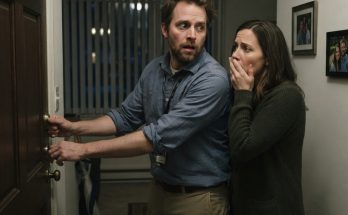
Tyler called for the seventh time while Leo was building a bridge for his toy train.
I knew it was the seventh because I had counted every vibration against the wooden sideboard.
The first three made me angry.
The next three made me tired.
The seventh frightened me, though I did not want to admit it.
Not because Tyler was angry with me.
Because the messages mentioned an injured person and water pouring through a house in freezing weather.
Elena watched my face from the kitchen table.
“You don't have to answer him,” she said.
“I know.”
“But is somebody in danger?”
“Possibly.”
I read the newest message aloud.
Mom, the garage is flooding. Nobody will come. Please just send somebody.
Elena put down her cup.
“Water and freezing temperatures can do serious damage. They need to shut off the supply. Is he capable of finding the valve?”
“I showed him where it was when he bought the house.”
“Then text him the instructions. Give him the utility emergency number. You can help without going over there.”
I wrote a message with three steps.
Turn off the main water shutoff. Keep everyone away from electrical outlets and standing water. Call the utility's emergency line and the fire department if there is immediate danger.
Then I added one more sentence.
If Chloe's mother is injured or dangerously cold, call 911 now.
I pressed send.
My phone rang immediately.
I let it ring.
Leo had stopped working on his train.
He watched me with a seriousness that didn't belong on a nine-year-old's face.
“Is that somebody who needs help?”
“Yes.”
“Are you going to help?”
“I sent him instructions to get professional help.”
Leo thought about that.
“Like when Mom called the tow truck and they said they couldn't come?”
Elena's shoulders stiffened.
“Sometimes helping means making sure the right people know,” I told him. “And sometimes it means showing up. We have to figure out which one is safe.”
He nodded and returned to his bridge.
I went into the mudroom and called Ray.
Ray Whitcomb lived two doors down and had worked alongside me for eleven winters before his knees persuaded him to retire.
He answered on the first ring.
“Hazel, the roads are ugly.”
“I know. Have you heard anything about Tyler's street?”
“Power company says crews are working on it. A transformer went near the subdivision entrance. Their street's not the only one out.”
“Is emergency access open?”
“Main road, yes. Side roads, not reliably. The county has trucks out.”
I told him about the broken pipe.
“Your kid should have shut the water off before calling you,” Ray said.
“I've told him how.”
“Then tell him again.”
“I did.”
There was a pause.
“Hazel, I didn't call earlier to stir up trouble. I called because Chloe used your card again and because their porch was dangerous. I saw her mother fall. She stood up afterward, but I couldn't tell if she'd hurt herself.”
“Did you call anybody?”
“I asked if she wanted an ambulance. Chloe said no. I can't force them.”
That was Ray.
He gave facts without pretending they guaranteed an answer.
I returned to the living room.
Elena had found a deck of cards in my kitchen drawer and was teaching Leo a game my husband had once played with Tyler.
A new text appeared.
Fine. I turned the valve. The garage is wrecked. If you loved me you would bring the generator.
The relief I felt about the valve was real.
So was the sting of the next sentence.
For nearly three decades, Tyler had known exactly what to say when he wanted me to confuse love with obedience.
I typed, I love you. The generator powers my essential equipment and needs professional installation for house connection. I am not bringing it into unsafe conditions tonight.
Then I muted his conversation.
The wind rattled the front door.
Leo jumped.
I showed him the weather stripping and told him how to tell a loose door from something that required attention.
He relaxed enough to laugh at my ancient plow boots.
“They're enormous.”
“They've carried me through some winters bigger than this one.”
He slipped one foot into a boot.
His whole leg disappeared.
Elena laughed.
I put another log on the fire and checked the emergency alerts on my phone.
The paper grocery bag sat beside the sofa, still holding things I had bought for Tyler's family.
There were oranges, a tin of coffee, and a pair of warm gloves for Margaret.
I'd also bought a new kitchen towel because Chloe once mentioned she liked the blue pattern.
I had been looking forward to handing her that towel.
Such a small, ordinary hope.
I carried the bag to the kitchen and began taking things out.
Elena noticed the gloves.
“Those look nice.”
“They were supposed to be a present.”
“Were?”
“I don't know what they'll be now.”
I set them on the counter.
It would have been easy to give everything away out of spite and tell myself I'd won some moral contest.
But presents weren't weapons.
Margaret hadn't insulted me.
She was injured and cold.
I folded the gloves neatly and put them back in their bag.
I would decide what to do with them when I wasn't angry.
Elena rinsed the applesauce spoon Leo had used earlier.
“Thank you for not pushing me to talk about the van,” she said.
“You can tell me whatever you want.”
“My former husband wasn't always cruel. He could be kind when things were easy. But he took over our money, and when work got difficult, he made me responsible for keeping everything cheerful.”
She placed the spoon in the rack.
“I got tired of making promises I couldn't afford.”
“I know that feeling.”
“Leo thought the move would be exciting. I promised him a new apartment, new friends, and a job where I could be home more.”
She looked toward the living room.
“Then the room fell through, and the van died. He didn't complain. That was the part that scared me.”
“He asked whether he could sleep in his shoes,” I remembered.
“Yes. He's been afraid someone will tell us to leave suddenly.”
I thought about the words Chloe had spoken to me less than an hour before I'd found them.
Please don't come.
A grown woman could hear those words, find another door, and survive the humiliation.
For a child, uncertainty about where he'd sleep was something much larger.
“You can stay through the worst of the weather,” I said. “Then we'll make a plan that belongs to you.”
Elena nodded.
“Please tell me if having us here becomes too much.”
“I will. And you can tell me if something makes you uncomfortable.”
She looked relieved.
I had brought casseroles, fixed loose fittings, paid bills, and expected those actions to explain my affection.
I had not always asked what they wanted.
I had also never admitted how much some of those favors strained me.
The conversation didn't absolve anyone of what happened that afternoon.
But it showed me that even generosity needed words.
Afterward, Elena carried the clean dishes into the cupboard, and we joined Leo near the tree.
He was making a tunnel from an empty tissue box.
He asked whether trains could run through mountains.
I told him about the tunnels along the Cascades, cut through rock by people who had worked for years.
“Even in snow?” he asked.
“Especially where the snow made roads difficult.”
He considered the tunnel in his hands.
“That's a lot of work to get somewhere.”
“Yes,” I said. “Sometimes it is.”
Road closures had spread east of town.
The utility estimated no firm restoration time.
I called my crew supervisor, Marta Salcedo, to make sure every driver was accounted for.
Marta was forty-two and knew every contract, gate code, and troublesome incline on our winter route.
“We've got the medical clinic cleared,” she said. “The grocery loading area too. I'm sending Dev and Noah home after the hospital lot.”
“Good. No heroics.”
“Says the woman who spent Christmas morning on a roof in 2019.”
“That roof was a mistake.”
“It was. You're allowed to learn.”
I asked whether any of our contracted emergency sites were near Tyler's subdivision.
“No,” she said. “And before you ask, private residential calls are on hold until conditions improve.”
“I wasn't going to ask.”
She didn't believe me.
“Hazel, your son is not one of our emergency contracts.”
“I know.”
“Please remember it.”
After we hung up, I opened the small notebook I kept in my coat pocket.
It had begun as a place for route measurements and fuel purchases.
Over time, it also held reminders of Tyler's expenses.
Insurance installment.
Replacement refrigerator.
Summer landscaping without a bill.
A roof repair I had paid for after he promised to repay me.
I had written all of them down because I liked orderly records.
I had never added them together.
Now I sat at the dining table and counted the entries from the previous twelve months.
The figure was larger than I expected.
It made my chest ache in a different way.
Elena approached quietly.
“Bad number?”
“An embarrassing one.”
“You don't need to tell me.”
“I know. I think I need to tell myself.”
I closed the notebook.
There would be time for accounts after Christmas.
Tonight, there was a warm child upstairs who had spent the afternoon inside a dead van.
There was a tired woman who still wore a borrowed sweater because her own clothes hadn't dried.
And there was my son, who had told me not to come to his holiday celebration but expected me to risk a plow truck in a blizzard to preserve his comfort.
At eleven forty-eight, my voicemail notification appeared.
This one was from Chloe's mother, Margaret.
Her voice was thin.
“Hazel, I know what happened at Christmas. I'm sorry. We called the emergency number. They're sending somebody to check my ankle. Please don't drive out here. The road is terrible.”
I listened twice.
I called Margaret back.
She answered after several rings.
“I'm glad you stayed home,” she said before I could speak.
“Are you warm enough?”
“We've moved into the living room. Tyler found blankets. A neighbor brought over a battery lantern.”
“And the water?”
“Off. The garage is a mess.”
“Someone's coming for your ankle?”
“Yes. Chloe finally called.”
“Then I'm relieved.”
Margaret hesitated.
“I heard what Chloe said to you this afternoon. I didn't agree with it.”
I gripped the edge of the table.
“Then why didn't you say anything?”
“I was embarrassed. And I wanted to spend Christmas with my daughter.”
I understood that fear more than I wanted to.
“I wanted the same thing,” I said.
Neither of us spoke for a moment.
Then Margaret said she would call if a genuine emergency arose that professionals couldn't address.
I wished her a safe night.
At midnight, the household was quiet.
Elena and Leo had gone upstairs to the rooms I kept ready for visiting relatives who rarely visited anymore.
I sat in the dark beside the tree.
My late husband, Frank, had made a wooden ornament shaped like a little plow.
A scratch ran across its red painted blade.
Tyler had made that scratch when he was five.
I loved that boy still.
But he was thirty-four now.
And love could not mean erasing his responsibility every time he demanded it.
I silenced my phone for the night, leaving emergency contacts and public safety alerts enabled.
Outside, the plow truck sat beneath a fresh cover of snow.
For once, I did not start its engine because my son had called.
Click here to continue reading: PART 2: The Christmas Morning When I Learned Who Needed Shelter and Who Expected Service
The Calls That Came Through the Storm and the Choice I Made Before Midnight
Part 1 of 12