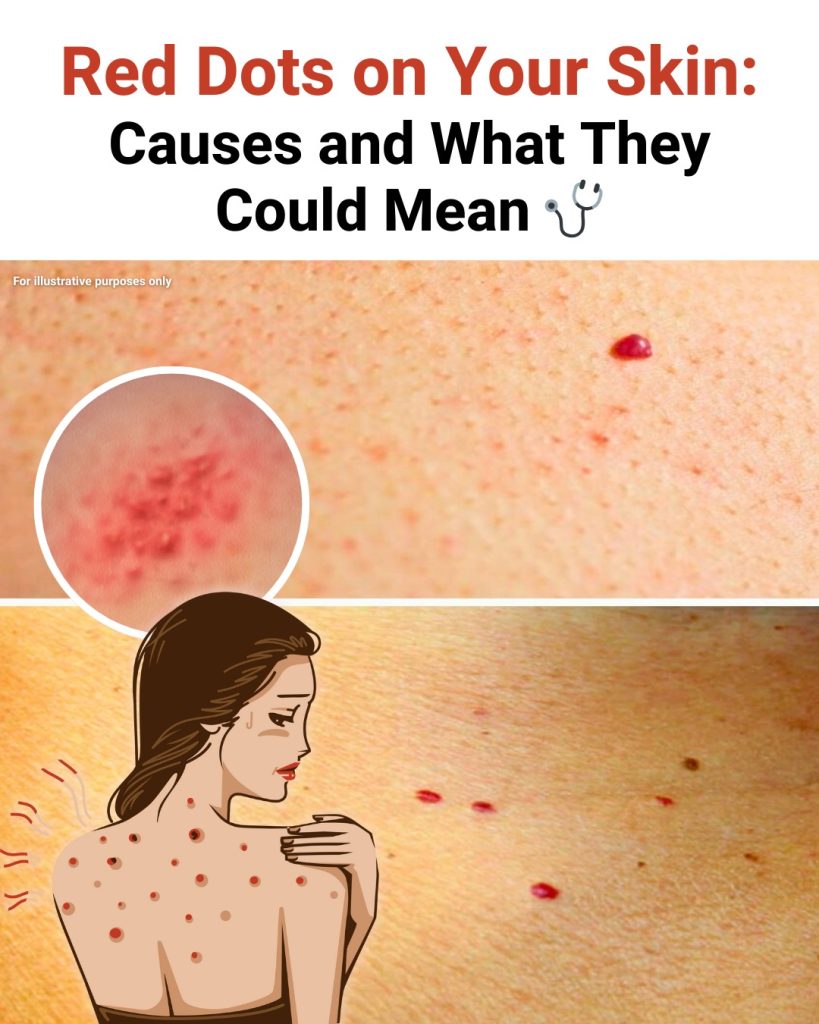
Red spots on the skin can appear suddenly or develop over time, and they range from harmless to signs of underlying health issues. Some fade on their own, while others require medical care.
Causes vary widely—from irritation, heat, infections, and allergies to autoimmune or blood-related conditions. Importantly, skin tone affects how spots appear:
- On lighter skin, spots may look bright red or pink
- On darker skin, they may appear purple, brown, or darkened rather than red
Below are 13 common causes of red spots, how to recognize them, and when to seek help.

1. Heat Rash (Miliaria)
Risk factors
- Hot or humid climates
- Excessive sweating
- Prolonged bed rest
Treatment
- Cool showers or baths
- Cold compresses
- Loose, breathable clothing
- Avoid thick or greasy moisturizers
Heat rash usually clears within a few days. See a provider if you notice pus, flaking, or worsening pain—these may signal infection.
2. Cherry Angiomas

Cherry angiomas are small, bright red or purple spots made of clustered blood vessels. They commonly appear on the torso and increase with age, especially after 30.
- Benign and non-cancerous
- May bleed if scratched
- Treatment is optional
Removal options include laser therapy or liquid nitrogen if desired for cosmetic reasons.
3. Contact Dermatitis

Contact dermatitis is a skin reaction caused by irritants or allergens, leading to redness, itching, swelling, and flaky skin.
Two types
- Irritant contact dermatitis – damage to the skin barrier
- Allergic contact dermatitis – immune reaction to an allergen
Treatment
- Identify and avoid the trigger
- Over-the-counter hydrocortisone cream
- Antihistamines for itching
Rashes typically resolve within a few weeks.
4. Ringworm (Tinea Corporis)

Despite the name, ringworm is a fungal infection, not a worm. It appears as a round, red, scaly patch with raised edges and often spreads outward.
Key facts
- Highly contagious
- Spread through skin contact, surfaces, or pets
- Common on arms and legs
Treatment
- Antifungal creams (OTC or prescription)
- Severe cases may need oral antifungals
5. Atopic Dermatitis (Eczema)

Eczema is a chronic inflammatory skin condition causing red, itchy, scaly patches—often in skin folds. It’s most common in young children but can persist into adulthood.
Management
- Regular moisturizing
- Topical steroids
- Antihistamines for itching
- Avoid hot showers and harsh products
6. Drug Rash
Some medications trigger allergic skin reactions ranging from mild rashes to severe blistering.
Symptoms
- Widespread redness or hives
- Swelling or pain
- Sometimes fever
Important: Severe reactions require immediate medical attention. Never stop a medication without consulting a healthcare provider.
7. Pityriasis Rosea

This benign rash, common in teens and young adults, often begins with a single large “herald patch,” followed by smaller scaly spots on the torso.
- Possibly linked to viral infections
- May include mild fever or sore throat
- Usually clears within 6–8 weeks
Treatment focuses on itch relief using antihistamines or topical steroids.
8. Purpura (Blood Spots)

Purpura appears as red or purple spots caused by bleeding under the skin from broken blood vessels.
Possible causes
- Minor trauma
- Blood-clotting disorders
- Low platelet counts
Widespread or unexplained purpura requires blood tests and medical evaluation.
9. Swimmer’s Itch (Cercarial Dermatitis)
- Appears within hours to a day
- Not contagious
Treatment includes topical steroids and antihistamines. Persistent cases may need antibiotics.
10. Psoriasis

Psoriasis is an immune-mediated condition causing thick, red plaques with silvery scales, often on elbows, knees, or scalp.
Triggers
-
Stress
-
Infections
-
Certain medications
Treatments range from topical creams to UV therapy and immune-modulating medications.
11. Lichen Planus
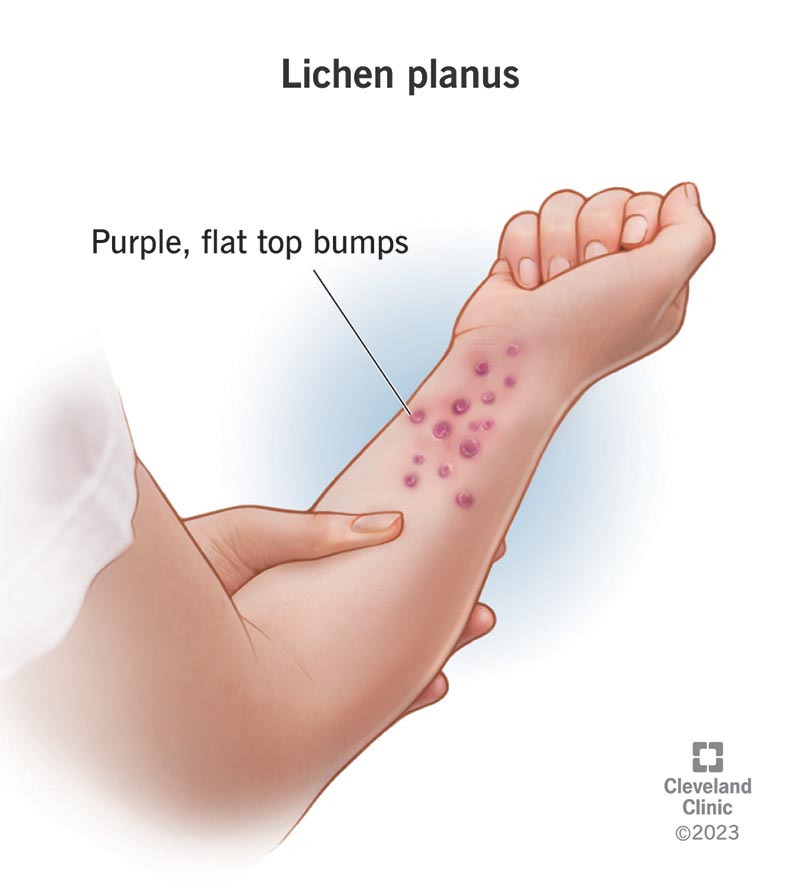
Lichen planus causes flat, purple, itchy bumps and may affect skin, mouth, nails, or genitals.
- Not contagious
- May resolve on its own but can recur
Treatment includes topical steroids or antihistamines for symptom control.
12. Petechiae
Possible causes
- Infections
- Trauma
- Blood disorders
 Urgent care needed if petechiae appear with fever or illness.
13. Pimples (Acne Vulgaris)

Acne causes red or inflamed spots from clogged pores filled with oil, dead skin cells, and bacteria.
Treatment options
- Over-the-counter products for mild acne
- Prescription topical or oral medications
- Dermatology procedures for severe cases
When to See a Doctor Immediately
Seek prompt medical care if red spots are accompanied by:
- Fever or fatigue
- Difficulty breathing
- Rapid spreading rash
- Severe pain or swelling
- Pus, bleeding, or unexplained bruising
Final Thoughts
Red spots can have many causes—some harmless, others serious. A healthcare provider can evaluate your skin, medical history, and symptoms to determine the cause and proper treatment.
Source: viralstrange.com