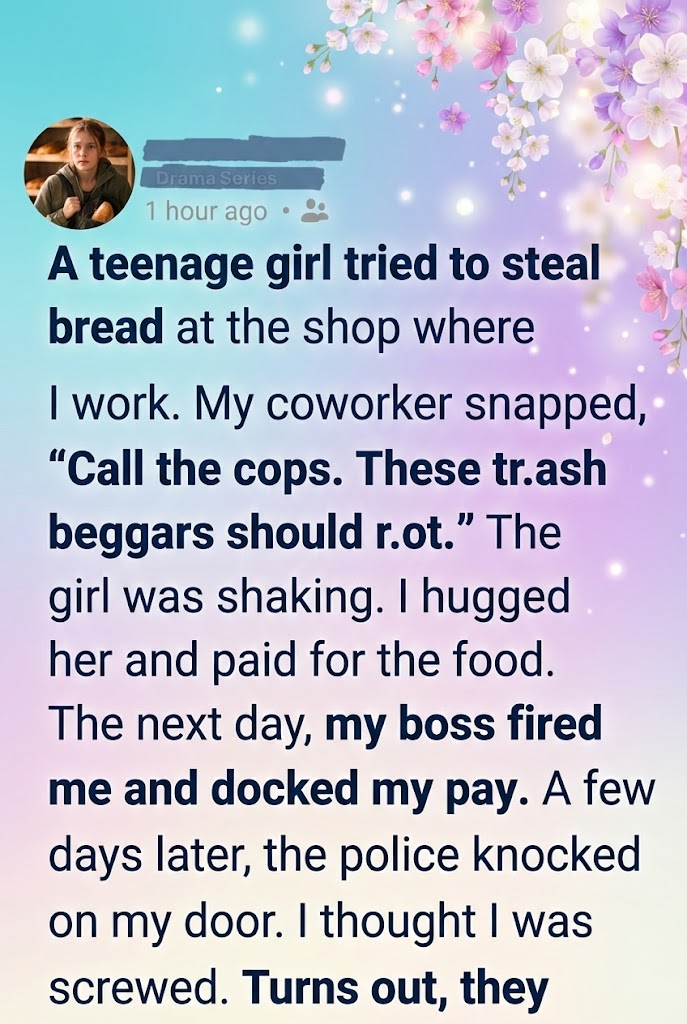
It was late afternoon, that slow hour when the shop feels heavy and quiet, when the air smells like bread and dust and tired feet. I was behind the counter, counting change, when I noticed her hovering near the shelves. A teenage girl. Maybe sixteen. Thin jacket. Hair pulled back too tightly, like she didn’t want it to be noticed.
She kept glancing toward the door.
I watched as she reached for a loaf of bread, hesitated, then slipped it into her bag with movements so careful it hurt to watch. Her eyes darted around, panic already settling in, like she was bracing for something terrible.

My coworker noticed before I could even say a word.
“Hey!” he barked, loud enough to freeze the room. “Call the cops. These trash beggars should rot.”
The girl froze completely.
Her face went pale, lips trembling, eyes wide with fear. She looked like a trapped animal. I could almost hear her heart pounding from across the counter.
Something in me snapped—but not with anger. With clarity.
I walked around the counter before anyone could stop me. I gently took the bread from her bag, placed it back on the counter, and wrapped my arms around her. She stiffened at first, then collapsed against me, sobbing so hard her knees nearly gave out.
“I’ll pay,” I said, loud enough for everyone to hear. “All of it.”
I paid for the bread. I paid for milk, fruit, and a small pack of noodles. I slipped the bag into her hands and whispered, “You’re okay. Go.”
She nodded over and over, tears streaking down her face as she rushed out the door.
I thought that would be the end of it.
I was wrong.
The next morning, my boss called me into his office. He didn’t look at me when he spoke.
“You embarrassed the store,” he said flatly. “You broke protocol.”
I tried to explain. I didn’t even get halfway through my sentence.
“You’re fired,” he said. “And the cost of what you paid for comes out of your final paycheck.”
I walked home in a daze, shame and anger twisting in my chest. I replayed the moment again and again. Had I ruined everything over one impulse?

A few days later, there was a knock on my door.
Police.
My stomach dropped straight through the floor.
I thought, This is it. I tried to help someone and now I’m screwed.
But they weren’t there for me.
They were there for my boss.
After he fired me, something unexpected happened. My coworkers—people I barely spoke to, people I thought didn’t even know my name—filed reports. Multiple ones. Labor violations. Wage theft. Intimidation. Some of them had been quietly collecting evidence for months.
It was enough.
Enough to open an investigation. Enough to get him in serious trouble.
When I found out, I sat on my kitchen floor and cried like an idiot.
But it didn’t stop there.
They tracked down the girl.
Someone remembered seeing her leave with a distinctive backpack. Someone else recognized her from the neighborhood. Within days, they organized a small charity drive—food, clothes, school supplies—for her family.
No cameras. No posts. No praise.
Just people quietly doing the right thing.

We have a new boss now.
I’m back at the shop.
And I’ve never worked with a kinder group of people in my life.
Even the coworker who shouted that day has changed. He barely meets my eyes now. He speaks softly, double-checks himself. Afraid, maybe, of losing his job—or maybe afraid of seeing himself the way he did that afternoon.
I don’t know.
What I do know is this:
One decent thing can quietly start a whole chain of better ones.
And sometimes, when you think you’re standing alone, you’re not.