My sister raised me after our mom passed away. She was twenty, barely more than a kid herself, and I was thirteen—angry, scared, and convinced the world had already taken everything from me.
I remember the day Mom died more clearly than any exam I ever took. The hospital smelled like antiseptic and cold floors. When the doctor spoke, I heard the words but didn’t understand them. It was my sister, Emma, who held my shoulders and said, “I’ve got you. I promise.”
She meant it.

Emma dropped out of college the next semester. She told everyone it was temporary, that she’d go back once things settled. Things never settled. She worked two jobs—sometimes three—waiting tables in the morning, stocking shelves at night, sewing on weekends. She learned how to stretch soup for a week and how to smile when the power was cut off again.
I, meanwhile, buried myself in school. Studying became my escape. Every good grade felt like proof that our sacrifices weren’t wasted. Teachers praised me. Counselors said I had a future. And somewhere along the way, I started believing that future was mine alone.
Emma never complained. She’d sit at the kitchen table late at night, rubbing her wrists, helping me quiz anatomy terms while half-asleep. When I got accepted to college, she cried like she’d won the lottery.
“You’re going to be someone,” she said. “That’s all I ever wanted.”
I didn’t understand what that cost her.
Years later, I stood on a graduation stage in a pressed gown, my name echoing through the auditorium. I’d made it. Medical school acceptance letters. Applause. Pride buzzing in my chest like electricity.
Emma came, sitting in the back row. She looked older than I remembered. Thinner. Tired. But she smiled the same way she always had—like seeing me succeed made everything else disappear.
At the celebration dinner, surrounded by classmates and their accomplished families, something ugly rose up in me. I don’t know why. Maybe insecurity. Maybe resentment I’d never dealt with.
I lifted my glass and laughed, too loudly.
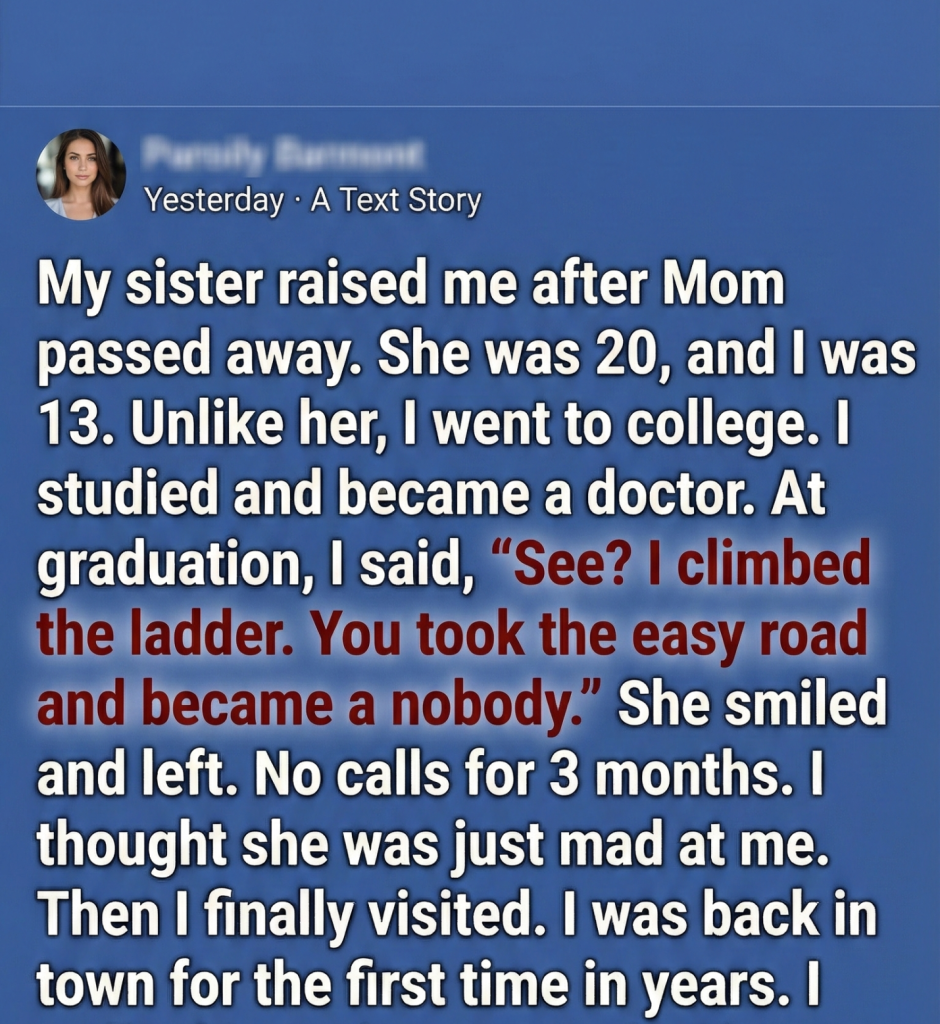
“See?” I said. “I climbed the ladder. I worked hard. You took the easy road and became… well, nobody.”
The table went quiet.

Emma didn’t argue. She didn’t cry. She just smiled—a small, careful smile—and stood up.
“I’m proud of you,” she said softly. Then she left.
She didn’t answer my calls after that. Three months passed. I told myself she was just hurt. That she’d come around. People always do.
Then work brought me back to our hometown for the first time in years.
On impulse, I decided to visit her. No warning. No call. I even rehearsed an apology on the drive over—something polished, something that would make things right without forcing me to sit in the discomfort too long.
The address she’d given me years ago no longer existed.
After some asking around, I found her building on the edge of town. It used to be a motel. Now it was long-term rentals—peeling paint, flickering lights, the kind of place you don’t notice unless you’re looking for it.
I knocked.
No answer.
The door was unlocked.
I walked in and went numb.
The room was small and bare. A single mattress on the floor. A folding chair. An oxygen machine humming softly in the corner. Medical bills stacked neatly on a crate that doubled as a table.
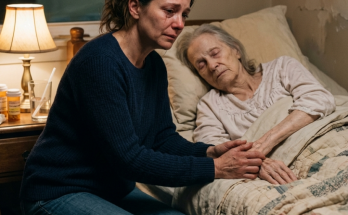
And on the bed—so thin I barely recognized her—was my sister.
She was pale. Her hair was gone. Tubes traced her arms like fragile lines on a map. Her eyes opened slowly when she heard me gasp.
“Oh,” she whispered. “You came.”
I dropped my bag. Every word I’d practiced vanished.
“What… what happened?” I managed.

She smiled, the same old smile. “Cancer. Stage four. They found it late.”
“How long?” I asked, already knowing I didn’t want the answer.
“Long enough,” she said gently.
I fell to my knees. A doctor who could explain diseases to strangers, suddenly unable to breathe in front of his own sister.
“I’m sorry,” I choked. “I didn’t know. I didn’t mean—”
“I know,” she said. “You were always in a hurry to become someone.”
Tears blurred my vision.
“I should’ve taken care of you,” I said. “Like you did for me.”
She reached for my hand, her grip weak but steady.
“You did,” she said. “You became who you were meant to be. That was my dream too.”
She passed away two weeks later.
At her small funeral, I learned the truth: she’d turned down help, scholarships, even treatment options—so I could finish school without debt. Every “easy road” I accused her of taking had been paved with sacrifice.
I still wear my white coat.
But every time I do, I remember who lifted me high enough to reach it.