Not necessarily word for word. More like the emotional architecture of it had been built elsewhere. The phrasing had my mother’s fingerprints all over it. The framing the tragedy, the vagueness, the refusal to use words like lie or deception, the subtle transfer of responsibility onto my feelings was so familiar it made my skin prickle.
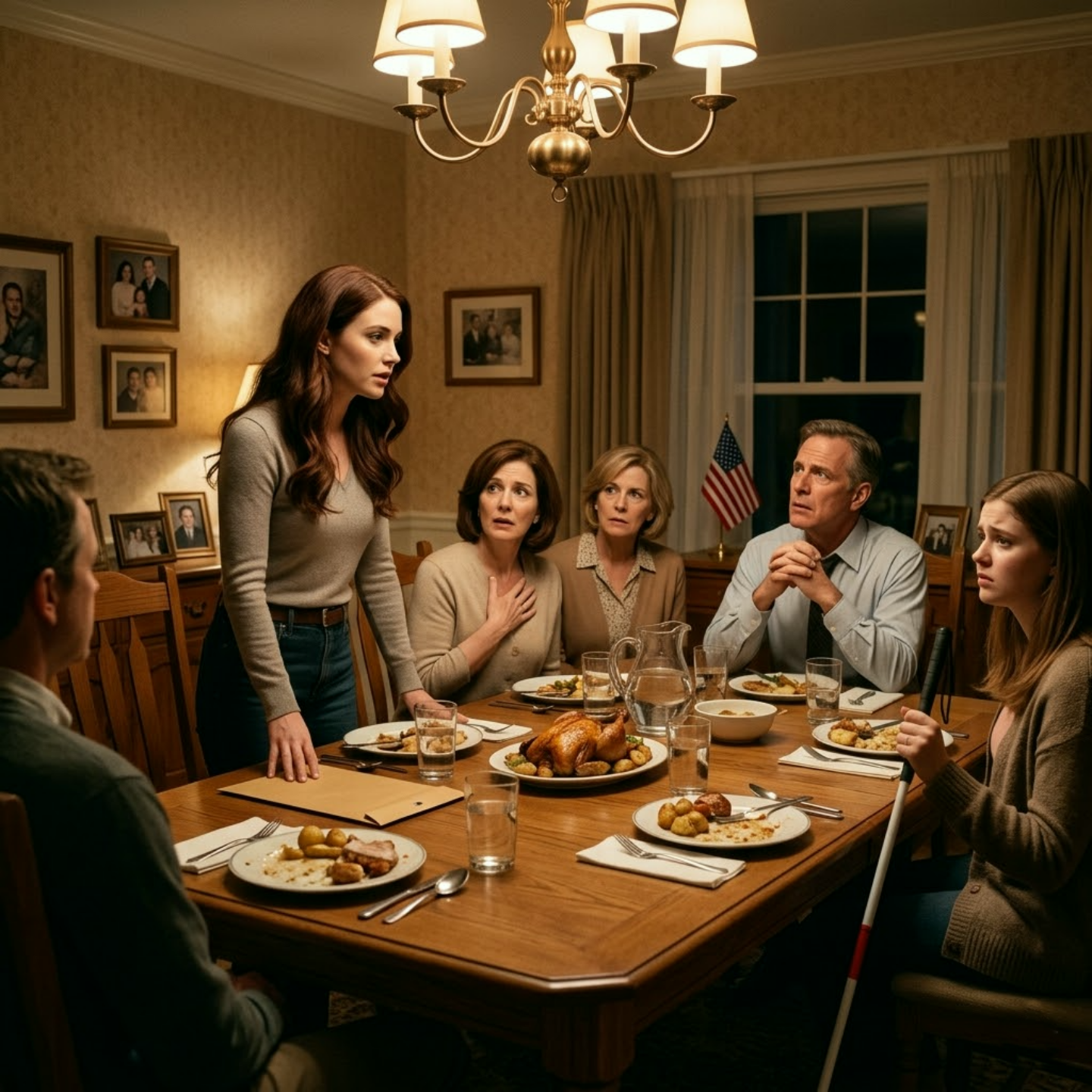
I waited a day and brought it to therapy. Dr. Medina told me if I wanted clarity, I needed to ask a direct question and refuse to let the conversation sprawl around it. So I did.
I texted Haley back: Did you know the cornea surgery wasn’t real when we had that meeting at Mom and Dad’s house?
The message showed as delivered. Then read.
No answer came that day. Or the next.
When she finally replied, it was paragraphs long and somehow entirely empty at the center. She wrote about how blind people depend on others for medical information. How frightened she had been. How hopeless it felt to lose work and movement and certainty all at once. How she had trusted what our parents told her because she wanted to believe there was hope. She said if anyone had bent the truth, it was because they loved her and were desperate.
I read the message three times.
She never answered the question.
Not yes. Not no. Not I suspected. Not I didn’t want to know. Just layer after layer of context designed to make the question itself feel unkind.
When Travis came by later that week, I showed him the exchange. He looked at it and said, “A non-answer is still an answer.”
I knew he was right.
The thing that followed was not rage, exactly. It was colder than rage. A kind of sad clarity.
That cold clarity pushed me into research I should never have needed to do. Travis came over one evening with takeout and we spent hours looking up Haley’s condition on medical sites, patient forums, advocacy pages, and university hospital resources. We wanted to know what was true, not what my parents had filtered through panic and performance. The more we read, the more obvious it became that living cornea donation was not some obscure workaround my family had heroically uncovered. It simply was not the treatment. Not for Haley. Not for the kind of deterioration she had.
On an anonymous patient forum, I posted a carefully vague question asking whether anyone had ever heard of living cornea donation being used this way. The responses started showing up within hours. Several people with the same condition said no, absolutely not. One person said their family had nearly fallen for a scam clinic promising miracle treatment. Another wrote about a father who tried to pressure a sibling into donation before the doctor explained that it was medically impossible. Reading those replies felt awful in a strangely stabilizing way. I wasn’t uniquely cursed. I wasn’t crazy. This was a pattern bigger than my own house, which somehow made the walls of my childhood feel both less personal and more tragic.
I took screenshots and printouts to Dr. Medina. She spread them over her coffee table and read them carefully, then told me something I had not quite let myself believe yet: Haley could be both a victim of our parents’ manipulation and someone who had chosen to participate in it. Compassion for her suffering did not require me to erase my own. Sympathy did not obligate intimacy. Those ideas sound simple when written in neat sentences. Inside a body trained for years to equate obedience with goodness, they felt revolutionary.
That same week I went to a support group for adults dealing with family estrangement. It met in the basement of a church on the other side of town, in a room that smelled faintly like old coffee, wet coats, and industrial cleaner. Folding chairs. Styrofoam cups. Fluorescent lights trying their best. I almost turned around in the parking lot because walking in felt like admitting something final. Not that my family had made a mistake. That my family was broken in a way love alone could not repair.
When it was my turn to introduce myself, my voice shook. I said my name and that I had recently cut contact with my parents after they lied about a medical emergency to manipulate me. The woman sitting next to me reached over and squeezed my hand before she even knew the details. Later, she told a story about being pressured to donate a kidney to her brother under claims of urgent need, only to find out from his actual doctor that he was on a normal waiting list and in no immediate danger. The parallels were so exact that I cried through half her story and the next two after it. By the time I got back to my car, I was wrung out but less alone than I had been in months.
A few days later, a certified letter arrived.
My parents had hired a lawyer or at least somebody willing to print threatening language on legal stationery and were threatening to sue me for defamation and emotional distress because I had shared Dr. Kavanaugh’s statement with relatives. The letter was designed to intimidate. Dense wording. References to damages. Phrases meant to make an ordinary person feel one step away from catastrophe. I called Mariana immediately and read it to her from my kitchen floor because my legs had gone weak halfway through.
She listened and then said, “This has no merit.”
Truth, she reminded me, is a complete defense to defamation. I had documentation proving what I said was accurate. She told me to make copies, add it to the file, and treat it as more evidence of continued harassment.
The next week, my cousin Sarah called. Her voice had that careful tone people use when they know what they’re about to say is both necessary and ugly. She told me my parents were now telling relatives I had suffered some kind of mental breakdown and was making accusations because I wasn’t stable. Worse, they were pointing to the fact that I was in therapy as proof that I was “not well.”
That was the moment I got truly angry.
Not the bright flash kind. The deep, clean kind that steadies you instead of scattering you. They had lied about my body. Lied about medicine. Lied to my extended family. Now they were weaponizing the very steps I was taking to recover from what they had done. I sat on my bathroom floor after I hung up with Sarah, staring at the grout between the tiles, and felt something inside me harden into a boundary I could finally trust.
Work became my refuge in a way that was not entirely healthy but was at least functional. I threw myself into projects, stayed late, volunteered for extra assignments, kept my head down and my inbox clean because work had rules and outcomes and none of them depended on whether someone in the room wanted to rewrite reality. Aiden noticed the shift, of course. He started dragging me out for lunch, dropping coffee on my desk, making me walk the block with him so I would remember to exist inside a body instead of only inside a crisis. I never forgot those small kindnesses. They were so different from my family’s version of care. No pressure. No ledger. No hidden hook under the gift.
Three months after the original confrontation, Haley called from a number I didn’t know.
I almost let it go to voicemail. Something made me answer.
She was crying so hard I could barely understand her at first. She said the house was unbearable now. Dad was angry all the time. Mom was depressed and barely getting out of bed. The silence between everyone felt suffocating. She said she couldn’t stand being in the middle of it anymore, that she needed me to come back and fix things because she didn’t know how much more she could take.
For a second, hearing her cry like that, I felt the old reflex rise up in me. The one that had been trained since childhood. Move toward pain. Absorb it. Solve it. Do not ask who built the room it is happening in.
Then another thought cut through: none of this had happened because I refused to lie. It had happened because they lied in the first place.
I told her that gently. I said this wasn’t my fault. I hadn’t created the situation by discovering the truth. They had created it by manufacturing the lie.
Her voice changed instantly. The tears sharpened into anger.
She called me selfish. Self-righteous. She said she was suffering because of my stubbornness. She said the whole house had become a nightmare and I could stop it if I would just let things go back to normal.
Normal.
That word hit me like ice water. Because what she wanted wasn’t peace. She wanted the old arrangement restored. The one where I bent and they called it love. The one where Haley’s pain excused everyone else’s dishonesty. The one where I functioned as a spare part in the family machine.
I told her I had to go, and I hung up.
At my next session, Dr. Medina talked about generational family systems and how dysfunction replicates itself until somebody refuses the inheritance. She said families like mine often need a scapegoat once one member starts insisting on honesty. Someone has to absorb the discomfort of change. The person who breaks the pattern becomes the problem because the pattern itself can no longer remain invisible. Hearing that didn’t make it hurt less. It just made the loneliness of it feel less random.
Three days after that session, I found the GoFundMe.
I was eating lunch in my car, scrolling absentmindedly through social media, when I saw a post shared by one of my mother’s friends. It was a fundraiser for Haley’s medical expenses. The campaign description made my stomach drop. It talked about Haley’s blindness. A promising treatment. Family circumstances that had made it impossible to move forward. The language was slippery enough to avoid direct accusation, but the implication was unmistakable: some heartless family member had failed her, and generous strangers were needed to help cover the cost of that loss.
They had raised nearly three thousand dollars in less than a week.
I sat there gripping my phone, reading comments from church friends and old neighbors and distant relatives offering prayers and money based on a lie my parents already knew had been disproven. It crossed some line in me that even everything before it had not. Manipulating me was one thing. Defrauding strangers with the same story was another.
I took screenshots of everything and sent them to Mariana and Dr. Medina. Mariana called within the hour. She said what they were doing looked like actual fraud. It violated the platform’s terms at minimum and could potentially have legal implications depending on intent and documentation. She said I could report it, and with Dr. Kavanaugh’s statement I had real evidence. She also warned me that if I did, my parents would know exactly who had taken action.
I remember standing in my kitchen after that call, hand flat against the counter, staring out the window at the parking lot below. I knew reporting it would detonate whatever remained. I also knew I could not live with myself if I let them take money from people under false pretenses because I was afraid of being called cruel again.
So I reported it.
Mariana helped me file everything properly. We included the doctor’s statement, a timeline, screenshots, and a formal note from the legal aid clinic summarizing the situation. Then I waited.
For six days, nothing happened.
Then the campaign vanished.
No warning to me, no dramatic message, just gone. A removal notice for violating community guidelines. Later, Mariana confirmed that the donations had been refunded and their account had been flagged. My father’s response came in a flood of emails because his number was still blocked. He said I had humiliated the family, destroyed their reputation, made everyone think they were scammers. My mother sent shorter messages saying I had taken things too far and was tearing everyone apart over pride.
The following Tuesday, our receptionist called my desk phone and said someone was in the lobby asking for me.
I assumed it was a delivery issue or maybe a friend in the neighborhood.
It was my mother.
She stood near the entrance in a coat too light for the weather, looking older than she had just weeks before. She didn’t try to hug me. She just stepped forward, handed me a thick envelope with my name on it in her familiar looping handwriting, and left without a word. I took it upstairs and shoved it into my bag because there was no universe in which I was opening that at work under fluorescent lights with people discussing printer toner ten feet away.
That night, I sat on my couch and read all six pages.
It was the closest thing to honesty I had received from anyone in my family. My mother admitted my father had gone too far. She said he had become obsessed with helping Haley and convinced himself the ends justified the means. She admitted she had gone along with it because disagreeing with him openly made life unbearable. She said keeping peace in the marriage had become its own survival skill. She talked about fear. About Haley’s suffering. About helplessness. About love. She said they had believed the fake surgery would motivate me to help. She said she missed me. She said she understood if I needed time. She said she loved me.
What she never said was, I knew it was a lie and I did it anyway. What she never said was, I am sorry for what I chose at your expense. What she never said was, I will do something different from here forward.
I cried after reading it, but not because it changed anything. I cried because it came so close to the thing I needed and still stopped just short of responsibility, as if accountability were the one country my mother could not bring herself to enter.
Dr. Medina read the letter at our next session and said exactly what I had known but didn’t want to admit: explanation is not apology. Understanding someone’s motive does not obligate reconciliation. My mother had described why she did what she did. She had not taken ownership of the harm. She had asked for compassion without offering repair.
That distinction saved me more than once over the months that followed.
About four months after the confrontation, I started noticing I could breathe again. Not all at once. Just in small ways. I slept through the night more often than not. I stopped checking my phone every ten minutes. The static in my head quieted enough for normal life to return around the edges. I made plans with friends. I laughed and was surprised by it. I could go through most of a workday without mentally replaying my parents’ voices.
The grief still came, but it no longer drowned everything else.
Then Haley texted me one Wednesday afternoon to say she had finally gotten corneas through the transplant list. Her surgery was scheduled for early the next month. The message ended with a little knife slipped inside the information: even though I didn’t care about her anymore, she wanted me to know.
I sat with that for a minute.
Then I wrote back that I was genuinely happy her surgery had been scheduled and that I wished her a smooth procedure and full recovery. And I meant it. Whatever had happened between us, I did not want her to remain blind. She read the message immediately and did not answer. That silence was cleaner than the other ones. Less loaded. Almost respectful in its distance.
That weekend, Travis and I had coffee and I heard myself say something I had not believed possible months earlier: I thought I was ready to move forward instead of just survive. He asked what that looked like, and I told him I wanted to do something useful with what had happened. Maybe volunteer. Maybe support other people dealing with family coercion. Maybe help someone recognize the trap while they were still standing in it.
He smiled and said, “That sounds like living.”
Through Mariana, I got connected with a family rights organization that needed helpline volunteers. The training was four sessions long and covered coercion tactics, manipulation patterns, available resources, and boundary support. In a bland conference room with stale coffee and stackable chairs, I listened to case studies that sounded like someone had been reading from my diary. Families using medical emergencies to force compliance. Financial pressure disguised as duty. Guilt weaponized so thoroughly it became the language of home.
During the role-play exercises, I broke down.
I played the caller first: the sibling being told she had to donate, the daughter being called selfish, the child whose own wellbeing nobody bothered to ask about. The volunteer playing the counselor said the words I had needed a year earlier that my body was mine, that coercion wasn’t love, that boundaries didn’t make me cruel and I started crying so hard the facilitator had to pause the exercise.
It embarrassed me then.
Later, it made me trust the work.
My first shift on the helpline came two weeks after training ended. The first call was about eldercare and practical resources. The second was from a young woman whose family wanted her to drop out of college to care full-time for her grandmother. Her parents were telling her she was selfish for wanting her own future. She kept saying maybe they were right. Maybe she was selfish. As she spoke, I could hear the shape of my own old thoughts inside hers.
I told her what I wish someone had told me sooner. That wanting her own life did not mean she loved her grandmother less. That guilt was a favorite tool in manipulative families because it made control feel moral. That support didn’t have to mean self-erasure. By the end of the call she was crying and thanking me. After we hung up, I cried too.
Not because it reopened the wound. Because for the first time, something good had come through it.
Around then, Dr. Medina and I started talking more explicitly about what healthy relationships actually looked like. She gave me a worksheet once, which sounds silly until you realize some people grow up without a reliable internal map. Respect for boundaries. No punishment for saying no. Care that does not demand self-betrayal as proof. Support for growth even when it inconveniences someone else. I looked at that list and felt grief and relief in almost equal measure. Grief for the fact that none of it sounded like home. Relief that I could still learn it.
Maybe that was why I downloaded a dating app.
Part of me was lonely. Part of me wanted proof I could interact with new people without family chaos eventually swallowing the room. I went on a few mediocre dates, then met a guy named Mark who was easy to talk to and didn’t ask invasive questions. On our second date at a Thai place downtown, he asked about my family in that casual way people do. I gave him the line I had practiced in therapy: we aren’t close and I don’t see them much. He nodded, said, “That happens,” and moved on to asking what hiking trails I liked.
I nearly laughed from sheer surprise.
No pushing. No curiosity disguised as concern. No insistence that I explain the unexplainable. It felt so unfamiliar that I had to sit with it afterward and recognize it for what it was: respect.
Five months after the original confrontation, my cousin Sarah texted and asked if we could meet for coffee. She said my parents’ version of events had never fully made sense to her and the more she thought about it, the more uneasy she felt. We met halfway between our apartments on a rainy Saturday at one of those local places with mismatched mugs and too many plants. She was already there when I arrived, two lattes waiting.
She apologized before I had even taken off my coat.
I told her everything from the beginning. This time I didn’t summarize. I showed her the doctor’s statement, the timeline, the emails, the pattern. She listened without interrupting, and as she listened, her face changed from confusion to anger to something like shame. Then she started telling me stories I had never heard. Times my parents had pressured her to cover for them when they forgot promises or twisted events. Moments in family conflicts where neutrality was not allowed and disagreement meant being iced out. She said watching me set boundaries had forced her to revisit years of things she had explained away because that was easier than seeing them clearly.
Then she told me Haley’s surgery had happened two weeks earlier and had gone well.
A real surgery. A real transplant. Through the actual donor list. Exactly the outcome Dr. Kavanaugh had predicted from the beginning.
I felt a strange, aching relief. I was genuinely glad she could see again. At the same time, Sarah added that my parents were telling people the surgery had happened thanks to the funds from the GoFundMe, even though the campaign had been removed and the money refunded. They still needed the narrative to place them on the heroic side of history. They could not admit that the ordinary medical process had worked exactly as the doctor said it would.
At my next therapy appointment, Dr. Medina suggested I write my parents a letter I would never send. Not to change them. To drain the poison. That night, I sat at my kitchen table with a laptop and wrote until my back hurt and my eyes burned. Ten single-spaced pages. I wrote about the childhood I had wanted and the one I got. About what it had done to grow up as the healthy child whose wants were endlessly negotiable. About the scholarship, the college fund, Spain, the years of training that taught me I was only good when I was useful. I wrote about the cornea scheme not as a shocking anomaly but as the final and undeniable proof of a lifelong pattern.
I cried through half of it.
The following weekend, I took the printed pages to Travis’s apartment. He had a fire going in the fireplace and a six-pack on the table. He asked if I wanted to read any of it out loud. I shook my head. Then, page by page, I fed the whole letter into the flames. The paper curled, blackened, vanished. It felt theatrical and necessary and a little ridiculous and completely real all at once. Not closure, exactly. More like releasing the fantasy that they would ever be the people I kept exhausting myself hoping they might become.
The Tuesday after that, my manager called me into a meeting.
I walked in thinking it was about the Henderson project I had been leading. Instead, she offered me a promotion to senior coordinator with more responsibility and a substantial raise. She said my work had been outstanding, my leadership steady, and the company wanted to invest in my future. I sat there in that glass conference room, looking at her mouth move while part of me lagged behind in disbelief. Six months earlier I had been crying in bathroom stalls and shaking through legal calls. Now I was being told I was thriving.
That night, I took myself out to celebrate. Pasta, wine, tiramisu, a little Italian place with warm yellow light and too much framed art on the walls. I sat alone by the window and felt proud in a way that had nothing to do with survival and everything to do with becoming.