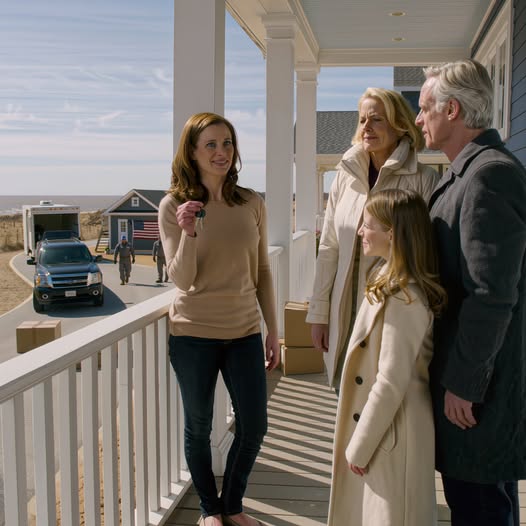
They remembered me this year. After fifteen years of silence, forgotten invitations, and photos posted online without my name, my parents suddenly wanted a family Christmas.
Except it was not at their home. It was mine.
I had learned long ago that waiting for their call only meant disappointment, but when Mom’s number flashed across my screen two weeks ago, I picked it up anyway. Her voice was too bright.
“Sweetheart, wouldn’t it be lovely if we all spent Christmas together at your beach house? It’s been too long.”
Too long. I could have told her exactly how long.
Fifteen years.
Fifteen Christmas mornings were spent pretending the quiet did not sting, pretending work or weather kept me busy, when in truth, I was just not invited. Every December I watched their family photos go up: matching pajamas, fake smiles, the caption reading “All together again.”
I was always the one missing.
I told her yes, though. I said it as easily as I used to say “sorry” for things I did not do.
For those of you listening, I wonder, have you ever agreed to something you already knew would hurt, just to see if anyone noticed? Let me know in the comments. For me, that’s where I was when I said yes.
The morning they arrived, I was already awake. The ocean was flat and gray, the kind of stillness that comes before a storm. I stood by the window with my coffee, watching their black SUV pull into the driveway.
The house sat on a quiet stretch of beach near Seabrook, my first home that felt like mine. Every inch of it had been paid for in long workdays and short nights, selling houses no one believed I could sell, saving every dollar until I bought this one. It was not just a house. It was a boundary with walls.
Mom stepped out first, dressed in white, her perfume heavy even from a distance. Dad followed, checking his reflection in the car window before he lifted the trunk. And then Lana. My sister. My parents’ pride. She had a camera crew trailing her, all teeth and laughter. She waved like she was arriving at a movie set.
“Faith, this place is gorgeous. You didn’t tell us it looked like this.”
I smiled.
“You never asked.”
They moved fast once they were inside. Lights, tripods, boxes labeled “Christmas Setup.” Mom started arranging decorations before taking her coat off.
“This space will be perfect for Lana’s holiday special,” she said. “The light, the colors. It’s so warm, so family-like.”
Dad walked around like a property scout.
“You know, sweetheart, this could help both of you. The exposure would be incredible.”
Exposure. That was his favorite word when he didn’t want to pay for something.
I leaned against the counter, letting them fill my home with noise. Fifteen years of being forgotten and suddenly they remembered me because the lighting was good.
Mom turned to me, soft voice rehearsed.
“I hope it’s alright we brought some things from storage. Lana’s team wanted to make the place more festive.”
“You mean more staged,” I said.
She blinked, smiled.
“You always had an eye for design. Maybe after Christmas we can talk about using this house for future shoots. It would be great exposure.”
“You forgot to invite me for fifteen Christmases,” I said quietly. “You can’t decorate your way into forgiveness.”
She froze for a second, then found her tone again.
“Oh honey, we didn’t forget. We just assumed you were busy. You always seemed so independent.”
Independent. Their word for unnecessary.
Lana walked over, camera in hand, hair perfect.
“Can we film something quick, just a little intro? You standing by the tree, me hugging you, Mom laughing. It’ll be so cute.”
“You’re filming in my house, Lana.”
She laughed.
“That’s what family does. We share.”
“You’re sharing my house. I’m not sure that’s the same thing.”
Dad’s voice came from behind me.
“Don’t be dramatic. We all benefit from this. You can’t put a price on family.”
I looked at him.
“You’ve been doing it for years.”
He turned away, already on the phone bragging to someone about our “beach house Christmas reunion.”
By noon, the crew left for lunch, leaving behind wires and half-wrapped presents. The living room looked like a studio. A tree stood in the corner, dressed in white and gold ornaments that were not mine. The stockings on the mantle read “Mom,” “Dad,” “Lana,” and “Faith.”
I almost laughed. After all these years, they finally remembered to include me—by name only.
I stepped outside. The air was colder now, the ocean rougher. Every wave hit the shore with a kind of rhythm that sounded like counting. Fifteen. Fifteen years of silence. Fifteen times I waited for a call that never came.
The first time, I drove to their house uninvited, gifts in hand. Cars filled the driveway, laughter poured out from the windows. When Mom opened the door, she blinked, surprised.
“Oh honey, I thought you were spending Christmas with friends.”
Another year, I saw their family photo online. Matching red pajamas. The caption said “All together again.” I was twenty miles away. That was the year I stopped calling.
And now here they were. In the house I bought, the one place they had never touched. Standing there like they owned it, like I should be grateful they finally remembered my name.
The sky was turning darker, a thin line of orange over the water. Inside, I could hear Lana’s voice rehearsing her lines. Mom humming. Dad giving orders. All of them practicing family.
I stayed outside until the stars came out. The cold air burned my skin, but it felt better than their kind of warmth. For fifteen years, they forgot to invite me. This year, they remembered. But not because they missed me. They remembered because they needed a place that looked good on camera.
I closed my eyes and listened to the waves. For once, I didn’t feel left out. I felt ready. Ready to see what would happen when they realized the forgotten one had finally remembered herself.
The first year they forgot me was the hardest.
I was twenty-three, still believing that family meant something unshakable, that forgetting was just an accident. That Christmas Eve, I dressed up, baked a pie, and drove an hour to my parents’ house in Savannah without calling ahead. The driveway was full of cars. Through the window, I could see the tree glittering and hear laughter: my dad’s booming voice, my mom’s familiar giggle, Lana’s perfect high tone.
When I knocked, Mom opened the door with surprise that felt too practiced.
“Oh, sweetheart, we thought you were spending the holidays with friends.”
Her smile was wide enough for the neighbors to see. I stood there holding the pie, feeling like I had walked into the wrong house.
She took it from me and said they were just about to open gifts but maybe we could talk after New Year’s.
I remember driving home that night with the radio off. The pie smell filled the car like a reminder. I told myself it was fine, that they were busy, that it would be different next year.
It wasn’t.
Every year after that, the excuses got shorter and colder. Dad said work was hectic. Mom said they assumed I was traveling. Lana didn’t say anything, but her photos did. Every Christmas morning, she posted matching family pajamas, gifts under the tree, the caption reading “All together again.”
The first few times, I tried calling. No one picked up. I left voicemails that started cheerful and ended in silence. Eventually I stopped.
For those of you listening, maybe you’ve had that moment when you realize you’re the only one trying to keep something alive. That’s what it felt like. A slow fade. A lesson taught in small doses.
After a while, forgetting became their tradition, and pretending not to care became mine.
I poured myself into work, showing houses to strangers who at least pretended to listen. I was good at it, too. Real estate didn’t care where you came from or who forgot your birthday. It only cared if you showed up and closed the deal.
By the time I turned thirty, I had built a name people in Jacksonville recognized. I started saving, quietly, no celebrations, no family dinners. Money was simpler than love. You could see where it went.
Every commission check, every late night, every signature moved me further from the people who once made me feel invisible. I think I needed that distance more than anything.
The calls from Mom got fewer. Sometimes months went by. When she did call, it was to ask for something small: a referral, a market update, a favor for one of Dad’s clients. Never to ask how I was doing. Once she mentioned Lana’s success online, how proud they were of her brand, her sponsorships, her perfect life. I congratulated her. I was proud too, in a detached way. It was easier to feel nothing than to wish I could be part of it.
The last Christmas I spent alone before buying the house, I sat by the window of my apartment with a bottle of red wine, watching the city lights blur against the rain. I remember whispering, “Maybe they’ll remember next year,” just to hear how the words sounded. Then I laughed at myself, because I already knew the answer. They had made forgetting an art form.
I didn’t realize it then, but that was the night I decided to stop waiting for an invitation that would never come.
I spent New Year’s morning scrolling through listings, not for clients, but for myself. Beachfront property, something quiet, something mine. That’s when I saw it, a small two-story place near Seabrook, white wood and glass, nothing fancy, but the view made my heart stop. I could picture it immediately. Morning coffee on the porch. The sound of waves instead of small talk. A life with no audience.
When I bought it six months later, I didn’t tell my parents. They found out through a friend of a friend, and Mom called just long enough to say how proud she was, then quickly mentioned how Lana was planning a beach-themed video shoot soon. I told her it wasn’t available for rent. She laughed like I was joking.
I wasn’t.
The house changed everything. It gave me quiet I didn’t know I needed. I started sleeping better, cooking again, even laughing at small things. There was peace in hearing only the ocean and my own thoughts.
But deep down, I knew the peace wouldn’t last forever. My parents had a way of appearing when there was something to take. Maybe you know people like that, the ones who remember your name when it benefits them.
For fifteen years, they forgot. Then suddenly, they remembered. I didn’t know it yet, but the moment they decided to celebrate Christmas in my house, their tradition of forgetting was about to end. Only this time, I would be the one deciding what to remember.
The beach house was never supposed to be a statement. It was supposed to be peaceful.
I had worked for twelve years selling homes for other people, watching them hug at closings and talk about where they would put their Christmas tree. Every time, I smiled and handed them the keys, then drove back to my small apartment where the only thing waiting for me was the hum of the refrigerator. I wasn’t lonely, just quiet. There’s a difference.
Real estate teaches you how to read people fast. You learn who dreams small and who dreams loud. You also learn that most people never really own what they buy. They lease moments, they borrow pride, they decorate insecurity. I didn’t want that kind of ownership. I wanted a home no one could take credit for, a place where silence didn’t feel like punishment.
The Seabrook listing appeared on a rainy Thursday afternoon. A two-story house, white clapboard, big front windows that caught the morning light. The price was fair, the seller desperate. I drove down that same day.
When I stepped onto the porch, the ocean stretched out in front of me like something alive. The salt air stuck to my skin. I didn’t even go inside before I called the agent and said, “I’ll take it.”
People talk about buying houses as if it’s about square footage or school districts. For me, it was about finally building a life that didn’t depend on being invited into someone else’s.
Closing took two months. I signed every document under my company, Blue Tide Properties LLC. I had started the LLC a few years earlier, mostly to protect investments, but now it felt like armor. Blue Tide wasn’t just paperwork. It was me without the family name. It was everything I had built without anyone’s permission.
When the final signature went through, I drove to the house alone with a folding chair and a bottle of champagne. The place smelled like salt and dust, but when I opened the windows, the breeze made it feel alive again. I sat on the deck with the glass in my hand and listened to the waves crash. I remember thinking, This is what peace sounds like.
The first few months were simple. I worked during the day, drove into town for groceries, painted the walls myself on weekends. I learned the patterns of the sea, when the tide came in, when the light hit the windows just right. Sometimes I would wake up early just to watch the fog roll in from the water.
The quiet didn’t bother me. It never had.
I didn’t tell my parents right away. It wasn’t out of secrecy. I just didn’t think it mattered to them. They had their lives, their company, their golden daughter. When Mom finally called after hearing from a friend that I had bought a house on the coast, she said,
“Oh sweetheart, we’re so proud.”
Then without pause, she added,
“You know, Lana has been thinking about doing a beach lifestyle series. Maybe she could film a few videos there.”
I said no, but she didn’t hear it. She kept talking about how perfect it would be, how family should help each other. I hung up before she finished her pitch.
For a while, they left me alone again. That suited me fine. I had clients to manage and a few new listings to stage. I was good at my job, and I liked being invisible when I wasn’t working. The town was small, but I fit there. People waved, asked about the weather, and then let me be.
I found a local handyman, Carl, who helped fix the shutters. He talked more than I did but in a kind way. Once he said,
“You’re lucky, Miss Faith. Most folks I meet buy places like this trying to run from something. You look like you finally found what you were chasing.”
Maybe he was right. Or maybe I had just learned how to stop chasing altogether.
There was one night in early December when I walked down to the beach barefoot, the cold sand numbing my feet. The stars were low, the ocean black and endless. I thought about all those Christmases I had watched from a distance—their laughter, their matching sweaters. The years I told myself I didn’t care. I realized I wasn’t angry anymore. Just detached.
Their forgetting had stopped hurting when I stopped waiting for them to remember.
Still, I noticed something that night. Even when you heal, memory lingers like salt on skin. It stays until something stirs it again.
When I walked back to the house, my phone buzzed with a message from an unknown number. It was a link to Lana’s latest video. The thumbnail showed her holding a Christmas wreath, the title reading “Our Family’s Coastal Christmas Plans.”
I didn’t click it. I didn’t need to.
The next morning, Mom called. Her voice was bright, rehearsed, the same tone she used when she wanted something.
“Sweetheart, your sister has been so overwhelmed. We thought it might be nice to celebrate Christmas at your beach house this year. It would mean the world to us.”
I looked out the window at the waves, steady and endless. For a moment, I said nothing. Then I smiled, though she couldn’t see it.
“That sounds fine, Mom.”
When I hung up, the house was quiet again. The kind of quiet that hums like electricity before a storm. Somewhere deep inside, I knew this wasn’t an invitation to reconnect. It was another transaction. They had remembered me at last, but not for the reason that mattered.
And as I stood there watching the ocean pull back before another wave, I thought, Let’s see what happens when they remember me for the wrong reasons.
By the third day, the house didn’t feel like mine anymore.
The living room had become a filming set, the kitchen a catering station, and the air smelled like burnt coffee and self-importance. Every surface had been rearranged. Even the throw pillows looked like they belonged to someone else.
Lana’s camera crew started each morning before sunrise, chasing perfect light. They filmed breakfast, staged gift wrapping, even retook spontaneous laughter. Mom floated from room to room fixing decorations, her voice all sugar and stage direction. Dad spent most of his time pacing the deck on his phone, negotiating with investors, talking about “our new property.” He didn’t say my name once.
I’d learned to stop correcting them. Instead, I watched. That’s what quiet people do best. They think we’re slow to react, but really, we’re just recording everything.
Lana filmed a segment that morning called “Family Comes First.” I heard her from the hallway, the same smooth tone she used online.
“My parents have always been my biggest inspiration,” she said, smiling into the lens. “And now, being able to share this family getaway with them means everything.”
The cameraman nodded, impressed.
I stepped into the frame long enough for her to notice, then kept walking. She blinked, momentarily off script. I didn’t need to say a word.
Later, while they filmed outside, I found a folder on the counter titled MONROE LIVING COASTAL EXPANSION. Inside were printed renderings of new branding materials: product shots, logo mockups, and a banner that read “The Monroe Family Beach Estate.”
My stomach tightened, not from shock but from recognition. It was the same feeling I’d had the year I drove to their house uninvited and found strangers opening gifts in my place.
History doesn’t repeat itself. People do.
I placed the folder back where I found it. They hadn’t asked for permission because they never thought they needed to. Forgetting was still their favorite form of entitlement.
When Mom noticed me standing there, she smiled without guilt.
“Oh, you found the plans. Isn’t it exciting? Your dad thinks the beach house could be part of the company’s lifestyle division. It’s such a natural fit.”
I tilted my head.
“For who?”
“For us, sweetheart. Family.”
That word again.
I nodded slowly.
“Right. Family.”
She patted my arm like I was a polite child.
“You’ll thank us later.”
Dinner that night was almost theatrical. They insisted on eating by candlelight while Lana recorded sound bites between bites of roast chicken. Dad told stories about building their business from nothing, about resilience, legacy, and teamwork. He said words like loyalty and trust as if they still meant something.
I stayed quiet, letting their noise fill the space. The sound washed over me like static. Every now and then, I caught pieces of conversation I wasn’t supposed to hear. Words like investors, partnership, brand house.
Mom poured more wine and leaned closer to Dad.
“Once Lana’s set up here full time, it’ll really feel like home.”
That line sat heavy in the air, but no one noticed my expression. I smiled and excused myself to refill the glasses.
In the kitchen, I stared at my reflection in the window. For years, I’d asked myself what I had done wrong to deserve being forgotten. Now, I realized I hadn’t done anything wrong at all. I’d just stopped being useful to them.
The ocean roared outside, steady and unbothered. It had seen a thousand families just like mine—loud, greedy, temporary. It didn’t take sides. It just kept erasing footprints.
I turned off the kitchen light and walked back to the table. The candles flickered, casting their faces in soft gold. For a moment, I tried to see them as strangers. It was easier that way.
Dad raised his glass.
“To new beginnings,” he said.
I lifted mine too.
“To remember what matters.”
Mom smiled, missing the meaning. Lana clinked her glass like a victory.
After dinner, I stepped out onto the porch. The cold wind hit my face, grounding me. Inside, laughter continued, too bright to be real. I watched them through the glass, their silhouettes moving in practiced harmony.
They had spent fifteen years forgetting me. Now they remembered because they needed what I had. And they were about to find out what it costs to remember the wrong person.
They came with a truck the next morning, not a car full of groceries or a basket of cinnamon rolls, but a rental truck with a ramp and two men in matching shirts who moved like a practiced team. I heard the backup beeps before I saw it, that harsh little sound that tells you something heavy is about to be set down where it does not belong.
I was on the porch with coffee when the truck settled against the curb and the ramp clanged to the pavement. Dad stood in the driveway with a clipboard like a foreman. Mom pointed at the front door with a bright smile and Lana filmed herself stepping out of the SUV like a beach queen.
Boxes slid into view one by one. The black marker labels were big enough to read from the steps.
“Lana’s Room.”
“Vanity.”
“Wardrobe.”
“Ring Lights.”
The last one made me laugh without humor. They had planned this. Not a visit. Not family. Occupation disguised as holiday spirit.
I stayed seated while the first two boxes came up the ramp. The men were polite and quick. Dad gestured toward the guest room hallway as if he had drawn the floor plan. Mom reached for my keys out of habit, then stopped when she remembered she did not have them.
“Faith, sweetie, can you unlock the side door so the men do not scuff the entry?”
Her voice was honey poured over a blade.
I set my cup down and stood.
“You brought movers.”
She blinked like an actress caught in the wrong scene.
“It is just a little help for Lana. She has been so overwhelmed. We can make her comfortable for a few months. It is quieter here. The ocean will be healing.”
“Here” as in my house.
She nodded like that detail was paperwork.
“Family home, sweetheart. We already have the color palette for her shoot schedule.”
Dad cleared his throat and tapped his clipboard.
“If we can stabilize internet speeds and get a fiber appointment next week, a weekly live segment is possible.”
He slid a page across the counter. A content calendar fell open.
Monday: unboxings.
Tuesday: wellness by the sea.
Wednesday: brand partners live.
Thursday: family meal challenge.
Friday: meet the Monroes.
I flipped a page like I was browsing a menu and then closed it. I nodded toward the garage.
“Everything stays behind that door for now.”
Mom touched my arm.
“Do not make this harder than it needs to be. Your sister is fragile.”
Lana looked up at the word fragile like it was a spotlight. She added a sniff and dabbed at a dry eye.
I kept my expression level.
“If she is fragile, the internet is not the remedy.”
Silence dropped hard for a heartbeat. Dad finally said what had been living beneath all of it.
“Technically, family assets are communal. You are single. You do not need all this space. It is time you did something useful for the whole.”
The words were heavy with habit. Be useful. Not be loved. Not be respected. Useful.
I poured more coffee and spoke as if I were discussing the weather.
“Everything in this house belongs to Blue Tide Properties. It is not communal. It is owned.”
Mom smiled as if I were a child pretending to be a lawyer.
“You and your papers. We are not fighting you, sweetheart. We are helping you. Pressure breeds resentment. Let us relieve you of the burden.”
“The burden of holding my own keys.”
I left them in the kitchen and went to the garage. I asked the movers to pause. They set down a garment rack and waited. I tugged one box toward me and sliced the tape with my thumbnail. Inside were framed prints, large ones, staged photographs from Lana’s brand shoots. I pulled one free and set it upright. The caption printed at the bottom read “Monroe Family Beach Estate.”
The photo was of my porch. My railing. My view. No mention of me.
I closed the box and slid it back.
“Thank you,” I said to the older mover. “Please keep everything on this side of the line.”
He looked where I drew my foot across the concrete. That line I could respect. He smiled once and nodded.
“We got a couple more loads. Want us to bring the mattress in after?”
I shook my head.
“The mattress stays where it is.”
He rubbed the back of his neck and lowered his voice.
“You want me to leave the ramp up for a while? Looks like you might need a buffer.”
“Yes, please.”
He gave me the kind of look people give when they have watched this movie before and they know the ending is not going to be soft.
An hour later the garage was a tidy warehouse and my parents had retreated to the deck to call more people. Lana walked through the hallway with a measuring tape, calling out lengths to her assistant. She reached my office door and held the tape against the wall where the bookshelf lived.
“How much space do we have if we take this out?”
The assistant read a number. She nodded and wrote it down.
“Great. The garment rack fits.”
I stepped into the doorway.
“My office is not available.”
She blinked at the word not like it was a language she had heard before but never practiced. She laughed lightly.
“We can share. It is family. You will be in there during the day. I will use it at night.”
I pictured my own sleep and then pictured the hum of ring lights pouring through a closed door at one in the morning.
“No.”
She opened her mouth to argue and I pointed toward the living room.
“There is plenty of space out there.”
She frowned.
“That will ruin the shot.”
I said nothing. The ocean said enough.
By late afternoon the sky had turned a dull silver and the wind picked up. Our neighbors slowed as they passed, polite curiosity on their faces. The older couple from two houses down waved. Their eyes said they understood more than they would ever ask.
Mom announced an early dinner and lifted a bottle of sparkling water like it was a trophy.
“To new beginnings.”
Dad kissed the top of Lana’s head for the camera and called her “a survivor.” I let the toast happen. I let the camera roll. I nodded in all the right places and even smiled when the assistant said, “Now hold that for three seconds.”
Then I rinsed my glass and walked to my bedroom. I locked the door, set my phone on the dresser, and called Olivia.
She answered on the second ring.
“Tell me everything,” she said, her voice all clean edges.
I kept my tone even.
“They brought a moving truck. Boxes are labeled like she is here for a lease term. They have branded prints that show my porch with their family name printed across the bottom. They are telling people she will be here for months.”
Olivia was quiet for a beat, typing.
“Did anybody sign anything in front of you?”
“No.”
“Any mention of rent, sublet, mail forwarding?”
“Not yet. They did bring a mattress. The garage is full.”
“Ok,” she said, her voice shifting into strategy. “Do not argue. Do not post. Do not text. Let them act. Then we lock it down. You already hold the title under Blue Tide. We will reinforce the perimeter. Tomorrow morning I call a locksmith, get every exterior lock swapped and a keypad on the side gate. I will send you a guest occupancy letter under the LLC that makes any stay written invitation only, no exceptions. Print it and tape it inside the entry closet. If they push, you have rules, not feelings.”
I sat on the edge of the bed and looked at the water beyond the glass.
“Olivia, they will say I am cruel.”
She exhaled.
“Let them. Cruel is a word people use when they hit a boundary for the first time.”
She paused.
“Two more things. Put exterior cameras on the driveway and front door if you have not already and schedule a fiber appointment under the LLC with a new password that only you hold. Do not let your dad put one inch of infrastructure in his name.”
I felt the tight knot behind my ribs loosen a little.
“Thank you.”
She softened.
“Faith, I am proud of you. I will email the letter in one hour. Sleep if you can.”
I ended the call, printed nothing because the letter had not arrived yet, and went back to the kitchen. Through the window I saw Dad on the deck again. He was pacing with his phone to his ear and his voice was louder than he thought.
“Yes, we are moving her in. Short term for the camera, long term if it works. No, there is no lease. It is family. We do not need paper.”
My jaw set without effort. Paper is exactly what we needed.
The ocean darkened to slate. The wind pushed against the sliders. Inside the house, the staged laughter wound up again and I let it spin past me like a commercial I had learned to ignore.
After dinner I walked the perimeter like a tired security guard. I checked the gate latch with my hand and felt where it would need a keypad. I pressed my palm flat against the front door and felt the small give in the strike plate where the wood had never been reinforced. I pictured three-inch screws biting into the framing and imagined the sound they would make. A small decisive click that would feel like a complete sentence.
Back inside, Lana filmed one more segment by the tree, a quiet shot of her hands setting an ornament with the word “faith” in glitter across the front. She smiled into the camera like she had discovered irony.
I went to my room and closed the door. The house settled around me. The water kept moving. The email from Olivia arrived exactly when she promised.
Guest occupancy policy for Blue Tide Properties. Invitation required with specific dates. No standing access. No subletting. No mail forwarding. Any attempts to access without authorization will be documented and reported.
I read it twice and felt my shoulders drop as if I had put down a heavy box. I printed two copies and taped one in the entry closet above the coat hangers where any invited person would see it. I slid the second into the kitchen drawer where I keep the toolkit.
The wind rattled the windows lightly. I lay down on top of the covers fully dressed and closed my eyes. The ocean filled the room with its steady breath.
Tomorrow morning I would call a locksmith and then the world would change a little.
They had spent fifteen years forgetting to invite me. Today they remembered just enough to try to move in. Tomorrow they will learn there is a difference between a welcome and a key.
The locksmith arrived just after eight in the morning. He was a quiet man in his sixties, thin and sunburned, with silver hair tucked under a baseball cap that read SEABROOK HARDWARE. He introduced himself as Dennis and carried his tools like a surgeon preparing for a delicate procedure.
I led him through the house, pointing out every door and gate. He nodded after each one, measuring the frames and muttering in short, thoughtful bursts. While he worked, I made coffee and kept one ear on the sound of his drill. Each click and hum felt like a small reclaiming. When the first lock came loose, the sound echoed through the hallway like punctuation.
By the time he reached the back door, Mom appeared in her robe, hair perfect despite the early hour. She stopped at the foot of the stairs, frowning.
“What on earth is going on, Faith?”
“Just maintenance,” I said.
She wrapped her robe tighter.
“It’s Christmas week. We don’t need workmen here.”
Dennis didn’t look up. He was already fitting the new strike plate. I smiled softly.
“We do today.”
Dad walked in next, phone in hand, irritation already forming.
“Faith, you could have told us. This is disruptive.”
He said it like I had interrupted a live broadcast, not protecting my own home. I leaned against the counter and stirred my coffee.
“I like things secure.”
Lana appeared at the top of the stairs, her voice bright with curiosity.
“Is this about the locks? She’s filming a vlog segment in her robe,” Dad said without looking at me. “The followers love candid family moments.”
Dennis straightened and adjusted his cap.
“Ma’am, these are your new keys. Heavy-duty stainless. Same key for all exterior doors.”
“Thank you,” I said.
He hesitated, glancing toward my family.
“You want me to hand them to you?”
“No. Just me.”