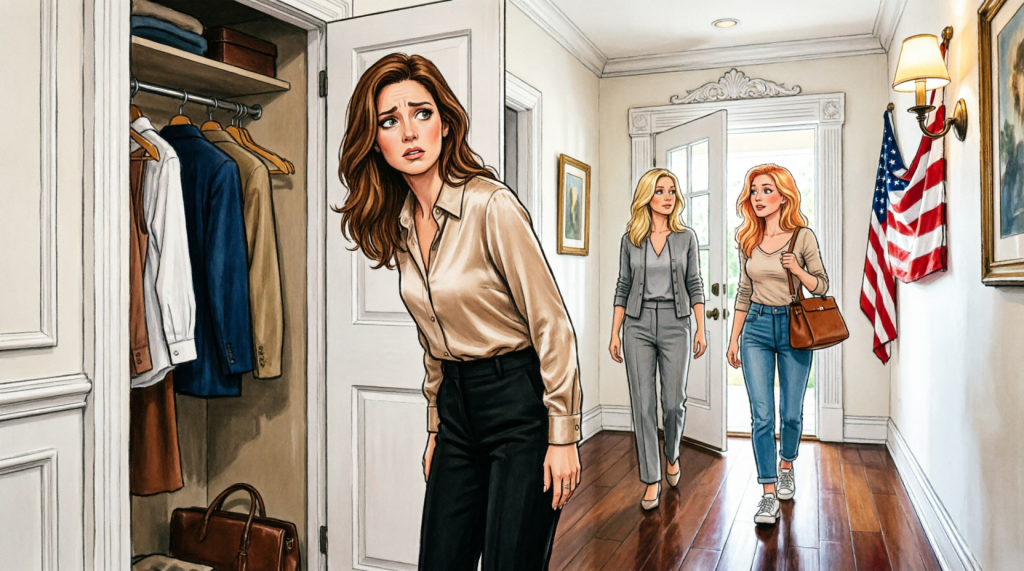
I realized I wasn’t invited to my brother-in-law’s wedding just three days before it took place—and not because anyone had the courtesy to tell me. I found out because my husband, Ethan, left an embossed cream invitation on the kitchen counter while he was in the shower, as if I might somehow overlook my own exclusion. The envelope had only one name on it: Mr. Ethan Cole. No “and guest.” No “Mr. and Mrs.” Just him.
When he came downstairs and saw me holding it, he froze.
“It’s not what you think,” he said.
I let out a short, sharp laugh. “Then explain what I’m supposed to think when your brother invites you to a black-tie wedding and deliberately leaves out your wife.”
Ethan rubbed the back of his neck. “Connor said the guest list got tight. Vivian wanted something very curated.”
“Curated?” I echoed. “I’m not décor, Ethan. I’m your wife.”
He kept defending them in that tired, hesitant tone people use when they know they’re wrong but hope you’ll let it go anyway. Connor’s fiancée, Vivian, came from old Connecticut money. Every detail of the wedding had been curated for photos, society pages, and social media. The venue was a restored estate outside Newport, filled with marble fountains and imported roses. Apparently, I didn’t match the image. After enough pushing, Ethan admitted Vivian thought I was “too outspoken,” and that my job as an investigative reporter might make some of her family uneasy.
“So they invited your silence,” I said.
He looked guilty—but not guilty enough to stay home.
That was what hurt the most.
“You’re still going,” I said.
“It’s my brother.”
“And I’m your wife.”
After that, neither of us spoke. The silence between us felt like a final judgment.
The morning he left, I smiled. Not because I was okay—but because I was done asking for respect. While he loaded his tux into the car, I sat at the kitchen counter and booked myself a week in Rome. Business class. A five-star hotel near the Spanish Steps. Private food tours, museum passes, and a leather shopping budget so reckless it almost made me laugh. By the time he came back in for his charger, I was already scrolling through confirmation emails.
“You booked a trip?”
I sipped my coffee. “Rome.”
“Seriously?”
“You’re attending a luxury wedding without your wife. I’m answering with luxury of my own.”
“That’s childish.”
“No,” I said calmly. “Childish was your family excluding me and expecting me to stay home quietly.”
He stared at me, stunned—but he still left.
For two days, I posted only glimpses—champagne on the flight, sunset over terracotta rooftops, my hand holding espresso in a sunlit piazza. Ethan texted less and less. Then, on the night of the reception, as I was halfway through truffle pasta on a rooftop terrace, my phone lit up with his name.
I answered to noise—voices raised, glass clinking, music abruptly cut.
“Claire,” he whispered, panic tightening his voice. “You need to help me.”
I leaned back in my chair, looking out over Rome glowing beneath me.
“What happened?” I asked.
And through the chaos behind him, he said the last thing I expected.
“They can’t pay for the reception.”
At first, I thought he was joking. Connor and Vivian had spent six months turning their wedding into a luxury spectacle—drone footage at the rehearsal dinner, monogrammed champagne walls, custom perfume favors flown in from Paris. Their florist alone probably cost more than my first car. So when Ethan said they couldn’t pay, I thought he’d lost his mind.
“What do you mean they can’t pay?” I asked.
“They thought Vivian’s father was covering the final balance,” Ethan said, his voice unsteady. “Her father says he already paid what he agreed to. Connor says Mom and Dad promised to handle the rest. Mom says she only offered to cover the rehearsal dinner. The venue manager just shut the bar down and won’t reopen anything until someone wires the money.”
In the background, a woman shrieked, “This is humiliating!”
Vivian, I assumed.
Then a man snapped, “You should have read the contract before signing it.”
That was probably her father.
I took another bite of pasta, chewing slowly. “And where do I come in?”
Ethan hesitated—long enough to insult me all over again.
“Connor thinks… maybe you could transfer the money. Just temporarily. We’d pay you back.”
I laughed so hard the couple at the next table turned to look.
“You’re calling the wife you didn’t invite to ask for bailout money at the wedding I was too embarrassing to attend?”
“It’s not like that.”
“It is exactly like that.”
“Claire, please. Everyone’s losing it.”
I could hear it. The music had stopped completely. Guests murmured. Staff moved quietly, efficiently—the way people do when they’re trained to stay composed around expensive disasters. I pictured Connor in his tux, sweating through his collar. I pictured Vivian, flawless makeup and venom behind her smile. The image was almost satisfying enough to order dessert.
Then Ethan lowered his voice.
“They say if the balance isn’t settled in the next twenty minutes, they’ll start shutting everything down—service, stations—and they may call local deputies if guests try to leave without signing personal liability forms.”
I blinked. So this wasn’t just embarrassment. This was collapse.
“How much?” I asked.
There was a pause.
“Seventy-eight thousand.”
I nearly dropped my fork. “You have got to be kidding me.”
“It’s not all of it,” he rushed. “It’s the remaining balance, service charges, alcohol overage, and some add-ons Vivian approved this afternoon.”
“Of course she did.”
“Claire—”
“No. Let me guess. No one wanted to talk about real numbers because everyone wanted to look rich.”
Silence. That was answer enough.
I stood and walked to the edge of the terrace, looking down at a narrow Roman street glowing gold under the lights. My anger had turned cold, precise—almost useful.
“Put Connor on.”
A few seconds later, my brother-in-law came on, breathless and furious.
“Claire, I know this looks bad—”
“This doesn’t look bad, Connor. It is bad.”
“We just need help getting through tonight.”
“You mean you need help. Interesting, considering Vivian made it clear I’d ruin the aesthetic.”
He exhaled sharply. “She was wrong.”
Click Here to continuous Read Full Ending Story Part2: Not Invited To Wedding. I Went To Rome. They Couldn’t Pay
Not Invited To Wedding. I Went To Rome. They Couldn’t Pay
Part 1 of 2