After My Daughter Laughed That I Was ‘Useful Until the Inheritance Clears,’ I Didn’t Cry – I Changed the Locks and Disappeared Before Dawn
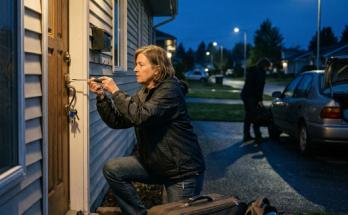
At 4:47 in the morning, the new deadbolt gave one clean click, small and final, against the front door I had paid for with thirty-four years of chalk dust, cafeteria coffee, and grading papers at midnight.
My hard-shell suitcase waited by my ankle. Gerald’s watch was wrapped in a sweater inside it.
Marguerite’s brass compass sat in my coat pocket, pressing against my hip like a quiet hand reminding me which way out was.
I stood on the porch for one last moment.
The house behind me was completely dark.
Upstairs, my daughter Lauren was asleep in the bedroom that had once been hers as a teenager.
Her husband, Eric, was beside her.
Their two children were across the hall.
They had moved in “temporarily” eight months earlier after Eric’s business failed.
Temporarily became permanent surprisingly fast.
At first, I didn’t mind.
I loved having my grandchildren close.
I cooked.
I picked them up from school.
I helped with homework.
I paid the utilities because Lauren and Eric were “getting back on their feet.”
Then my sister Marguerite died.
She had no children.
No husband.
And, according to Lauren, a considerable amount of money.
I didn’t know exactly how much.
I didn’t ask.
Marguerite and I had been sisters for sixty-one years. Losing her hurt enough without turning her death into arithmetic.
Lauren didn’t see it that way.
Three nights before I changed the locks, I came downstairs because I’d forgotten my glasses.
Lauren and Eric were in the kitchen.
They didn’t hear me.
Eric whispered:
“How long does probate usually take?”
Lauren laughed.
“Who cares? Mom’s useful until the inheritance clears.”
I stopped halfway down the stairs.
Eric chuckled.
“What happens after?”
“We finally get our own place.”
“With her money?”
“Eventually it’ll be mine anyway.”
Then she said:
“Just keep being nice.”
I went back upstairs without my glasses.
I didn’t confront her.
I didn’t cry.
I barely slept.
The following morning, I called a locksmith.
Then my lawyer.
Then the bank.
By Friday, I had made a decision.
Lauren thought she was waiting for my inheritance.
Instead, she was about to discover that I had stopped waiting for her to love me without conditions.
I loaded my suitcase into the trunk.
At 5:03 a.m., I drove away.
I didn’t leave a note.
I left an envelope taped to the inside of the front window.
Lauren would see it when she woke.
Inside were three things.
A thirty-day notice to vacate.
A copy of the deed showing the house belonged solely to me.
And one sentence:
Being my daughter gave you my love. It did not give you ownership of my life.
Then I turned off my phone.
For the first time in eight months, nobody could ask me what was for dinner.
Nobody could tell me the children needed picking up.
Nobody could mention another unexpected bill.
I drove north.
Marguerite’s compass stayed in my coat pocket.
It had belonged to our father before her.
When we were girls, Marguerite used to steal it from his desk and make us pretend we were explorers.
“Never trust the road,” she’d say dramatically. “Trust the compass.”
I hadn’t thought about that in fifty years.
Now I needed it.
My destination was a cottage two hundred miles away.
Marguerite had owned it secretly.
I learned about it only after her funeral when her attorney, Samuel Price, called me.
“The cottage isn’t part of the inheritance,” he’d explained.
“What do you mean?”
“She transferred it to you six years ago.”
I had nearly dropped the phone.
Marguerite had never told me.
The cottage sat beside a lake, surrounded by pine trees.
Small.
Weathered.
Perfect.
When I arrived, I unlocked the door and smelled dust and old wood.
For the first time since Gerald died eleven years earlier, I entered a home where nobody expected anything from me.
I put my suitcase down.
Then I cried.
Not because of Lauren.
Not entirely.
I cried for Gerald.
For Marguerite.
For the version of myself who had spent years believing that being needed meant being loved.
My phone stayed off for two days.
When I finally turned it on, there were forty-three missed calls.
Twenty-one from Lauren.
Eleven from Eric.
Several from neighbors.
Three from my lawyer.
And one voicemail from my grandson, Noah.
“Grandma, Mom’s really mad. I don’t know where you went. I just wanted to make sure you’re okay.”
That one hurt.
I called him.
Only him.
“I’m okay, sweetheart.”
“Are you coming home?”
“Not yet.”
“Mom says you kicked us out.”
“I asked your parents to find another home.”
“Did we do something?”
“No.”
I closed my eyes.
“None of this is because of you or your sister.”
After we hung up, Lauren called from Noah’s phone.
I answered accidentally.
Her voice exploded through the speaker.
“What the hell are you doing?”
“Good morning to you too.”
“You changed the locks!”
“Yes.”
“You can’t do that!”
“My lawyer says otherwise.”
“This is our home!”
“No, Lauren. It’s the house you moved into temporarily.”
Silence.
Then:
“Are you seriously throwing your grandchildren into the street?”
There it was.
The sentence designed to make me surrender.
“They have two parents.”
“You know we’re struggling.”
“I do.”
“And you’re sitting on Aunt Marguerite’s money!”
I felt remarkably calm.
“So this is about the inheritance.”
“No.”
“You didn’t even ask where I was.”
Another silence.
Then she said:
“Where are you?”
“Safe.”
“Mom, stop being dramatic.”
I almost laughed.
For thirty-four years, I’d been a high-school English teacher.
I had heard teenagers use that exact phrase whenever an adult stopped doing what they wanted.
“Lauren, you have twenty-eight days left.”
“You wouldn’t actually make us leave.”
“I would.”
Then she said the words that ended the conversation.
“After everything I’ve done for you?”
I looked around the quiet cottage.
“No,” I said. “After everything I’ve done for you.”
I hung up.
The next week was strange.
I walked around the lake.
I slept until eight.
I ate cereal for dinner because nobody complained.
I read an entire novel without interruption.
Then Samuel Price called.
Marguerite’s attorney.
“We need to meet.”
“Has probate finished?”
“Not exactly.”
Something in his voice bothered me.
“What happened?”
“Your sister left unusual instructions.”
I drove back to town the following morning.
Samuel’s office was above an old pharmacy.
He placed a thick folder in front of me.
“I assumed Marguerite’s estate was straightforward,” he said.
“So did I.”
“It isn’t.”
He opened the folder.
The figure on the first page made me stare.
Marguerite’s estate was worth just over $1.8 million.
I sat back.
“She never lived like she had that kind of money.”
“She invested extremely well.”
I thought of my sister clipping grocery coupons until the week she died.
Then I remembered Lauren.
Eventually it’ll be mine anyway.
Samuel turned the page.
“There’s something else.”
“Of course there is.”
“Marguerite didn’t leave the money directly to you.”
I frowned.
“Then who?”
“She created a trust.”
“For me?”
“For several people.”
My stomach tightened.
Samuel showed me the beneficiary page.
My name came first.
Then Noah.
My granddaughter, Sophie.
And finally…
Lauren.
I stared at my daughter’s name.
“What does she get?”
Samuel didn’t answer.
“Samuel?”
He removed a sealed letter.
“Marguerite instructed me to give you this before I explained.”
The envelope said:
For Eleanor. Read this before Lauren learns what she inherited.
I opened it.
Marguerite’s handwriting filled three pages.
The beginning was typical Marguerite.
If you’re reading this, I’m dead, which is inconvenient because I would very much enjoy seeing Lauren’s face when she finds out.
Despite myself, I smiled.
Then I kept reading.
Marguerite wrote that she’d noticed how Lauren treated me.
The constant requests.
The assumptions.
The way every family gathering somehow ended with me paying.
She had noticed before I did.
Then came the paragraph that made my hands tremble.
Lauren has spent years believing your house and my money would someday rescue her from every bad decision. I have no intention of rewarding that belief.
I looked at Samuel.
“What did she do?”
“Keep reading.”
The final paragraph said:
Lauren’s inheritance is not money.
My heart began pounding.
It is a choice.
I looked up.
“What choice?”
Samuel slid another document toward me.
Marguerite had left Lauren exactly one dollar outright.
But she had also created a separate account containing $250,000.
Lauren could receive it under one condition.
Not after my death.
Not after probate.
Not after some arbitrary birthday.
The condition was written in plain language:
Lauren must maintain stable housing and employment for twenty-four consecutive months without receiving financial assistance from Eleanor.
I stared at it.
Samuel said:
“Your sister wanted her to prove she could stand on her own.”
I almost laughed.
But there was more.
If Lauren failed, the $250,000 would go to Noah and Sophie’s education trusts.
“And my share?”
Samuel turned another page.
Marguerite had left me the remainder.
More than a million dollars after the other provisions.
My eyes filled.
“I don’t need this.”
Samuel smiled faintly.
“Marguerite predicted you’d say that.”
He handed me another note.
One sentence:
Then use it to finally have a life that isn’t organized around rescuing everyone else.
I laughed through my tears.
Then Samuel’s receptionist knocked.
“Mr. Price?”
“Yes?”
She looked uncomfortable.
“Lauren is here.”
I froze.
“How did she know I was here?”
The receptionist glanced toward the hallway.
“She says she’s here about her inheritance.”
Of course she was.
Samuel looked at me.
“Do you want me to send her away?”
I thought about the new deadbolt.
The cottage.
The compass in my pocket.
Then I shook my head.
“No.”
Lauren walked in thirty seconds later.
She looked furious.
“You’ve been hiding from me for almost two weeks.”
I said nothing.
Then she saw the folder.
Her anger disappeared.
“Is that Aunt Marguerite’s estate?”
Samuel stood.
“Lauren, perhaps you should sit down.”
Her eyes lit up.
“How much did she leave?”
I looked at my daughter.
For the first time, I understood something Marguerite had seen years earlier.
Lauren wasn’t expecting grief.
She was expecting a number.
Samuel slid a single check across the desk.
Lauren stared at it.
$1.00.
She laughed.
“What is this?”
Samuel folded his hands.
“Your inheritance.”
Her smile vanished.
“No.”
“Your aunt left you one dollar.”
Lauren looked at me.
“What did you do?”
That question told me everything.
Not why would Aunt Marguerite do this?
Not is there some mistake?
What did I do?
“Nothing.”
“You poisoned her against me.”
Samuel interrupted.
“Mrs. Hayes, your aunt wrote these instructions six years ago.”
Lauren stopped.
Six years.
Long before Marguerite became ill.
Long before the inheritance.
Long before Lauren moved into my house.
Samuel explained the trust.
The $250,000.
The twenty-four-month condition.
No financial support from me.
Lauren went completely still.
Then she whispered:
“She knew?”
I didn’t pretend not to understand.
“Yes.”
Her eyes filled with tears.
“Mom, I didn’t mean what you heard.”
I stared at her.
I had never told her I overheard anything.
The room went silent.
Lauren realized her mistake.
Samuel looked from her to me.
I quietly asked:
“What exactly do you think I heard?”
Lauren’s face went white.
And that was when I learned the kitchen conversation wasn’t the worst thing she’d said about me.
There had been another conversation.
One Marguerite had heard herself.
And before she died, my sister had recorded it.
Part 2 — The Compass
Samuel opened a drawer.
He removed a small digital recorder.
Lauren stared at it.
“No.”
Samuel said:
“Your aunt requested that Eleanor hear this only if there was a dispute over the trust.”
“Turn it off.”
“It isn’t on yet.”
Lauren stood.
“I don’t have to listen to this.”
“No,” I said.
“You don’t.”
She looked relieved.
Then I added:
“But I do.”
Samuel pressed play.
Marguerite’s voice came first.
She was apparently sitting in her own living room.
Then Lauren entered.
The recording was from eight months before my sister died.
They talked casually at first.
Then Marguerite asked:
“What will happen to your mother if something happens to me?”
Lauren laughed.
“Mom will be fine.”
“She seems tired.”
“She likes being needed.”
Then Marguerite asked:
“And when she’s too old to keep helping?”
Lauren’s answer came immediately.
“By then we’ll have the house.”
My throat tightened.
On the recording, Marguerite went silent.
Lauren continued.
“And whatever you leave Mom eventually comes to me anyway.”
“What about Noah and Sophie?”
“They’ll get plenty when we’re gone.”
Marguerite’s voice became colder.
“So Eleanor is useful until the inheritance clears?”
Lauren laughed.
“Basically.”
The recording stopped.
Nobody spoke.
Lauren sat down again.
She looked smaller.
Not innocent.
Just finally unable to hide behind excuses.
“I was joking.”
I thought about all the times I’d accepted those words.
I was joking.
As if cruelty became harmless when followed by laughter.
Marguerite had apparently thought the same.
Samuel handed me the recorder.
On the bottom, my sister had taped a tiny label:
Eleanor — believe people when they tell you how they value you.
I closed my hand around it.
Lauren started crying.
“Mom, please.”
I looked at my daughter.
I loved her.
That was the difficult part.
If I hadn’t loved her, leaving would have been easy.
“I don’t want your money,” she said.
“That isn’t what this is about.”
“I’ll move out.”
“You already are.”
“I’ll get a job.”
“That would be good.”
“Can’t we just go back to normal?”
There it was.
Normal.
Normal meant I cooked.
I babysat.
I covered unexpected expenses.
I made myself smaller whenever Lauren became upset.
“No.”
Her face crumpled.
“No?”
“Normal wasn’t good for me.”
She stared at me as if I’d spoken another language.
Then she asked:
“Where are you even living?”
I smiled.
“Somewhere I like.”
I didn’t tell her about the cottage.
Not then.
Lauren and Eric moved out seventeen days later.
They rented a two-bedroom apartment.
Eric took a warehouse-management job.
Lauren returned to work as a dental receptionist after being out of the workforce for almost nine years.
The first months were ugly.
She blamed me.
Then Marguerite.
Then Eric.
Then the trust.
But the trust didn’t care who she blamed.
Twenty-four months meant twenty-four months.
No shortcuts.
No money from me.
I followed Marguerite’s instructions exactly.
When Lauren called because the car needed repairs, I gave her the number of a mechanic.
Not money.
When she complained about rent, I listened.
I didn’t write a check.
When she asked me to cover summer camp, I said no.
That one hurt.
But I found other ways to be a grandmother that didn’t require becoming the family ATM.
Noah and Sophie came to the cottage.
We swam in the lake.
We made pancakes.
We played cards.
I taught Noah how to use Marguerite’s compass.
“Why do you keep carrying this?” he asked.
“Because your great-aunt believed people should know which direction they’re going.”
He turned it in his hand.
“Does it tell you?”
“Sometimes.”
My relationship with Lauren changed slowly.
At first, every conversation had an invisible dollar sign inside it.
Then something shifted.
About a year after she moved out, she called me.
“Mom?”
“Yes?”
“I got promoted.”
I waited for the request that usually followed good news.
There wasn’t one.
“That’s wonderful.”
“I wanted you to know.”
That was all.
Six months later, she invited me to dinner.
At her apartment.
She cooked.
The pasta was overdone.
The garlic bread was burned.
I ate every bite.
After dinner, she handed me an envelope.
Inside were copies of all the checks I’d written her during the five years before Marguerite died.
I looked at her.
“What is this?”
“I’ve been adding them up.”
“Why?”
Her eyes filled.
“Because I wanted to see how much I thought your love was worth.”
I didn’t know what to say.
The total was over $38,000.
“I can’t pay you back all at once.”
“I don’t want you to.”
“I know.”
That answer surprised me.
She continued:
“I’ve been meeting with a counselor.”
I nodded.
“I spent a long time thinking because you always helped, helping was your job.”
I felt tears coming.
“But it wasn’t.”
“No.”
“I was awful to you.”
“Yes.”
She almost smiled.
“You don’t make this easy.”
“I’m done making everything easy.”
That time, we both smiled.
At the end of twenty-four months, Samuel called us into his office.
Lauren had met the conditions.
Stable employment.
Stable housing.
No financial assistance from me.
The $250,000 was hers.
She sat staring at the paperwork.
Then she did something none of us expected.
“I don’t want all of it.”
Samuel frowned.
“What do you mean?”
She asked for $100,000 to remain in the education trusts for Noah and Sophie.
She took the rest.
Not to buy a bigger house.
Not for a luxury car.
She and Eric paid off their debts, created an emergency fund, and put a down payment on a modest home.
When she showed it to me, I noticed something.
A new deadbolt.
I touched it.
Lauren laughed softly.
“I thought you’d appreciate that.”
I did.
Years have passed.
I sold my old house eventually.
Not to Lauren.
To a young couple with a baby who stood in the kitchen imagining where they’d put the high chair.
I used part of Marguerite’s inheritance to travel.
I saw Italy.
Norway.
And, at sixty-five, I finally visited the Scottish village our father used to talk about.
I took the brass compass.
Gerald’s watch came too.
I’d spent so much of my life carrying people who were no longer beside me.
Now I carried reminders instead.
Lighter.
Kinder.
The cottage became my real home.
Lauren visits often.
But she knocks.
That’s important.
One autumn morning, we sat beside the lake drinking coffee.
She suddenly said:
“I still think about that thing I said.”
“So do I.”
“I wish I could take it back.”
“I know.”
She looked at me.
“How did you forgive me?”
I thought about the question.
“I didn’t forgive the sentence.”
She frowned.
“I forgave the person who decided not to remain the woman who said it.”
Lauren started crying.
This time I reached for her hand.
There is a difference between forgiveness and returning to the same arrangement that hurt you.
It took me sixty-two years to learn that.
Marguerite knew it before I did.
The morning I changed the locks, I thought I was disappearing.
I wasn’t.
I was finally showing up somewhere else.
For myself.
I still have Marguerite’s compass.
It sits beside Gerald’s watch on a shelf in the cottage.
The compass no longer works perfectly.
The needle sticks sometimes.
But I’ve never repaired it.
Because I don’t really need it anymore.
I know the way.
And every time Lauren comes through my door now, she brings something.
Flowers.
Bread.
A bottle of wine.
Sometimes nothing at all.
But she never brings an expectation.
Last Christmas, she hugged me before leaving.
“Love you, Mom.”
“Love you too.”
Then she smiled.
“Thanks for dinner.”
I raised an eyebrow.
“Careful. You’re sounding like you expect another one.”
She laughed.
“No.”
She opened the door.
“I know I’m invited now.”
That was the difference.
Once, my daughter thought my usefulness guaranteed her a place in my life.
Now she understands that love is not an inheritance.
It is not a deed.
It is not something that becomes yours because you’ve waited long enough.
It is a relationship you keep earning by how you treat the person while they’re still standing in front of you.
At 4:47 that morning, the deadbolt had made one small click.
For years, I thought that sound meant I had locked my daughter out.
Now I know better.
It was the sound of me finally letting myself out.
THE END