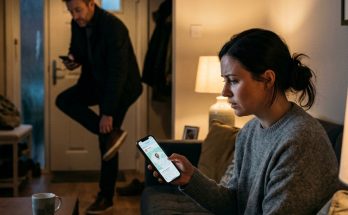
My mother-in-law told me to MOVE OUT… of the apartment I secretly paid $5,600 a month for.
I stood there silently while she pointed toward the door.
“My stepson and his wife are having a baby,” she said. “They need the space more than you do.”
She had no idea that for the past two years, I had been paying the entire $5,600 monthly rent.
I didn’t argue.
I didn’t reveal the truth.
The next morning, I hired movers.
Box after box disappeared through the front door.
Then the mover suddenly stopped and asked:
“Ma’am… whose name is the lease under?”
My mother-in-law froze.
And when I answered…
“Mine.”
Her face went completely white.
The mover looked between us.
“So… everything in the apartment belongs to you?”
“Not everything.”
I pointed toward the dining room.
“The oak table is hers. The china cabinet too. Leave those.”
My mother-in-law, Patricia, stared at me.
“What do you mean the lease is in your name?”
I kept wrapping glasses.
“Exactly what it sounds like.”
“No. David rented this apartment.”
David was my husband.
Or, technically, had been.
He’d died eighteen months earlier.
Patricia had moved in after his funeral because she said she couldn’t bear being alone.
I had let her.
At first, I even wanted her there.
Grief makes strange roommates.
We’d sit up at two in the morning talking about David.
She’d tell me stories from his childhood.
I’d make tea.
For a while, having her nearby felt like keeping part of him alive.
Then slowly, she stopped acting like a guest.
She rearranged the kitchen.
Changed the curtains.
Gave away one of my chairs because she “never liked it.”
She started calling the second bedroom “her room.”
Then her stepson, Kevin, began visiting more often.
Kevin was David’s half-brother.
Thirty-four.
Married to a woman named Ashley.
They were expecting their first child.
Apparently Patricia had decided that meant my home should become theirs.
“You’re confused,” Patricia said. “David told me this place was his.”
“No. David and I rented it together originally.”
“So his name is on the lease.”
“It was.”
She stared.
“What does that mean?”
“When he died, the lease was renewed.”
“By who?”
“Me.”
Her mouth opened slightly.
I continued.
“And the rent has been coming out of my account since before he died.”
Patricia looked toward the movers.
Then back at me.
“How much?”
I almost laughed.
“You didn’t know?”
“I knew it was expensive.”
“Five thousand six hundred a month.”
Her eyes widened.
For two years, I had paid every rent payment.
Utilities too.
Patricia contributed groceries occasionally and treated that like generosity.
She’d never once asked what the apartment cost.
Never once asked whether I needed help.
And now she’d ordered me to leave it.
She lowered her voice.
“Why didn’t you tell me?”
“You never asked.”
“That is not the point.”
“It became the point yesterday.”
She folded her arms.
“You’re really going to embarrass me in front of strangers?”
I looked at the movers.
“They asked a practical question.”
Then Kevin walked in.
Ashley was behind him, one hand resting on her stomach.
“What’s happening?”
Patricia immediately turned toward him.
“She’s taking everything.”
Kevin frowned at me.
“I thought Mom said you agreed to move.”
“I didn’t agree.”
Ashley looked uncomfortable.
“Then why are there movers?”
“Because I’m moving.”
Kevin relaxed.
“Okay. So what’s the problem?”
“The apartment is going with me.”
He laughed.
“What does that mean?”
“It means there will be no apartment for you to move into.”
Silence.
Patricia said sharply:
“Don’t be ridiculous.”
I held up my phone.
“I spoke with the landlord this morning.”
Kevin’s expression changed.
“What did you do?”
“I gave notice.”
Patricia actually gasped.
“You canceled the lease?”
“Yes.”
“You had no right!”
The mover stopped again.
This time he didn’t even pretend not to listen.
I stared at her.
“My name. My lease. My money.”
“You knew Kevin and Ashley needed this place!”
“No. You decided they needed my place.”
Ashley looked at Kevin.
“You told me she was moving voluntarily.”
Kevin didn’t answer.
That told me plenty.
I kept packing.
Patricia followed me into the bedroom.
“You’re being vindictive.”
“No.”
“You could easily afford another place.”
That made me stop.
“How would you know what I can afford?”
She hesitated.
Then:
“David told me you made good money.”
I worked in pharmaceutical consulting.
Yes, I earned well.
But that had become another reason everyone thought I should absorb whatever inconvenience appeared.
Five thousand six hundred dollars in rent?
I could handle it.
Patricia needed somewhere to live?
I could handle it.
Kevin needed a nursery?
Apparently I could handle that too.
I turned toward her.
“You know what I find interesting?”
“What?”
“You didn’t ask me to help them.”
She frowned.
“You told me to leave.”
“I thought this was David’s apartment.”
“No. You thought it was something you had authority over.”
Her face hardened.
“You’re twisting this.”
“Am I?”
She walked away.
By noon, most of my things were gone.
I was moving into a smaller condo I had purchased three months earlier.
Nobody knew.
Not Patricia.
Not Kevin.
I had planned to tell them after I decided what to do with the apartment.
Part of me had even considered letting Patricia stay there temporarily.
Then she solved the decision for me.
At 12:40, the landlord arrived.
Mr. Feldman.
Patricia rushed toward him.
“Thank God. Tell her she can’t do this.”
He looked confused.
“Do what?”
“Terminate the lease without consulting the family.”
Mr. Feldman looked at me.
Then at her.
“Mrs. Harper is the tenant.”
Patricia’s face changed.
Kevin said:
“My brother lived here.”
“Yes. Years ago.”
“And after he died?”
Mr. Feldman nodded toward me.
“She renewed alone.”
Patricia stared at him.
“So there’s nothing we can do?”
“You can apply for the unit after she vacates.”
Kevin’s expression brightened.
“Fine.”
Mr. Feldman continued:
“Current market rent is $7,250.”
Everyone went silent.
Ashley whispered:
“Seven thousand?”
“The building was renovated last year.”
Kevin looked at Patricia.
“You said it was fifty-six hundred.”
“It is,” I said.
“For me. I had a protected renewal rate.”
Mr. Feldman nodded.
“A new tenant would pay current market value.”
Kevin looked sick.
Ashley sat down.
Patricia turned toward me again.
“You knew.”
“Knew what?”
“That they couldn’t afford that.”
I stared at her.
“I knew nothing about their finances.”
“You could transfer the lease.”
Mr. Feldman answered before I could.
“No.”
Patricia turned.
“Why not?”
“Lease transfers aren’t permitted. She can renew or surrender.”
I smiled faintly.
“I surrendered.”
Patricia looked at me like I’d personally destroyed her family.
Then Ashley said quietly:
“Kevin, can we talk outside?”
They left.
Patricia stayed.
For the first time all morning, she looked less angry than afraid.
“Where am I supposed to go?”
That question hit differently.
Not because I felt guilty.
Because there it was.
The truth.
This had never just been about Kevin.
Patricia had assumed she was staying too.
“You were planning to live here with them?”
She didn’t answer.
“Patricia.”
“Yes.”
“For how long?”
She looked away.
“I thought it would be easier with the baby.”
“For whom?”
Again, no answer.
I sat down on the edge of the stripped bed.
“Did it ever occur to you that this was my home?”
“It was David’s too.”
“Yes.”
“He would’ve wanted his family taken care of.”
There it was.
David.
Used like a key to unlock anything she wanted.
I said quietly:
“Don’t do that.”
“What?”
“Don’t use my dead husband to tell me what I owe you.”
Her eyes filled.
“I lost my son.”
“And I lost my husband.”
We stared at each other.
Then she said something I’d never expected.
“You still have his life insurance.”
My whole body went still.
“What?”
She immediately looked as though she regretted it.
I stood.
“How do you know about that?”
No answer.
“Patricia.”
She looked toward the hallway.
Then finally whispered:
“Kevin told me.”
I stared.
“Kevin shouldn’t know anything about David’s life insurance.”
“He said David mentioned it.”
“He didn’t.”
I knew that because David and I had changed policies shortly before he died.
Very few people knew.
My lawyer.
My financial adviser.
Me.
Not Kevin.
I felt cold.
“How much did Kevin tell you I received?”
Patricia didn’t answer.
That was answer enough.
I walked into the living room.
Kevin and Ashley had returned.
“Kevin.”
He looked up.
“What?”
“How do you know about David’s life insurance?”
His face changed.
Tiny change.
But I saw it.
“What are you talking about?”
“Your mother says you told her.”
Patricia said:
“I didn’t mean—”
“No.”
I held up a hand.
“Let him answer.”
Kevin looked defensive.
“David was my brother. We talked.”
“About the policy?”
“Yes.”
“What amount?”
He hesitated.
Then named the exact figure.
$850,000.
My stomach dropped.
Ashley looked at him.
“How do you know that?”
Kevin said nothing.
I did.
“That policy amount wasn’t finalized until six weeks before David died.”
Patricia looked confused.
“So?”
“So David was already too sick to talk to Kevin then.”
Silence.
I stared at my brother-in-law.
“Where did you get that number?”
He looked toward the door.
Then at me.
Finally he said:
“From the papers in his desk.”
I felt something inside me turn to ice.
“You went through David’s desk?”
“After the funeral.”
“Why?”
“I was looking for something.”
“What?”
He didn’t answer.
Then Patricia whispered:
“Tell her.”
Kevin looked furious.
“Mom.”
“Tell her the truth.”
I stared at both of them.
“What truth?”
Patricia sat down slowly.
Then she said:
“David left another document.”
My hands began shaking.
“What document?”
Kevin finally spoke.
“A letter.”
“For who?”
He looked directly at me.
“For you.”
I couldn’t breathe.
“You had a letter from my husband for eighteen months?”
Kevin swallowed.
“Yes.”
“Where is it?”
He looked at Patricia.
And suddenly I understood.
She had it.
The woman who had just ordered me out of my own apartment had been holding my dead husband’s final letter all this time.
Part 2 — What David Left Me
Patricia disappeared into her bedroom.
When she returned, she was carrying a sealed envelope.
My name was on the front.
David’s handwriting.
I recognized it instantly.
My knees weakened.
“Why?”
Patricia started crying.
I didn’t care yet.
“Why did you keep this from me?”
Kevin answered.
“Because of what it says.”
I took the envelope.
My fingers shook so badly I could barely open it.
The letter was dated four days before David died.
He knew he wasn’t coming home from the hospital.
The beginning was exactly what I expected.
He loved me.
He was sorry.
He wished we’d had more time.
Then halfway down the second page, everything changed.
There is something I need you to know about Mom and Kevin.
I looked up.
Neither of them met my eyes.
I kept reading.
David had been helping Patricia financially for years.
Much more than I knew.
Rent.
Credit-card bills.
Car payments.
Money sent to Kevin when his business struggled.
At first, David hid it from me because he was embarrassed.
Then he realized the requests were increasing.
He tried to stop.
That was when the arguments began.
The final year of his life, David estimated he’d given them more than $140,000.
I sat down.
“That can’t be right.”
Patricia cried harder.
Kevin stared at the floor.
The letter continued.
I told them after I’m gone, they are not to ask you for money. The insurance is for you. Not them.
I stopped.
There it was.
The exact reason they’d hidden the letter.
David had predicted this.
He knew his family.
He knew me too.
You will feel guilty. You will think helping them keeps part of me alive. Please don’t confuse taking care of my family with letting them use you.
I covered my mouth.
For eighteen months, I’d done exactly that.
Paid the apartment.
Bought groceries.
Covered Patricia’s phone.
Paid for a dental procedure when she claimed she couldn’t manage the bill.
I thought I was honoring David.
His letter told me he’d wanted the opposite.
There was one final paragraph.
If Mom needs reasonable help, decide for yourself. But never let anyone tell you my death created a debt you owe them. It didn’t.
I folded the letter.
The room was silent.
Then I asked Kevin:
“You read this?”
“Yes.”
“And you hid it.”
“Yes.”
“Why?”
He looked angry now.
Maybe shame had nowhere else to go.
“Because he made us sound like parasites.”
I stared at him.
“You hid a dead man’s final letter to his wife because you didn’t like how you were described?”
“That isn’t fair.”
I laughed.
“Fair?”
Ashley stood.
“I didn’t know any of this.”
Kevin looked at her.
“Ashley—”
“No.”
She moved away from him.
“You told me your brother left money for the whole family.”
My head snapped toward him.
“What?”
Ashley looked at me.
“He said the insurance was supposed to take care of everyone.”
Kevin closed his eyes.
There was the lie.
That was why Patricia had felt entitled to my apartment.
Why Kevin believed I should transfer it.
Why everyone talked about David’s money like a family fund.
Kevin had created that story.
“Was there ever anything left to you?” I asked.
“No.”
Patricia whispered:
“David left me $25,000 in a separate account.”
That I knew about.
I’d given it to her after probate.
“Kevin?”
Nothing.
David had left him nothing directly.
Now I understood the bitterness.
Over the next hour, everything unraveled.
Kevin had gone through David’s office after the funeral.
He found the insurance paperwork.
The letter.
Several account statements.
He told Patricia that David had intended me to use the insurance to support them.
Then he kept the letter because it proved the opposite.
Patricia believed him because she wanted to.
And I never questioned why her expectations kept growing.
Until she told me to leave my own home.
Ashley packed a bag that afternoon.
Not because of me.
Because she’d just learned her husband had lied to her about money for years.
Patricia moved in with a cousin two weeks later.
Kevin and Ashley found a smaller apartment eventually.
The baby arrived healthy.
I did not pay their rent.
I did send a gift.
A normal gift.
Blankets.
A stroller.
Some clothes.
Nothing with strings.
Nothing that required me to surrender part of my life.
As for Patricia, we didn’t speak for nearly four months.
Then one evening she called.
“I owe you an apology.”
“Yes.”
She went quiet.
“You sound like David.”
That almost broke me.
She continued.
“I was angry that he left everything to you.”
“He was my husband.”
“I know.”
“But?”
She sighed.
“I suppose part of me still thought of you as the woman who married into my family.”
“And not his family?”
“Yes.”
At least she was honest.
Then she said:
“I used grief as permission to take too much.”
I didn’t forgive her immediately.
But I listened.
Eventually, we rebuilt something.
Different from before.
She never lived with me again.
That mattered.
I bought my condo outright using part of the insurance money.
Smaller than the apartment.
Quieter.
Mine.
I framed David’s letter.
Not the whole thing.
Just one sentence:
My death did not create a debt you owe anyone.
It hangs inside my desk drawer where only I see it.
A year later, I ran into Mr. Feldman.
He told me the old apartment had been rented within three days.
A family with two children.
They paid the full $7,250.
I laughed.
“What?”
he asked.
“Nothing.”
I thought about Patricia pointing at the door.
They need the space more than you do.
In the end, she was right about one thing.
I did need to move.
Just not for the reason she thought.
I needed to leave the apartment where grief had turned me into everyone’s solution.
I needed a home where David’s memory wasn’t being used as leverage.
And I needed to learn that generosity isn’t the same as surrender.
The morning the movers came, I thought the most important question was:
Whose name is on the lease?
It wasn’t.
The important question was:
Whose life is this?
For eighteen months after David died, I had let everyone else answer that for me.
Now I know.
The lease was mine.
The money was mine.
The decision was mine.
And finally, so was the life I built afterward.
THE END