My sister raised me after Mom passed away. She was 19, and I was 12. Unlike her, I went to college. I studied and became a doctor.
At graduation, I said, ‘See? I climbed the ladder. You took the easy road and became a nobody.’
She smiled and left.
No calls for 3 months. I thought she was just mad at me.
Then I finally visited. I was back in town for the first time in years. I walked in and went numb. She was…
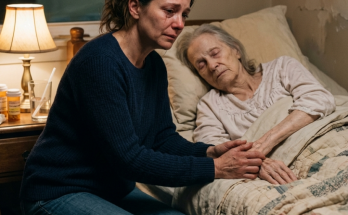
sitting in a wheelchair beside the living-room window.
For several seconds, I couldn’t move.
My sister, Rachel, had always been strong.
She was the woman who worked double shifts and still came home to help me with algebra.
The woman who learned to cook because after Mom died, somebody had to make dinner.
The woman who attended every parent-teacher meeting even though she was barely older than some of my teachers.
Now she looked thin and exhausted.
There was a blanket over her legs.
Several prescription bottles sat on the table.
“Rachel?”
She turned.
That same small smile appeared.
“Hey, Doctor.”
Hearing that word nearly broke me.
I rushed toward her.
“What happened?”
“Nothing dramatic.”
“You’re in a wheelchair!”
“It’s temporary.”
I grabbed one of the medical folders.
Rachel tried to stop me.
“Don’t.”
But I was already reading.
Tests.
Scans.
Specialists.
Treatment notes.
The earliest date was almost eighteen months earlier.
My stomach dropped.
“You’ve been sick for a year and a half?”
She looked away.
“Something like that.”
“And you never told me?”
“You were busy.”
“I’m your brother!”
That finally made her look at me.
“Yes. You are.”
There was no anger in her voice.
That somehow made it worse.
Then our old neighbor, Mrs. Collins, entered carrying groceries.
She froze when she saw me.
“So the doctor finally came home.”
Rachel sighed.
“Please don’t.”
But Mrs. Collins put the groceries down hard.
“No. He’s spent years believing you did nothing with your life. He should know.”
I stared at her.
“Know what?”
Rachel closed her eyes.
Mrs. Collins pointed toward the hallway.
“Open the closet.”
Inside were boxes.
Dozens of them.
I pulled down the first.
College brochures.
Architecture textbooks.
Sketchbooks filled with drawings.
At the bottom was an acceptance letter from a university dated fifteen years earlier.
Rachel had been accepted into an architecture program.
Full-time.
I looked at her.
“You told me you never wanted college.”
“I changed my mind.”
Mrs. Collins shook her head.
“No, she didn’t.”
Rachel’s expression tightened.
“Enough.”
But Mrs. Collins kept going.
“Your mother died in June. Rachel was supposed to leave for college in August. Instead, she stayed because you were twelve and there was nobody else.”
I felt my chest tighten.
“But Aunt Linda—”
“Would have taken you,” Rachel said.
“Then why didn’t you let her?”
Rachel looked at me like the answer should have been obvious.
“Because you begged me not to.”
And suddenly I remembered.
Twelve years old.
Crying in Rachel’s bedroom.
Telling her everyone was leaving.
Begging her not to send me away.
I had forgotten.
She hadn’t.
Mrs. Collins opened another box.
Inside were receipts.
My school uniforms.
My braces.
My first laptop.
College application fees.
Textbooks.
Rent.
I stared at Rachel.
“My scholarships paid for college.”
“Some of it.”
“You told me Mom left money.”
Rachel gave me a sad smile.
“Mom left eight thousand dollars.”
I nearly laughed from disbelief.
My education had cost far more.
“Where did the rest come from?”
Mrs. Collins answered.
“Rachel.”
I looked at my sister.
She had worked nights at a warehouse.
Weekends at a diner.
Later, she handled bookkeeping for a small construction company.
While I posted pictures from medical school celebrating how hard I worked, she had been quietly paying the bills I couldn’t cover.
“Why didn’t you tell me?”
Rachel shrugged.
“Because I wanted you studying, not worrying about me.”
My graduation returned to me in painful detail.
Rachel standing outside the auditorium holding flowers.
Her cheap blue dress.
Her tired face.
And me, surrounded by classmates, full of pride.
You took the easy road and became a nobody.
I sat down because my legs suddenly couldn’t hold me.
“Why didn’t you yell at me?”
“What good would that have done?”
“Anything would’ve been better than smiling.”
Rachel looked toward the window.
“I smiled because I got you there.”
My eyes burned.
“You were proud of me?”
“Of course.”
“After what I said?”
“You were being an idiot. You’ve been an idiot before.”
I laughed once through my tears.
Then I noticed another envelope on the table.
The logo belonged to the hospital where I had just accepted my first major position.
I picked it up.
Rachel’s face changed.
“Put that down.”
I opened it.
It was a treatment denial.
Her insurance had refused to cover an advanced procedure.
At the bottom was an estimate.
$96,000.
My hands started shaking.
“Rachel.”
“I’m handling it.”
“How?”
She said nothing.
Mrs. Collins looked at me.
“She’s selling the house.”
I stared at the walls around us.
This was Mom’s house.
The house Rachel had spent fifteen years keeping.
“You can’t.”
“I can.”
“I’ll pay.”
“No.”
“Rachel, I’m a doctor. I can help.”
She laughed softly.
“You’ve been a doctor for three months.”
“I’ll borrow it.”
“No.”
“Why?”
Her eyes filled for the first time.
“Because I didn’t raise you so you could spend the rest of your life paying me back.”
I moved closer.
“This isn’t paying you back.”
“Then what is it?”
“It’s being your brother.”
She looked down.
And then I noticed something sticking from beneath her medical folder.
A letter.
It had my hospital’s letterhead.
I pulled it out.
My blood went cold.
It was signed by Dr. Harris.
My department chief.
And it said Rachel had been offered a place in a special treatment program months earlier.
A program that could cover almost everything.
But beside the acceptance line, Rachel had written:
DECLINED.
I stared at her.
“Why would you refuse this?”
Rachel’s smile disappeared.
And what she said next terrified me.
“Because they told me what it would cost you.”
Part 2 — What Her Sacrifice Was Really Worth
“What do you mean, cost me?”
Rachel tried to take the letter.
I pulled it away.
Dr. Harris had personally recommended her for the program.
But at the time, I was competing for a prestigious residency position funded by the same medical foundation.
Rachel believed that accepting financial assistance might create a conflict that could hurt my application.
“So you refused treatment because of my job?”
“It wasn’t that simple.”
“It looks very simple!”
She shook her head.
“You’d worked your entire life for that position.”
“My entire life?”
My voice cracked.
“No, Rachel. You worked my entire life for it.”
She went quiet.
That evening, I called Dr. Harris.
The truth was almost ridiculous.
There had never been a conflict.
Rachel had misunderstood a paragraph in the paperwork and refused before asking anyone.
When I told her, she stared at me.
Then started laughing.
Soon I was laughing too.
Not because it was funny.
Because after fifteen years of sacrificing everything for me, Rachel had almost sacrificed her health over a bureaucratic sentence.
“You’re impossible,” I said.
“Family trait.”
The next morning, I made the calls myself.
Her treatment was reconsidered.
The foundation approved assistance.
I covered what remained.
Rachel argued with me for three days.
On the fourth, I stopped arguing.
I simply said, “You can be angry while getting treated.”
She called me unbearable.
I drove her to the hospital anyway.
The months that followed changed me.
I took fewer extra shifts.
I came home every weekend I could.
I learned what medications made her nauseous and which terrible television shows made her laugh.
And slowly, Rachel improved.
One afternoon, while cleaning the spare room, I found her old architecture sketchbooks.
Hundreds of drawings.
Homes.
Libraries.
Schools.
One sketch caught my attention.
A children’s hospital with huge windows, gardens, and rooms designed so siblings could stay overnight.
“This is incredible,” I told her.
Rachel shrugged.
“I was nineteen.”
“No. You were talented.”
“Was.”
“Are.”
She rolled her eyes.
But that night, I secretly researched architecture programs for adult students.
When Rachel was strong enough to walk without assistance again, I handed her an envelope.
She opened it.
Then stared at me.
“You applied to college for me?”
“No. I requested information.”
“Still rude.”
“Probably.”
She looked through the brochure.
For a long time, she said nothing.
Then she whispered, “I’m thirty-four.”
“So?”
“I’ll graduate close to forty.”
I smiled.
“You’ll turn forty either way.”
She threw a pillow at me.
Six months later, Rachel enrolled part-time.
She was terrified on her first day.
“I’ll be older than half the instructors.”
“Good. Intimidate them.”
She laughed.
And slowly, the woman who had spent her entire adult life making sure I had a future started building one for herself.
It took years.
There were setbacks.
Her health still required monitoring.
She occasionally wanted to quit.
Every time she did, I reminded her of something she once told me before my first medical-school exam:
“You don’t have to feel ready. You just have to show up.”
So she did.
Four years later, I sat in an auditorium holding flowers.
When Rachel’s name was called, I stood before anyone else.
She walked across the stage and received her degree in architecture.
I was crying before she even reached the other side.
Afterward, she found me outside.
I handed her the flowers.
“See?” I said.
She raised an eyebrow.
I swallowed.
“You climbed the ladder.”
She smiled.
Then I added, “Turns out you were never a nobody.”
Rachel looked at me for several seconds.
“I know.”
That answer surprised me.
Then she put her arms around me.
“I never believed what you said that day.”
“I’m glad.”
“I knew you didn’t understand yet.”
“Understand what?”
She pulled back.
“Success isn’t just about how high you climb.”
I waited.
“It’s also about who held the ladder.”
I couldn’t speak.
Years later, Rachel helped design an expansion for the hospital where I worked.
The children’s wing had large windows.
A garden.
And fold-out beds so siblings could stay close to one another.
Exactly like the sketch she’d made at nineteen.
During the opening ceremony, a reporter asked me how it felt having a doctor and an architect in the same family.
I looked across the room at Rachel.
Then I said, “I’m only the doctor because the architect got me here first.”
She heard me.
Her eyes filled with tears.
When Mom died, I thought Rachel had simply stayed behind while I moved forward.
I was wrong.
She hadn’t stayed behind.
She had stood beneath me, carrying everything she could so I could reach places she had once dreamed of reaching herself.
And the cruelest thing I ever did was mistake her sacrifice for failure.
It took becoming a doctor for people to call me successful.
It took losing almost everything for me to understand that Rachel had been extraordinary all along.
THE END