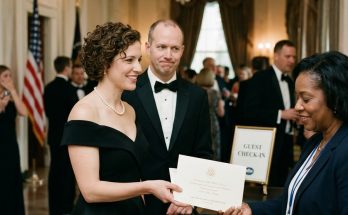
The Mariana-Theresa Health and Food Fund grew slowly.
That was intentional.
We partnered with organizations already doing the work.
A community clinic.
Two church food programs.
A pharmacy assistance nonprofit.
Later, a mobile health unit.
No giant headquarters.
No marble lobby with Mom’s portrait.
I wanted function.
Not monument.
For the first few years, every decision went through Mom in my head.
Would Mom approve?
Mom needed medicine.
Mom sold tamales.
Mom skipped meals.
That connection motivated me.
Then one board member, Dr. Keisha Bennett, challenged me.
“We need to expand into transportation support.”
I said:
“Mom never had transportation problems.”
She stared.
“That’s not the test.”
Right.
I had accidentally turned the fund into a reenactment of Mom’s hardship instead of a response to current community need.
That was another form of control through memory.
I corrected.
The fund should reflect values.
Not duplicate biography.
So we funded rides to medical appointments.
Later, dental care.
Then nutrition support for diabetic patients.
Programs Mom never used.
Still aligned with dignity and access.
That made the work healthier.
I also stepped back from day-to-day grant approval.
At first, I read too many applications.
Every story affected me.
Older woman choosing between medicine and rent.
Single father skipping meals.
Grandmother raising children.
I wanted to approve everyone.
Not sustainable.
Professional staff used criteria.
I remained on the board.
Not caseworker.
Role clarity again.
The fund’s executive director, Maya Chen, told me:
“You don’t have to personally suffer every story for the money to do good.”
That sentence stayed.
I had begun treating empathy as obligation to absorb.
Same pattern as caregiving.
Different setting.
We improved governance.
Conflict-of-interest policy.
Independent board seats.
Annual audit.
Grant criteria.
No family member could direct money to themselves.
Roger remained an advisory volunteer, not financial decision-maker.
I remained one vote.
The fund did not belong to me emotionally just because the story began with Mom.
That mattered.
The Aranda family later offered a very large donation.
Five million.
No conditions on paper.
Still, I hesitated.
Would accepting it let them polish family history?
Would the fund become an Aranda project?
Isabel understood the concern.
She suggested anonymous transfer through a donor-advised structure.
No naming.
No publicity.
The board evaluated independently.
Accepted.
That decision helped me separate source from use.
Money does not carry moral contamination forever if obtained legally and given without control.
The original family wealth came from businesses with complicated histories, like many old fortunes.
We reviewed what we could.
No evidence this donation was tied to unlawful activity.
The board accepted.
That five million funded medication and food access for years.
Mom might have refused it out of anger.
Maybe.
We did not know.
I stopped pretending I could ask her.
The living had to make current decisions.
That was another stage of grief.
Letting values guide without inventing instructions from the dead.
The fund also exposed class differences in a new way.
Some donors wanted gala dinners.
I hated galas.
Maya explained fundraising realities.
Not every donor would quietly wire money.
We compromised.
One annual event.
Simple.
No poverty slideshow.
No patient stories without explicit consent and compensation where appropriate.
No turning recipients into emotional content.
That rule mattered deeply to me.
Mom spent years hiding need because she valued dignity.
We would not use other people’s need as entertainment for donors.
The first gala raised less than some flashy events.
Fine.
Over time, reputation grew.
Respectful.
Effective.
Boring in the best way.
I eventually spoke publicly about Mom once.
Not the full family scandal.
The core lesson.
A woman in our community delayed care because she believed money was unavailable to her.
Financial opacity can become a health issue.
People nodded.
No one needed Roger’s worst messages.
No one needed Dad’s tape.
Those details belonged to family history and legal records.
Public storytelling has boundaries too.
The fund outgrew the mystery.
That was what I wanted.
When people referred to Mom, they increasingly knew Mariana-Theresa as the name on a health program rather than the woman with hidden millions.
At first, that bothered me.
They did not know her.
Then I realized institutions do not preserve whole people.
Families do.
Programs preserve values imperfectly.
Enough.
At home, I still made her tamales.
Badly.
The first batch fell apart.
Roger laughed.
Mom would have laughed too.
That memory did more for me than any donor plaque.
The fund’s first external audit was emotionally difficult for me.
An auditor questioned several administrative expenses.
Nothing improper.
Normal review.
Still, my body reacted as if someone were accusing us of becoming like Roger.
I had to remind myself:
Scrutiny is not disrespect.
Good governance invites questions.
That was another way the old family history could distort current behavior if I let it.
We answered.
Adjusted documentation.
Moved on.
Transparency should not feel dangerous when there is nothing to hide.
I wanted the fund to learn that lesson more easily than my family had.
The fund also adopted a policy that staff members could not require gratitude letters from recipients.
That sounds small.
Many assistance programs love testimonials.
We allowed voluntary feedback.
Never required.
Why?
Because receiving medicine should not create a debt of public emotion.
Mom hated asking for help.
I imagined how much worse it would have felt if every pharmacy discount required her to tell a room full of donors how desperate she was.
Dignity became part of program design.
Not an inspirational word.
A procedure.
Maya, the fund director, eventually asked whether I wanted to establish a donor family council.
“No.”
She laughed.
“That was fast.”
I had seen too many family systems where money gave relatives ceremonial authority they had not earned through competence.
The fund needed a board selected for skill and community perspective.
Not bloodline.
Roger could volunteer.
Aranda relatives could donate.
I could serve under term limits.
No hereditary seats.
That rule felt almost radical given the family history.
Arthur had treated company control as family entitlement.
Dad had treated information control as husbandly protection.
Roger had treated correspondence access as inherited responsibility.
I wanted at least one institution in our story where authority had to be justified by role rather than relationship.
The board agreed.
That governance decision outlasted my active involvement.
Good.
Values matter most when they survive the person who insisted on them first.
As the fund matured, I reduced my board role under the same term-limit policy I had supported.
That was harder than writing the policy.
Founders like to believe governance rules are for future people.
No.
I rotated off for a period.
The fund continued.
Programs expanded.
No collapse.
No one called me for every decision.
Again, the pattern repeated:
If an institution cannot function without one person, the institution is not finished growing.
I had learned that from family secrecy, estate administration, and now philanthropy.
Different settings.
Same lesson about concentrated control.
The fund’s independence eventually became a source of comfort rather than loss. Programs continued when I traveled. Staff made decisions I never saw. New board members had never met Mom. At first that felt wrong. Later it felt exactly right. A useful institution should not require everyone to share the founder’s personal grief in order to do good work.
One final governance change came from my own family history: no one person could control both information and money. Financial statements went to multiple authorized reviewers. Major grants required more than one approval. Minutes were distributed. Records were stored where successors could find them. That may sound excessively procedural for a small foundation. To me, it was emotional insurance. Dad and Roger had not needed physical access to Mom’s fortune to shape her life; controlling information had been enough. I never wanted the fund to recreate that pattern under charitable language.
Click here to continue reading: PART 15: Years Later, I Sold Mom’s House by Choice and Understood That Leaving the Place Where She Suffered Did Not Mean Leaving Her Behind
Three Days After We Buried My Mother, I Found Eighteen Million Dollars Hidden Above Her Ceiling and Learned Theresa Was Never Her Real Name
Part 14 of 16