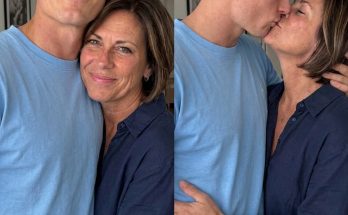
Carol kept journals irregularly.
I knew that during our marriage.
What I did not know was whether I had the right to read them after her death.
For three years, I left the box sealed.
Then Daniel asked:
“Do you think there’s more?”
Probably.
I hated the question.
I asked Dr. Morris.
She said:
“You’re not asking a legal question. You’re asking what kind of privacy remains after death when the person’s hidden actions affected living people.”
Exactly.
There was no perfect answer.
I decided to read only the journals from periods directly connected to Anna and Rebecca.
Not college gossip.
Not every private thought.
A boundary I chose.
The earliest relevant journal began months after Anna’s visit.
Carol wrote:
Anna came today.
Then four pages.
Fear.
Jealousy.
Rationalization.
She admitted knowing I deserved the truth.
She admitted thinking:
If I tell him, I lose him.
Then another thought:
If I don’t tell him, maybe she will.
When Anna did not immediately contact me again, Carol interpreted silence as permission.
That sentence made me furious.
No one had given permission.
Silence can be fear.
Confusion.
Distance.
Lack of information.
Carol used it as absolution.
Later entries showed guilt intensifying.
When we became engaged:
I keep thinking the ring is sitting on top of something rotten.
When Daniel was born:
He is so perfect and I am terrified happiness is punishment waiting for timing.
That line hurt.
Carol loved Daniel.
She also carried doom around his birth because of the secret.
Remorse had infected her joy privately.
I never knew.
When Rebecca was born, Carol did not know exact date initially.
Anna later wrote.
Carol’s journal:
There is a baby in the world who belongs partly to Michael, and he is buying a crib for the baby we plan someday.
I had to stop reading.
I walked outside.
Cried.
Then returned.
Why?
Because accuracy.
The later journals showed attempts to confess.
One entry before our tenth anniversary:
I almost told him tonight. He said he has never been happier. I lost my nerve.
That made me angry in a different way.
My happiness became her reason to deny me truth.
She decided I would prefer ignorance without asking.
Control disguised as protection.
Years later:
Anna wrote again. Rebecca asks questions. I told Anna I need time. What I mean is I want a version of courage that does not cost me anything.
There.
Carol understood herself brutally.
That mattered.
Not enough to repair.
Still.
The final journal from the year before diagnosis contained the line that changed something in me.
I have spent decades thinking confession is the brave act. It is not. The brave act would have been allowing Michael to make choices with the truth when I was young. Now confession mostly transfers the pain I have been carrying onto him. I still owe him the truth, but I no longer get to imagine telling him makes me good.
I sat for a long time.
That was the clearest thing she had written.
She knew late confession would not redeem.
She still chose it, partially, through her final request.
Why not tell me directly?
The journal answered.
She feared I would spend her final days looking at her differently.
That angered me.
Even at death, she controlled timing.
But I also pictured her.
Dying.
Afraid.
Still selfish.
Still human.
I finally understood something about forgiveness.
It was not:
Carol suffered enough.
She deserved peace.
She apologized.
Those are judgments I could argue forever.
Forgiveness, for me, became smaller.
I stopped asking her dead memory to produce a different past.
That was all.
I could say:
What you did was wrong.
I wish you had told me.
I hate that you waited.
I still love you.
I will not spend the remaining years turning every memory into a trial.
That was my forgiveness.
Not acquittal.
Release from ongoing prosecution.
I told Daniel and Evan I had read the journals.
I shared only the passages directly about them and the secret.
No need to expose every thought their mother had.
Daniel listened.
Then said:
“She knew.”
“Yes.”
“Does that make it worse?”
“Some parts.”
“Better?”
“Some.”
He nodded.
Complicated.
Evan asked:
“Do you forgive her now?”
I smiled.
“I think I stopped trying to answer that in one word.”
He laughed.
“That’s a therapist answer.”
“Yes.”
Rebecca did not want to read the journals.
Important.
I offered.
She said:
“No.”
“Are you sure?”
“Yes.”
“I think I know enough about her guilt. I don’t want to spend my life studying it.”
That was wise.
She wanted the specific letter where Carol acknowledged Thomas as her father.
I gave her a copy.
Enough.
Anna wanted nothing.
“I lived my part,” she said.
Also wise.
I archived the journals with family records and wrote a note:
PRIVATE. Direct family review only. No publication.
Why?
Because Carol’s wrongdoing did not erase her right to remain more than public material.
I had no interest in turning the story into spectacle.
Our family knew.
The people affected knew.
That was sufficient.
On the anniversary of Carol’s death that year, I went to the cemetery alone.
I sat beside the stone.
For the first time, I spoke out loud.
“I found her.”
Wind.
Nothing.
“Rebecca is good.”
My voice broke.
“You should have told me.”
Still nothing.
Then:
“I loved you.”
That sentence no longer felt like betrayal of myself.
Love was not a legal defense.
It was simply another fact.
I left flowers.
Went home.
And for the first time, I did not take the secret with me as something that needed to be solved again that night.
Reading Carol’s journals also forced me to think about what confession is for.
Sometimes people confess to relieve themselves.
Unload guilt.
Transfer burden.
Carol knew that late.
That is why her final request felt ethically complicated.
She gave me enough truth to discover everything, then died before facing the consequences.
Was that cowardly?
Partly.
Was it also better than silence forever?
Yes.
Both.
I decided not to romanticize deathbed honesty.
Timing matters.
A truth told when the other person can no longer ask questions is not the same as accountability while alive.
Still, withholding forever would have harmed Rebecca and me beyond Carol’s death.
So I gave the final act its limited credit.
She opened the door.
She did not walk through it with us.
That was all.
This framing helped Daniel too.
He had swung between:
Mom redeemed herself by telling Dad.
And:
Her final request was selfish.
Neither fully.
A corrective action can be morally meaningful without canceling the delay that made it necessary.
We learned to hold proportion.
That became another family skill born from pain.
Click here to continue reading: PART 14: Rebecca’s fiftieth birthday became the first milestone we could celebrate without counting everything I had missed, because the relationship had finally grown larger than the loss
Carol’s final request sent me to Anna’s doorstep nearly forty years after we said goodbye, where one sentence changed everything I thought I knew about my marriage
Part 13 of 16