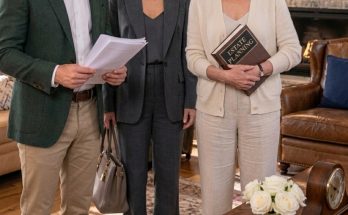
Mom was eighty-four when memory changes became more than ordinary.
Duplicate payments.
Missed appointments.
A pot left on stove.
We evaluated.
Mild cognitive impairment initially.
Then Alzheimer’s.
Slow.
She remained herself in many ways.
Still corrected restaurant bills.
Still noticed decimal errors.
But dates slipped.
I became healthcare proxy.
Professional fiduciary managed finances later by her own prior documents.
Important.
She had planned.
I did not take over account simply because daughter.
We used systems.
Mom moved to assisted living after two years.
Her choice while still capable enough.
No fight.
She hated leaving condo.
Loved not cooking.
Mixed.
One day, she asked:
“Are you still married to Brian?”
My stomach tightened.
“No, Mom.”
“Oh.”
Then:
“Good.”
I laughed.
She had never said that when memory intact.
The next day she asked again.
There was no need to make her relive the entire divorce each time.
I said:
“No. I’m married to Malcolm now.”
She smiled.
“I like him.”
Good.
Sometimes she remembered Beatrice storming workshop.
Sometimes not.
One afternoon she said:
“That woman came here this morning demanding you cook.”
We were in assisted-living lounge decades later.
Her mind had returned.
I answered:
“That happened a long time ago.”
“Did you go?”
“No.”
She smiled.
“Good girl.”
I almost cried.
Then corrected myself mentally.
Not girl.
But from Mom, love.
She asked:
“What did you do instead?”
“I went to work.”
“Good.”
That memory, stripped of details, held core.
I had gone to work.
Chosen self.
But I did not want Mom reliving anger repeatedly.
If she became upset, I redirected.
No point telling her Brian mocked or Beatrice exploited.
Truth has context.
Dementia care changes.
We preserved history in writing for family, not as daily burden.
I created a small family book.
Photos.
Dad’s workshop.
Mom young.
My early culinary classes.
Grand Plaza launch.
Malcolm.
No photos of conflict.
A life is more than grievances.
Mom loved book even when names faded.
She pointed:
“You cooked.”
“Yes.”
“You always cooked.”
This time not insult.
I laughed.
“Yes.”
Malcolm aged too.
He had heart disease but managed.
We lived in smaller condo after selling joint house.
By choice.
Near Mom.
I reduced work to part-time advisory.
Eventually retired.
Retirement frightened me less than expected.
I had reclaimed career enough.
I did not need die at desk to prove anything.
I kept teaching occasional paid workshops at Meridian academy.
Then guest sessions.
Then stopped.
No one forced.
I cooked at home more after retirement.
Again, by choice.
Malcolm did dishes.
We had settled.
One Christmas I baked Charles’s walnut cake, Dad’s favorite cookies, and a new apple tart.
Food no longer felt like unpaid identity.
Because I could stop.
Freedom changes same act.
Brian sent holiday card.
He and Elise had moved partly to Florida.
Beatrice lived near them in senior community after a fall.
She was nearly ninety.
Charles gone.
Miller House under Tanya and Lucas.
World moved.
I visited Beatrice once.
Yes.
My choice.
I was in Florida for conference? retired now. Maybe traveling with Malcolm.
We were near.
I emailed first:
We’ll be nearby. Would you like coffee?
She said yes.
We sat in community café.
She used walker.
Still sharp.
She said:
“I can’t believe you came.”
“I wanted to.”
“Why?”
“I don’t know. You were part of my life.”
She nodded.
No demand.
She told me about Charles.
Brian.
Elise.
I told about Mom.
At one point she said:
“If I could do it again, I would tell you to bring a bakery cake and sit down.”
I smiled.
“I might still cook.”
“I know.”
“That was the problem. You thought because I would, you could require.”
“Yes.”
Old age had distilled.
We did not hug at end.
Hands.
Warm.
That was enough.
I never saw her again.
She died two years later.
Brian told.
I sent flowers.
Grief strange.
I grieved woman who hurt me and later changed partly.
No contradiction.
At Mom’s final stage, she stopped recognizing me consistently.
This hurt more.
I learned not to ask:
Who am I?
No tests.
Interesting.
Even memory care taught same family lesson.
Do not make vulnerable person prove connection.
I entered:
“Hi, Mom. It’s Samantha.”
Give answer.
No quiz.
She sometimes smiled.
Sometimes not.
Love did not need test.
That phrase echoed.
Mom died at eighty-nine, peacefully after pneumonia.
Malcolm beside me.
I felt orphaned and old suddenly.
My parents had been the people I tried to protect from truth.
In the end, they had known enough.
Dad had seen.
Mom had defended.
I wished I had let them earlier.
That regret remained.
Not destructive.
Instruction:
Do not isolate to protect appearances.
Tell someone.
No marriage deserves secrecy that removes support.
I carried that forward to younger colleagues and friends only when relevant.
Not as sermon.
As:
“You don’t have to tell everyone. Tell one safe person.”
Sometimes that is enough to stop disappearing.
Mom’s dementia also brought back the theme of service in a new way.
Care staff did things I once considered “family duties.”
Bathing.
Laundry.
Meals.
Medication.
I paid professionals from Mom’s resources.
At first, guilt.
Should I do more personally?
Then I remembered Beatrice’s phrase:
A good wife doesn’t relax while family still needs something.
Different role, same trap.
Would a good daughter prove love by doing every task herself?
No.
I visited as daughter.
Sometimes helped.
Sometimes not.
I held Mom’s hand.
Read.
Brought photos.
Argued over television.
Professionals handled skilled care.
This protected us both.
If I exhausted myself bathing and managing meds, visits could become labor.
Money exists partly to buy care.
That does not reduce love.
I told other daughters in hallway when they apologized for using aides:
“We are family, not entire staffing model.”
Some laughed.
I had strong feelings.
Of course.
Mom benefited too.
She did not want me doing intimate care when professionals available.
Dignity.
Roles can preserve dignity.
This completed a circle.
For years, the Millers blurred family and labor to exploit.
In old age, I learned clearly separating family and labor can be loving.
Professionals deserve pay.
Family deserves choice.
Both can care.
As Mom declined, I also had to decide what parts of her past to correct when memory changed.
She sometimes remembered Dad as still running the workshop.
Sometimes thought I was preparing for my first culinary seminar.
Once she asked:
“Does Brian mind you traveling?”
I froze.
Then said:
“Brian and I aren’t married anymore, Mom.”
She frowned.
“Good.”
Then forgot.
The care team told me not every historical confusion required a full correction if it caused no harm.
So later, if she asked whether “my husband” minded work, I might say:
“My life is arranged the way I want.”
True.
Kind.
There was no need to re-deliver the divorce as fresh pain.
This challenged my commitment to honesty until I understood:
Honesty is not the same as forcing painful facts on someone who cannot retain them.
The ethical goal is dignity and meaningful choice where possible.
I wished our family had understood that kind of nuance earlier.
We had spent years with two extremes:
Hide everything to keep peace.
Or tell harsh truth to prove point.
There is a middle.
Accurate enough for the person’s needs, respectful of capacity, never manipulative for our convenience.
Caregiving taught me that late.
Click here to continue reading: PART 16: By the end, none of us needed Brian’s restaurant to fail or Beatrice to be humiliated — the real ending was that I stopped confusing service with love and learned to choose both work and family without disappearing inside either
Beatrice thought I was still the woman who would wake before sunrise to serve her family, but that morning I was headed toward the career they had spent ten years pretending I did not have
Part 15 of 16