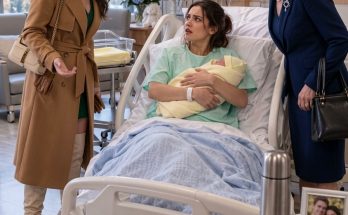
Robert’s second stroke was worse.
Andrew was thirty.
Maya called me before he could.
“Teresa, Robert’s in intensive care.”
I stood in my kitchen.
Old reflex.
Go.
Then a new question.
“What does Andrew need?”
“He doesn’t know.”
I asked whether Robert’s sister had been contacted.
Yes.
His healthcare documents named her first and Andrew second.
Good.
The system existed.
I did not need to become central.
I went to the hospital later that day because I wanted to support Andrew.
Not Robert.
That distinction may sound cold.
It was honest.
Robert was sedated.
Andrew sat in the waiting room with his hands clasped.
He looked up.
“Mom.”
I hugged him.
No speeches.
The neurologist later explained the damage.
Speech.
Right-side weakness.
Swallowing problems.
Recovery uncertain.
Robert’s sister, Diane, was overwhelmed.
She lived in Arizona and had her own health issues.
The healthcare directive eventually shifted more responsibility to Andrew according to its terms.
He panicked.
“I don’t know what he wants.”
I asked:
“Did he write it?”
“Some.”
“Then start there.”
We reviewed nothing ourselves beyond what Andrew showed the medical team and counsel.
I was not the decision-maker.
That mattered.
Andrew wanted me to interpret Robert.
“What would Dad choose?”
Twenty-eight years made me tempting as a translator.
I said:
“I can tell you what he used to say. I cannot tell you who he is now.”
He hated that answer.
Needed it.
Robert had once said he never wanted prolonged life on machines with no meaningful recovery.
That was relevant but not sufficient.
The doctors explained prognosis.
Andrew asked questions.
Diane participated.
A hospital ethics consultant helped clarify choices.
No one made me the wife because I knew his history.
I sat beside Andrew.
Support.
Not authority.
Robert improved enough to leave intensive care.
Then rehabilitation.
He recovered speech partially but needed substantial help.
This time, living alone was not realistic immediately.
Andrew looked at me before saying anything.
I raised an eyebrow.
He laughed weakly.
“I wasn’t going to ask.”
Good.
They arranged a rehabilitation facility and then assisted living.
Robert resisted.
“I can go home.”
The staff evaluated.
Not yet.
I watched from the edge.
The irony was painful.
Years earlier, Robert planned my housing without consent.
Now people were deciding where he could safely live based on actual impairment.
I did not enjoy it.
That surprised me.
Revenge fantasies dissolve when real vulnerability appears.
He was frightened.
Not the man at the microphone.
A damaged older man trying to understand why he could not go home alone.
I visited once.
He struggled to say:
“I understand.”
“What?”
He pointed around.
“This.”
I waited.
“Being… decided.”
I felt something move inside me.
Not forgiveness.
Recognition.
I said:
“They’re involving you as much as they can.”
He nodded slowly.
“Tried… not.”
I knew.
He meant he had not involved me.
“Yes.”
Tears filled his eyes.
That was enough.
No grand apology.
His speech made long explanations difficult.
Maybe that was merciful.
I did not need another confession.
Andrew handled Robert’s care better than any of us would have years earlier.
He asked preferences.
Used professionals.
Did not move him into his own home automatically.
Maya supported but did not become unpaid caregiver.
Diane helped remotely with paperwork.
Paid staff did care work.
Family visited.
The system was distributed.
I was proud of Andrew.
That pride did not erase our past.
It showed what he had learned from it.
One evening, he said:
“I understand now why you kept saying professional help isn’t abandonment.”
I nodded.
“When Grandma Margaret got sick, you did everything.”
“Yes.”
“Dad let you.”
“Yes.”
“I used to think that proved how much you loved her.”
“I did love her.”
“But it also nearly destroyed you.”
I looked at him.
“Yes.”
Care can be love.
Care can also become exploitation when the work is assumed and unsupported.
Both.
Andrew hired a care manager to coordinate Robert’s appointments.
That single decision saved dozens of family hours.
Money spent appropriately.
No guilt.
Robert eventually remained in assisted living permanently.
He adjusted.
Made friends.
Complained about food.
Normal human adaptation.
He did not return to the old Bellwood life because that life no longer existed.
Neither did I.
The second stroke closed another emotional door.
Not with revenge.
With perspective.
Robert had once seemed powerful enough to define reality.
Now he needed help buttoning a shirt.
Power changes.
Dignity should not.
That was the lesson I carried out of the hospital.
Even for him.
Watching Andrew make medical decisions for Robert also repaired one piece of our relationship I had not expected.
He asked questions.
He waited for explanations.
He did not say:
Dad would want this.
Until he had evidence.
That mattered because certainty had been one of Robert’s favorite tools.
He always knew what everyone supposedly needed.
What I should sign.
What Andrew could handle.
What Irene deserved.
Andrew was becoming different.
One evening in the hospital cafeteria, he said:
“I’m terrified I’ll make the wrong choice.”
I told him:
“You probably will make some imperfect choices.”
He looked alarmed.
“That’s comforting.”
“I mean there may not be one perfect answer.”
He listened.
“Your job is not to control the outcome. It is to use the information, the documents, and his known preferences in good faith.”
He nodded.
That was the same standard I wanted someday for myself.
Not perfect children.
Not mind readers.
Adults who respected process when emotions were high.
The betrayal had taught us that control often grows from certainty.
Humility was safer.
After Robert settled into assisted living, Andrew asked whether I wanted any of Robert’s belongings if he eventually died or moved permanently out of his old apartment.
The question startled me.
Once, almost everything in our home had been shared.
Now I could not think of a single object I needed.
Then I remembered one thing.
A wooden recipe box.
Not Robert’s, really.
Margaret’s.
It had ended up with him after the divorce because it was packed among kitchen items.
“If he doesn’t want it, I’d like the recipe box.”
Andrew smiled.
“Grandma’s?”
“Yes.”
That was all.
Not the wedding china.
Not photographs.
Not furniture.
A recipe box.
When Andrew later brought it to me with Robert’s permission, I opened it carefully.
Index cards in Margaret’s handwriting.
Soup.
Bread.
A terrible gelatin salad.
Notes in margins.
Call Teresa about cardiology.
Andrew likes cinnamon.
Robert hates peas.
A whole family compressed into practical reminders.
I cried.
Margaret had failed me and loved me.
Robert had hurt me and still existed in those notes as a son who hated peas.
Life refuses clean categories.
I kept the box.
Not as proof of the past.
Because some pieces were still mine to remember without anger.
Click here to continue reading: PART 15: When Teresa developed new nerve damage in her sixties, she faced the fear she had been avoiding since the settlement — that accepting more care might make her dependent again, even after spending years fighting for control
The will Robert had hidden did not give him the house — it gave Teresa the one thing his public celebration had been built to erase: legal standing
Part 14 of 16