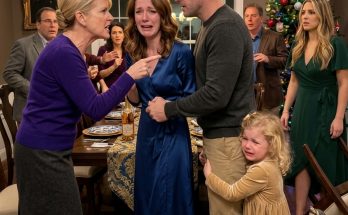
Ten years after Bellmont House, someone brought up the dinner at Thanksgiving.
A cousin joked:
“Remember the four-thousand-dollar lobster trap?”
Everyone laughed.
Even me.
My father did not.
He was quieter by then.
My mother changed the subject.
I realized the story had finally shrunk.
Once, that dinner represented everything.
Entitlement.
Humiliation.
Inheritance.
Three years of silence.
Now it was one bad night in a much larger family history.
The cottage still stood.
The investment account still existed in diversified form.
The scholarship in Sofia’s name had funded students she never met.
Alejandro had rebuilt his work.
Beatriz had become more direct.
My cousins learned to ask who was paying before ordering champagne.
My mother and I spoke twice a month.
My father and I spoke less.
That was honest.
No reconciliation package required equality.
One afternoon, I found the old Bellmont receipt in a folder.
My separate meal.
One hundred thirty-eight dollars and forty cents.
I had kept it like evidence.
I looked at it.
Then laughed.
I no longer needed it.
The restaurant had records.
My memory was clear.
The family story had corrected itself enough.
I shredded it.
Not dramatically.
No fire.
Paper into paper.
The next weekend, Alejandro came to the cottage.
He called first.
Asked if he could bring lunch.
I said yes.
We sat by the lake.
Sofia’s lake.
My cottage.
Family space by invitation.
Different truths living together.
He asked if I ever regretted not splitting the account.
“No.”
He nodded.
“I figured.”
“Do you still think she was unfair?”
“Sometimes.”
“Okay.”
He smiled.
That word had become important.
Okay.
Not agreement.
Permission for another person’s view to exist without taking yours.
The dinner bill had been a trap because everyone believed my ability to pay created responsibility.
The estate fight worked the same way.
They believed having more meant owing control.
I learned something different.
Capacity is not consent.
Affordability is not agreement.
Family is not automatic authority.
But boundaries are not exile either.
I could say no to paying sixteen people’s dinner and still love them.
No to signing away a cottage and later invite someone over.
No to sharing an investment account and later choose a gift.
No to reconciliation on someone else’s terms and yes to contact on mine.
That was the real legacy Sofia left me.
Not the lake.
Not the portfolio.
Permission to treat a gift as mine.
And from there, permission to make my yes meaningful because no remained possible.
Before Alejandro left, he gathered the lunch containers.
“Want me to take these?”
“Yes.”
He smiled.
“See? Still paying.”
“With trash removal.”
“Interest is brutal.”
We laughed.
He drove away.
I locked the cottage.
Then reopened the door because I had forgotten my sweater on the porch.
No symbolism.
Just life.
That was the ending I trusted.
The Bellmont story stopped being powerful when no one needed it to prove who was right anymore.
For years, I carried the receipt.
My father carried resentment.
Cousins carried embarrassment.
Mom carried guilt.
Alejandro carried anger from the estate fight underneath all of it.
Then ordinary life kept arriving.
Illness.
Birthdays.
Graduations.
Roof repairs.
Jobs.
Deaths.
New babies.
The dinner could not remain the center forever.
One Thanksgiving, Marisol ordered champagne.
Everyone froze for half a second.
Then she laughed.
“My treat.”
The room relaxed.
That tiny moment would have meant nothing to outsiders.
To us, it showed the culture had changed.
Clear offer.
Clear responsibility.
No hidden test.
We drank.
Dad had one glass.
Mom complained it was too dry.
Alejandro asked who wanted more.
No one looked at me.
Perfect.
Years later, after Dad died, we sorted some of his papers.
I found a folder labeled SOFIA.
My stomach tightened.
Inside were copies of estate documents.
Old notes from his attorney.
A page where Dad had written:
Unfair does not mean invalid.
I sat down.
He knew.
Maybe early.
Maybe later.
I will never know when he wrote it.
That sentence complicated him one last time.
He had spent years arguing emotionally against something he understood legally.
Human.
Infuriating.
Familiar.
I kept the page for a while.
Then gave it to Alejandro.
He read it.
Shook his head.
“Classic Dad.”
We both laughed.
Not because the conflict was funny.
Because Dad had remained Dad until the end.
Certainty outside.
More nuance on paper.
Mom asked if I wanted the rest of the folder.
“No.”
I had enough.
That was another change.
At the start, I wanted every piece of evidence.
Every message.
Every receipt.
Every record proving my version.
By the end, I no longer needed total documentation to trust my own memory.
Some records matter.
Some become clutter.
I kept Sofia’s personal note.
A gift is not a committee decision.
That one still mattered.
Not because it proved the estate.
Because it reminded me how to give.
How to receive.
How to say yes.
How to say no.
After Dad’s funeral, the family went to dinner.
Nothing fancy.
Italian place near Mom’s house.
The waiter asked:
“One check?”
Alejandro looked at me.
I raised an eyebrow.
He smiled.
“Separate checks, please.”
Mom laughed.
Even through grief.
The old story surfaced for one second.
Then passed.
That is how I knew it had become history instead of a wound.
History can still hurt.
It simply stops making every current decision for you.
The cottage eventually changed too.
I sold it in my late sixties.
Not because anyone pressured me.
Because the dock was work.
The winters were lonely.
I wanted to live closer to friends.
Selling did not betray Sofia.
Keeping it forever would not have honored her more.
It had been her gift to me.
A real gift allows the recipient to choose when the object stops fitting.
I kept the old key.
No property attached.
Just metal.
Alejandro kept one paddle.
Mom kept a photograph.
We divided memories without dividing title.
The investment account remained.
Different shape.
Different balance.
No longer Sofia’s in any practical sense.
Mine.
That was the point all along.
At another family dinner, long after Bellmont, someone forgot a wallet.
We covered his share.
He paid us back the next day.
No symbolism.
No lecture.
No suspicion.
I noticed only afterward how ordinary the event had been.
Money moved.
Trust remained.
That ordinary moment felt like the real conclusion.
Not me smiling over a $4,386.72 bill.
Not the manager appearing.
Not Dad’s face changing.
Those moments were dramatic.
The ending was quieter.
People asking.
People answering.
People paying what they agreed to pay.
People giving when they wanted to give.
People accepting no without turning love into a debt.
That was the family Sofia could never write into a will.
We had to build it ourselves.
Slowly.
Badly at first.
Then better.
After I sold the cottage years later, people expected me to be devastated.
I was sad.
Not devastated.
The buyer loved the lake.
Planned to repair the dock.
Asked if I wanted anything left behind.
I took one small wooden sign from the kitchen.
SOFIA’S PLACE.
Not because the property remained hers.
Because the sign made me smile.
At closing, I signed the deed.
No family meeting.
No vote.
No guilt.
That may have been the fullest expression of ownership.
I could keep the gift.
Use it.
Share access.
Repair it.
And eventually sell it.
The sale proceeds went into my investment plan.
No dramatic redistribution.
No “now everyone gets a share.”
The cottage had been mine.
Its value remained mine.
That fact no longer felt defensive.
Just ordinary.
Alejandro asked whether he could visit once before closing.
I said yes.
We walked to the dock.
He took the old paddle he had used as a boy after I offered it.
I kept the kitchen sign.
We stood quietly.
Then he said:
“I’m glad Grandma gave it to you.”
I looked at him.
“Really?”
“Not because I think it was fair.”
I laughed.
“Of course.”
“Because you loved it well.”
That was enough.
We left.
No reconciliation speech could have meant more.
Years later, when someone tells the Bellmont story, they still emphasize the manager.
The bill.
My father’s face.
I understand.
Drama is easy to remember.
What mattered came later.
Alejandro asking before entering.
Mom naming her part.
Beatriz correcting lies.
Dad partially changing.
Me learning that boundaries without generosity become walls, while generosity without boundaries becomes control.
The family did not become perfect.
It became more explicit.
That is less glamorous.
Much safer.
On the tenth anniversary of Sofia’s death, we funded another scholarship in her name.
This time several relatives contributed.
Voluntarily.
Different amounts.
No one tracked who gave most.
No one used participation as proof of love.
That may have been the family act she would have appreciated most.
Maybe.
I still refuse to speak for the dead.
We did it because we wanted to.
That was enough.
In the final years, I rarely told the Bellmont story unless someone asked.
That surprised me.
For a while, it had been the story I wanted everyone to know.
Proof of what my family did.
Proof of what I refused.
Eventually, I no longer needed identity from refusal.
I was not the woman who did not pay the bill.
I was Elena.
Worker.
Granddaughter.
Sister.
Aunt.
Cottage owner for a time.
Scholarship donor.
Daughter in a complicated family.
A person who sometimes set good boundaries and sometimes learned late.
The story became one chapter.
That was freedom too.
The family’s best evidence of change was eventually how little anyone discussed money during normal gatherings.
We argued about food.
Travel.
Politics.
Football.
Who forgot dessert.
Ordinary irritations returned.
That was healthy.
A family that can fight about trivial things has stopped using one old financial wound to organize every disagreement.
By the time the Bellmont story became a joke, I no longer needed to correct every detail when relatives retold it. The amount was sometimes rounded. The number of desserts exaggerated. Fine. The central fact remained: they expected me to pay without asking, and I did not. History can tolerate a little storytelling once the truth is no longer under threat.
Eventually, Sofia’s legacy felt less like money and more like permission: permission to choose deliberately, to document clearly, to love people without handing them authority, and to let a no remain a complete sentence when needed.
In the end, the most valuable change was simple: no one in my family could assume that love, wealth, age, or history automatically answered the question of consent.
One final Thanksgiving, years after Sofia’s death, my mother asked whether I wanted her to bring dessert.
Not:
What should I bring?
Not:
I already ordered something.
Want.
I said yes.
She brought a pie.
Too sweet.
Everyone complained.
She laughed.
Nobody turned the moment into symbolism.
That may sound small after everything that happened.
It was not.
The old family had been built around assumptions.
Who should pay.
Who should inherit.
Who should forgive.
Who should agree.
Who should stay quiet.
The newer family asked more questions.
Not perfectly.
Enough.
After dinner, Alejandro and I stood in the kitchen while others cleared plates.
He looked at me.
“You know what’s funny?”
“What?”
“If Dad had just asked you at Bellmont, would you have paid for some of it?”
I thought.
“Maybe.”
He laughed.
“That would’ve killed him.”
“Probably.”
And that was the truth that made the whole story almost absurd in hindsight.
I was never unwilling to be generous.
I was unwilling to have generosity assigned to me and then used as proof of loyalty.
There is a difference.
A big one.
We carried the last plates to the sink.
No manager.
No black leather folder.
No witnesses waiting for someone to submit.
Just family finishing dinner.
That was better than any dramatic victory I could have planned.
And for once, everyone had paid exactly what they had agreed to pay.
Later that night, I thought about how different generosity feels when it begins with a question.
Would you like me to help?
Would you like me to pay?
Would you like me to come?
The answer can be yes.
It can also be no.
Neither answer has to become a referendum on love.
It took our family years to learn something that simple.
Once we did, money stopped being the loudest person in the room.
THE END
The End
Read more original stories on Feel Every Story.
The manager confirmed the reservation had never been made in my name
Part 16 of 16