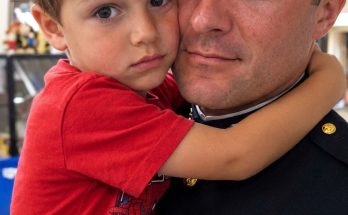
Marcus stood on the porch beside Tanya.
A woman in a pale blue coat was with them.
She introduced herself as Evelyn Brooks, a victim advocate from a local support organization.
They had not come to seize the house or humiliate my son.
They had come because I asked for help.
Daniel appeared behind me.
“What's this?”
“I'm leaving,” I told him.
He laughed as if I had announced an outing.
“Mom, don't be dramatic.”
Marcus stayed by the doorway.
“Loretta has asked us to help collect her belongings. She doesn't want an argument.”
“Who are you?” Daniel asked.
“Someone she trusts.”
Sloan walked into the hall with her coffee.
“Did she call a lawyer because she got her feelings hurt?”
Nobody answered that.
I had spent years explaining myself to people determined not to listen.
This time I walked to my room and opened the suitcase I had packed before sunrise.
Tanya helped me fold my coats.
She did not ask for the story.
Evelyn checked whether I had somewhere safe to stay and whether my medication would last the week.
I said I could afford a small hotel for a few nights.
“Then we'll make a longer plan,” she said.
Daniel stepped into the bedroom doorway.
“What are you telling these people?”
I lifted my chin.
“That you hit me.”
For one second, he looked embarrassed.
Then his expression hardened.
“You were provoking us.”
Marcus raised a hand.
“Please give her space.”
I carried the graduation photograph to the suitcase and looked at it for a long moment.
Then I placed it back on the nightstand.
I did not want that version of my son to be the only one I remembered.
At the front door, Daniel demanded the key.
I put it on the console.
Sloan said I owed them another month's contribution.
I told her I would review anything properly documented.
“No more cash requests,” I said.
Outside, the morning air was cold and clean.
My chest still felt tight.
But nobody was smoking beside me.
At the clinic a nurse photographed my bruise with permission and recorded my account.
The doctor examined my cheek and breathing.
She asked whether I felt safe returning to the house.
“No.”
I said it without apologizing.
Evelyn discussed reporting options and a safety plan.
I chose to report the assault.
An officer took a statement, explained the process, and asked where he could contact me.
There was no instant judgment and no dramatic arrest in my kitchen.
There was paperwork, follow-up, and the uneasy knowledge that I could not control my son's reaction.
For the first three nights, I stayed with Tanya.
She made soup and let me keep the hallway light on.
I had not realized how often I woke to listen for footsteps.
Andre came over with a folder and a calculator.
He had reviewed only my own statements and receipts.
For six months I had transferred money to Daniel for household expenses.
The transfers were real.
So were charges to my card that I did not recognize.
One was for an expensive dinner.
Another was for a pair of designer shoes.
I remembered Sloan borrowing my card to buy medicine once.
I had never authorized those other purchases.
Andre advised me to dispute the charges and replace the card.
He did not accuse anyone without records.
At the bank, a representative helped me secure my account and start the dispute process.
We also checked who had access to my online banking.
I changed passwords myself.
That evening Daniel called twenty-one times.
I did not answer.
He sent a message that said I had embarrassed the family.
Then one that said he was sorry I felt hurt.
The third said I should come home because Sloan was tired of the mess.
I sat with the phone in my hand.
Tanya brought me tea.
“Do you want me to read them?” she asked.
“No. I know what they say.”
A week later, Marcus helped me review my housing options.
There was no secret fortune to rescue me.
I had a modest pension and money I had saved slowly.
But I also had enough income to rent a one-bedroom apartment if I kept my expenses careful.
We looked at a building near the library with a working elevator and a small courtyard.
The apartment had a window that closed properly.
There was a grocery store within walking distance.
I signed a lease after reading every page.
The first night there, I sat on the floor eating crackers because my furniture had not arrived.
I laughed at myself.
Then I cried.
My phone lit up with a message from Daniel.
He wanted to meet.
Not to talk about the assault.
He wanted to know who had been helping me, and what I had told them.
I wrote back that future communication could be in writing.
He replied immediately.
“You're acting like I'm dangerous.”
I stared at the words.
Then I put the phone facedown and went to bed.
During those first days away from the house, I kept expecting someone to tell me I was overreacting.
It was a familiar fear.
When I was younger, I had learned to be the person who did not make problems bigger.
I worked overtime instead of complaining about money.
I endured rude customers without answering them.
I attended family celebrations even when nobody noticed whether I was comfortable.
Being dependable had become so central to my identity that I sometimes forgot I was allowed to need care.
At Tanya's kitchen table, I tried to apologize for using her spare room.
She interrupted me.
“You have washed every dish I've used since you arrived.”
“I don't want to be trouble.”
“Then stop treating friendship like a bill you need to pay.”
I smiled despite myself.
She had known me since she was a girl with a school bag almost bigger than her shoulders.
Her mother, Evelyn, had been ill for months during her final year of school.
I made meals, drove to appointments, and sat with Evelyn so Tanya could study.
I had done those things because our families were neighbors.
I never expected anything in return.
Now Tanya was offering a bed and a quiet place to recover.
The balance did not need to be settled by Friday.
On the fourth morning, I opened my suitcase and found a scarf I had forgotten I owned.
It was green and patterned with tiny birds.
I had worn it to my sister's birthday several years earlier.
Sloan once said the color made me look old.
I put it on anyway.
Tanya said it suited me.
I kept wearing it.
At the clinic, the doctor showed me the notes she had entered about my injury.
She explained how to obtain a copy for my records.
I asked whether the bruise could have caused the headaches I was having.
She examined me again and explained when to seek urgent help if symptoms worsened.
I had spent the night before the appointment worrying that I would be treated as foolish for staying in the house after earlier warnings.
Instead, the nurse asked whether I had transportation home.
She asked whether the people helping me knew where I was.
She gave me information about community services without insisting I use every one.
Small acts of respect felt strangely unfamiliar.
When Marcus visited, he brought a legal pad rather than a dramatic plan.
We made separate columns.
Physical safety.
Housing.
Banking.
Personal belongings.
Possible communication with Daniel.
He explained which questions he could answer and which belonged to other professionals.
He did not know whether any criminal charge would be brought.
He did know I could preserve evidence and make choices about contact.
He helped me write an inventory of belongings still at the house.
A cedar chest from my mother.
Two boxes of family photographs.
My sewing machine.
A small set of silver spoons I had owned before Daniel was born.
Sloan had once said they were unfashionable.
They were mine.
We discussed arranging a peaceful pickup, preferably with appropriate assistance if I felt unsafe.
I did not rush back for them.
My medicines, identification, and essential clothing were already with me.
That mattered more than spoons.
Several days later, Daniel called from an unfamiliar number.
I answered before I realized who it was.
“Mom, what is going on?”
His voice was sharp.
I could hear traffic behind him.
“I left the house.”
“You brought strangers into my home.”
“I brought people I trusted to help with my things.”
“You've made me look like a monster.”
I waited for him to mention my face.
He did not.
“I need to get off the phone,” I said.
“Don't hang up on me.”
I ended the call.
My hands shook afterward.
Tanya found me staring at the dark screen.
I said I was embarrassed to be frightened by my own child.
She sat beside me.
“Fear doesn't care how old the other person is.”
We did not speak for a while.
Later I wrote down exactly what Daniel had said, along with the date and time.
Marcus had advised me to keep a factual record rather than argue by text.
I found that writing facts helped me separate what happened from the accusations that followed.
In my journal, I wrote one sentence on a fresh page.
I asked Sloan to smoke outside because smoke hurts my lungs.
That was the beginning.
It was enough.
The apartment search took more effort than I expected.
The first building had stairs I couldn't manage comfortably.
The second required a deposit that would leave too little emergency money.
A third looked lovely online, but the bathroom had no room for the support rail my doctor recommended.
I began to understand why people stayed in unsatisfactory housing longer than they wanted.
Moving cost money.
It required transportation, paperwork, patience, and energy I did not always have.
Tanya and I made a spreadsheet of prices, access, utilities, and bus routes.
At the fourth building, the manager showed me a modest unit with afternoon sunlight.
The carpet was new.
The kitchen cupboards were plain.
There was a little bench outside the front door.
I could imagine sitting there with a cup of tea.
The manager asked whether I had questions.
I asked about emergency repairs, smoke-free rules, and the nearest bus stop.
I was not embarrassed to ask.
When I received the approval, I took the paper to Tanya's kitchen.
She read it and hugged me.
I had been worried that independence at my age would mean loneliness.
But I was learning it might also mean the freedom to invite people in by choice.
I visited the new apartment twice before signing the lease.
On the second visit I brought a tape measure and checked whether my bed would fit beside the window.
I measured the cupboard shelves because reaching too high made me breathless.
I tested the water pressure and asked how maintenance requests were handled.
The manager explained the smoke-free building policy.
I read the rules carefully.
It felt strange to take pleasure in a simple sentence about smoking not being permitted in indoor common areas.
I had begged for that much consideration in a house my son called a gift.
Tanya helped me plan the move.
We found a secondhand table, two chairs, and a narrow bookcase.
Marcus insisted we use proper movers for the heavy furniture.
I had been ready to lift everything myself out of stubbornness.
He reminded me that accepting help was not the same as surrendering independence.
On moving day I stood in the empty room while someone carried in the mattress.
I had no family photographs on the walls yet.
The cupboards were bare.
There was an echo when I spoke.
But the door closed properly, and I had the only key I needed.
After Tanya left, I made a list of things I wanted in the apartment.
Curtains that looked cheerful.
A lamp bright enough for reading.
A comfortable chair for the balcony.
A kettle I could lift easily.
None of those things was expensive.
All of them meant that I was making decisions for my own comfort again.
That night Daniel sent another message asking when I intended to come home.
I looked around the room.
My suitcase stood beside the bed.
My cardigan hung over a chair.
My medications were on the bedside table where I had put them.
I wrote back that I had moved into my own place and would not be returning.
He did not answer for several hours.
When he finally did, his message was only four words.
“You'll regret this eventually.”
I saved it with the others.
Then I turned on the little lamp and began reading a library book.
Click here to continue reading: PART 3: The Life I Built Without Asking My Son for Permission
The Morning I Finally Let Someone See What My Son Had Done
Part 2 of 3