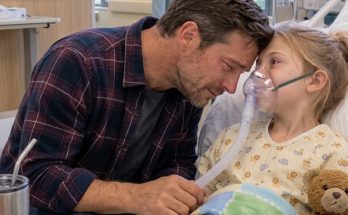
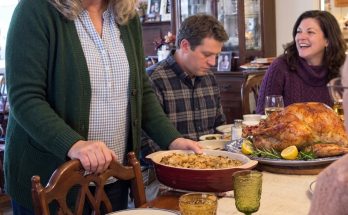
Emma stayed in the hospital until her doctors felt she could continue recovering safely at home.
Before discharge, a respiratory therapist taught us how to check her inhaler technique.
We practiced using the spacer correctly.
We reviewed which symptoms required immediate emergency help and which meant calling her clinician for advice.
Jessica joined us.
She asked questions about school, sports, and nighttime symptoms.
I made notes in a small notebook.
We scheduled follow-up with Emma's specialist.
The discharge nurse also reminded us to keep rescue medication accessible and follow the prescribed plan.
I had spent days fearing I might lose my daughter.
Now I was concentrating on ordinary practical things.
Where to put the medication at home.
Which teacher needed a copy of the action plan.
How to coordinate her care between two households.
It felt like a gift to have tasks I could actually complete.
On the morning we left, Emma asked if Grandpa could come for dinner.
“Of course,” I said.
“Can Mom come too?”
I looked at Jessica.
She nodded.
We agreed to eat together for Emma's sake.
That evening, Harold arrived with vegetable soup and fresh bread.
Jessica brought fruit.
Emma sat on the couch with a blanket over her knees.
She told Harold about the nurses who had made her laugh.
Nobody mentioned the gender-reveal party.
Nobody asked her to explain how frightened she had been.
We let her be a child who was recovering.
Two days later, my mother came to the house without calling first.
I saw her car through the window.
I stepped onto the porch and closed the door behind me.
“Monroe,” she said.
“Emma's resting. You should have called.”
“I've been worried sick.”
I studied her face.
I wanted to believe her.
But worry did not erase the messages she'd sent.
“Did you know she was in intensive care?” I asked.
“You made it sound so dramatic.”
“She was in intensive care. Those were the doctors' words.”
Mom crossed her arms.
“Your sister only has one gender reveal.”
“Emma only has one life.”
She looked away.
I told her that I would not argue about which event deserved my attention.
I also told her she could not visit without arranging it first.
“Are you punishing me?”
“No. I'm protecting the quiet Emma needs to recover.”
She began crying.
I felt a familiar urge to comfort her.
Then I remembered my daughter asleep inside.
“I'll speak with you another day,” I said.
I went back indoors.
It was difficult.
It was also necessary.
Stephanie sent a message later that week.
She said Mom had told everyone I'd slammed the door in her face.
I replied that Emma was recovering and I was not discussing the party.
Stephanie sent several more messages.
I did not answer.
I had an appointment with Emma's specialist to prepare for.
At the appointment, we talked about possible asthma triggers and updated her management plan according to the clinician's recommendations.
We discussed how to coordinate with her school nurse.
Jessica attended.
She had begun sending me clear messages about medication administration during her parenting time.
That gave us something practical to build on.
Her attorney later confirmed she would not be filing the proposed emergency custody request.
We still arranged a routine meeting to review how to handle future medical emergencies.
Our legal arrangement remained in place.
We agreed that the parent with Emma would notify the other promptly during any hospitalization and share discharge instructions.
Neither of us pretended we had resolved every disagreement.
But Emma did not have to carry them.
Several weeks later, Harold invited me to lunch.
He said my mother had called him repeatedly.
He had told her that she could apologize to me directly instead of recruiting relatives to pressure me.
I thanked him.
“I'm not asking you to stop loving her,” I said.
“I know.”
He folded his napkin.
“Love doesn't mean agreeing with everything someone does.”
I smiled.
He asked whether Emma was back at school.
“Part-time at first. She's getting stronger.”
He nodded.
“That's what matters.”
Over the next month, my mother sent two letters.
The first complained about how she'd been embarrassed in front of the family.
I put it away without replying.
The second was different.
She acknowledged that Emma had been seriously ill.
She admitted that repeating an inaccurate account to Harold had been wrong.
She said she should not have demanded I leave the hospital.
I read it twice.
Then I told her I appreciated the acknowledgment but needed time.
I did not promise she could resume visits immediately.
She said she understood.
I would judge that understanding by what she did next.
Stephanie did not apologize.
She continued to insist I'd spoiled her celebration.
I stopped discussing the issue with her.
I sent a polite note wishing her well with the pregnancy and said I was not available for family gatherings that involved criticism of Emma.
Uncle Paul later called to say he had misunderstood the seriousness of the illness.
I accepted his apology.
I did not invite him into our private medical decisions.
By early summer, Emma was running around the backyard again, following the activity guidance from her care team.
She liked blowing bubbles with a plastic wand.
She liked drawing animals on the driveway with chalk.
She asked whether she could invite a friend over.
I said yes.
One evening, I stood in the kitchen washing fruit while Emma and her friend played a board game.
Jessica was due to pick her up the following morning.
Our updated medication list hung inside the cabinet door.
The specialist's number was saved in both our phones.
The household was not free of worry.
No family ever is.
But it had routines that made Emma safer.
And it had adults willing to put her needs ahead of their arguments.
Harold visited on Sunday.
He brought a small bag of peppermints for himself and an art set for Emma.
She hugged him tightly.
“Grandpa, remember when I was in the hospital?”
“I remember.”
“You came.”
He bent toward her.
“I did.”
She smiled.
Then she ran into the living room to show him her newest drawing.
I stayed by the doorway for a moment.
My mother had once told me that missing a party meant I would lose my family.
That had not happened.
I had learned which relatives could respect a boundary and which needed more time.
I had learned to coordinate with Jessica even when our relationship was strained.
Most importantly, Emma was home.
She was growing stronger.
She was surrounded by people who treated her illness as real and her childhood as worth protecting.
I went into the living room and sat beside her.
She handed me a purple marker.
“Draw with us, Dad.”
So I did.
THE END
The End
Read more original stories on Feel Every Story.
My Daughter Was Fighting to Breathe While My Family Demanded a Celebration
Part 3 of 3