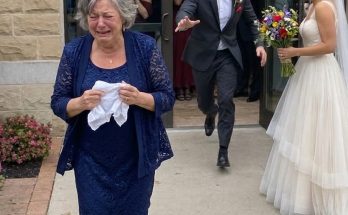
Vanessa's fiancé, Daniel, called two weeks after our meeting.
He asked whether I was willing to speak with him.
I said I could answer questions about my own actions, but I wasn't going to manage their relationship.
"I know," he said. "I just wanted to apologize for assuming you were being unreasonable."
Vanessa had finally told him about the money.
She'd explained the dress deposit, the payments Patricia had made, and the disputed estate papers.
Daniel sounded exhausted.
"I thought we were paying for the wedding ourselves," he admitted.
"I'm sorry you were misled," I said.
"I'm sorry Caleb was in the hospital and nobody came."
That was the first apology from anyone connected to the wedding that named what had actually happened.
Daniel and Vanessa postponed the expensive reception.
They did not cancel their relationship.
They began rebuilding a budget from the money they had earned and saved.
The boutique allowed Vanessa to use part of the deposit toward a less expensive dress after she spoke honestly with the manager.
She arranged a payment plan for other obligations.
Some vendors kept nonrefundable fees.
Those losses were painful.
They were also hers to handle.
Patricia blamed me for each one.
She said I had embarrassed Vanessa into telling Daniel things that should have stayed inside the family.
I answered once.
"A marriage needs honesty more than an expensive dress."
Then I stopped discussing the wedding.
Caleb began attending school for shortened days after his doctor approved the plan.
His teacher arranged quiet work and let him keep water nearby.
He came home tired and proud.
On his first day back, he showed me a card from Oliver.
WELCOME BACK, SPACE DINOSAUR.
I put it on the refrigerator.
At night, Caleb sometimes worried about the next appointment.
We talked about what the doctors had told us and which questions he could ask himself.
I didn't promise there would be no more frightening days.
I promised we would face them with help.
One Saturday, Vanessa left a small package on the porch after asking permission by text.
Inside was a book about planets and a note to Caleb.
The conversation with Daniel continued in my mind after we hung up.
I thought about how often I had learned about Vanessa's plans indirectly.
A text from Patricia saying the car needed tires.
A receipt forwarded without explanation.
A birthday dinner I was expected to finance even though nobody asked whether I could attend.
When I tried to discuss a budget, Patricia accused me of counting every kindness.
But budgets were exactly what I'd needed all along.
I called my own bank and asked what automatic payments were still linked to the old account.
The representative walked me through them, one at a time.
I moved household bills to my new checking account and updated direct deposit with my employer.
I left the old account open only as long as necessary to resolve outstanding transactions and follow the bank's instructions.
Then I scheduled a meeting with a financial counselor through a community program.
She didn't ask whether my mother was a good person.
She asked what I needed my money to do.
I told her it needed to support a child who might have ongoing medical expenses.
It needed to pay our mortgage, keep food in the refrigerator, and leave something for emergencies.
She helped me choose a realistic savings target.
We began with an amount small enough that I could repeat it every month.
I had spent years making dramatic one-time rescues for my relatives.
This quiet recurring deposit felt more powerful than any of them.
Around the same time, Caleb's school sent home an invitation to a science afternoon.
The students were building simple models and explaining them to families.
I marked the date on the calendar.
When Caleb asked whether Grandma would come, I said I hadn't invited her.
"Why?" he asked.
"We're still working out how visits will happen. I want this day to be about your project."
He nodded.
"Can Nina come?"
Daniel sent me a handwritten card after he and Vanessa changed the wedding plans.
He said he appreciated my refusal to hide the problem, even though learning the truth had been painful.
I wrote back that I hoped they would build a marriage where both people could ask questions about money without feeling ashamed.
I didn't tell him how to manage Vanessa.
I didn't offer advice about Patricia.
I wished them well.
At work, Hannah asked whether I had decided to take the training assignment.
I told her I would, provided I could keep the flexibility we had arranged for Caleb's appointments.
She checked with our manager and confirmed the schedule.
I signed the revised work plan.
For years, I had treated my own opportunities as optional so other people could keep theirs.
This time, I made room for work I wanted to do.
"Yes."
"And Mrs. Bell?"
"I'll ask her."
Both came.
Nina wore a badge Caleb had made that said OFFICIAL PLANET HELPER.
Mrs. Bell brought a small notebook and took the demonstration seriously.
Caleb used a flashlight to show how a planet could have day and night.
He forgot part of his explanation, paused, and started again.
Nobody rushed him.
Afterward we ate sandwiches on a bench outside the school.
Caleb talked excitedly about the other projects.
I took photographs and sent one to his physician's office with a brief thank-you to the staff who had helped us get there.
I didn't post it in the family chat.
The day was complete without an audience.
That evening, Vanessa texted asking whether she could see a photograph.
I asked Caleb if he was comfortable sharing one.
He chose the picture of his model, not the one of his face.
We sent it.
She replied with a question about Jupiter.
When Vanessa and Daniel reduced their wedding plans, Patricia called my workplace.
She asked the receptionist to put her through and said there was a family emergency.
Hannah knew the situation only in broad terms and didn't disclose my schedule.
She sent me a message saying somebody had called and asking whether I wanted to take the call.
I declined.
Later, I emailed Patricia a short boundary.
Please do not contact my employer about personal matters. If there is an emergency involving health or safety, put the details in writing or use the appropriate emergency service.
At the school science afternoon, one parent asked how I had managed the months of medical appointments and work. I didn't give her a heroic answer. I said coworkers had covered shifts, friends had brought food, and I had learned to ask for help. She said she'd been afraid to ask for help with her own child's illness. I gave her the hospital social worker's office number and told her there were people who could explain available resources. I didn't pretend to know what she needed. I simply passed along a place to begin.
Patricia replied that I had become cold.
I didn't defend my personality.
I sent the message to Maya for the record and returned to work.
In my next counseling session, I talked about how uncomfortable the refusal felt.
"I wasn't doing anything wrong," I said. "But I felt like I was abandoning her."
The counselor asked what I would tell Caleb if a classmate demanded that he give away something important to prove he cared.
"I'd tell him he could say no."
"Would you call him cruel for doing that?"
"Of course not."
The answer sounded obvious when it concerned my son.
It was harder when it concerned me.
Over the following weeks, the calls became less frequent.
I couldn't tell whether Patricia had accepted the boundary or simply found someone else to complain to.
Either way, the quiet helped.
I used the extra time to plan meals, finish paperwork, and sit outside with Caleb after school.
One evening, he asked about the fifty cents after seeing the amount on an old statement while I was filing papers.
I told him I'd sent a small payment with an unkind message when I was very upset.
"Did it fix anything?" he asked.
"No. Fixing the account access and asking for professional help did more."
He looked thoughtful.
"So the message was just mean?"
I considered that.
"It was sarcastic. I understand why I sent it. But it wasn't the part I'm proudest of."
He nodded, then returned to his drawing.
I was glad I hadn't turned those fifty cents into a family legend about winning.
They were a moment of anger.
The lasting change came from the decisions I made afterward.
That distinction was important enough to explain to my child without making him carry the fight.
He answered it himself.
It was the first conversation between them in months that did not contain an adult demand.
She wrote that she was sorry she hadn't come when he needed family nearby.
She didn't make excuses.
She didn't ask him to forgive her.
I read the note first.
Then I asked whether he wanted to open the package.
He did.
He read the note slowly.
"She said sorry," he observed.
"Yes."
"Can I tell her I like the book?"
"Of course."
We sent a short thank-you message together.
It was not a reunion.
It was a book and a thank-you.
For now, that was enough.
At the probate office, the accountant's work continued.
The estate had assets that needed to be properly accounted for.
Patricia had spent some money on legitimate expenses.
Other withdrawals lacked sufficient support.
The attorneys discussed whether repayment, corrected accounting, and additional court oversight could resolve the civil issues.
The matter of the disputed signature was being examined separately.
Maya reminded me that financial harm and criminal responsibility were not interchangeable.
Proof mattered.
Intent mattered.
I told her I wanted a lawful accounting, not a public spectacle.
"Good," she said. "We can focus on documents and remedies."
I wasn't sure when that focus had become possible.
Perhaps it began the day I stopped replying to every accusation.
Perhaps it began when Caleb asked whether I was getting better too.
Whatever the reason, I could finally spend an evening cooking dinner without rehearsing an argument in my head.
Click here to continue reading: PART 10: A Settlement Proposal Forced Me to Separate Restitution From the Relationship I Had Lost
The Morning Caleb Went Into Surgery, Nobody Came, but My Mother Remembered the Wedding Dress
Part 9 of 12