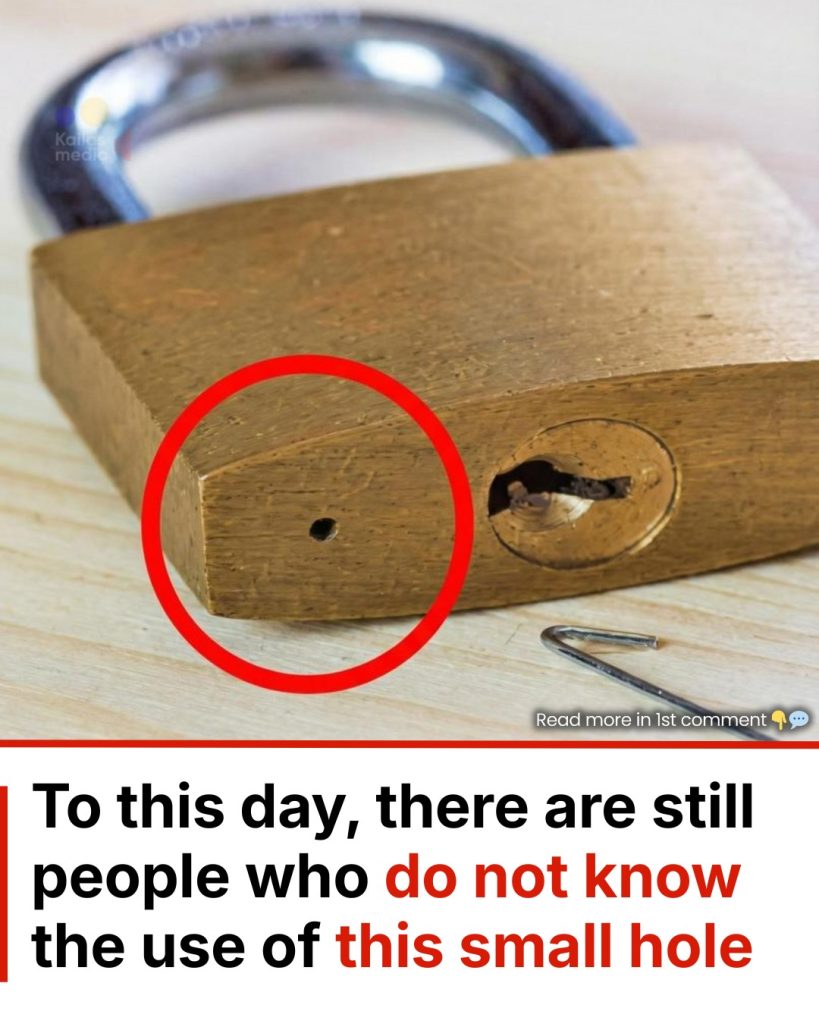
A padlock is one of those everyday items we don’t think about much—until we need it. People use them to secure bikes, garden sheds, toolboxes, gates, and more. They’re made to withstand harsh weather and attempts to cut or break them.
But many people never notice one small but very important detail: the tiny hole at the bottom of most padlocks.
And yes—it serves a major purpose.

A Small Hole With a Big Job
Padlocks are durable, but like most metal items, they’re not invincible. Rain, snow, moisture, and humidity can cause rust and internal damage over time.
That’s where the small mystery hole comes in.
Preventing Rust and Water Damage
The hole is actually a drainage system. If water gets inside the padlock, the hole allows it to escape. This keeps the inner mechanisms dry, prevents corrosion, and extends the life of the lock.
It’s a tiny feature that makes a big difference.

Another Function You Might Not Know
Sometimes, padlocks get jammed—even when you have the right key or code. Weather, dirt, or age can make them stick.
A Spot for Lubrication
That tiny bottom hole is also designed so you can add synthetic lubricant directly into the lock’s internal components.
A quick spray of lubricant through that hole can often unstick a stubborn lock instantly.

A Weatherproof Alternative
While the tiny hole was once considered revolutionary, many newer padlocks are weatherproof. They’re sealed in a way that prevents moisture from getting inside at all, keeping your belongings secure year-round without the need for a drainage hole.

Other Everyday Items With “Hidden Features”
Padlocks aren’t the only everyday tools with clever design secrets. Here are a few more surprising examples:
Screwdrivers and Wrenches: A Perfect Combo
Anyone who works on cars knows how frustrating tight spaces can be. Many screwdrivers are designed to slide into a wrench, giving you more reach and torque in cramped areas.
A simple trick that comes in handy for mechanics and DIYers alike.

Why Clothes Used to Come With Color Swatches
Many garments used to include a matching fabric swatch—and some still do.
These little pieces serve two main purposes:
- Repair Made Easy: They help match the fabric if you need to patch or mend the clothing.
- Wash-Test Safety: You can test laundry detergents or stain removers on the swatch instead of risking the whole garment.
It’s like a tiny tester strip for your clothes.

Brass Padlocks, Doorknobs, and Railings
Ever notice that many public buildings use brass doorknobs and railings?
That’s because brass is naturally antibacterial. It helps reduce the spread of germs on frequently touched surfaces, making it ideal for homes, offices, and public spaces.
Your Car’s Gas Tank Indicator
We’ve all been there—pulling into a gas station and forgetting which side the tank is on.
Most vehicles include a small triangle or arrow on the gas gauge that points to the correct side. It’s a simple feature that saves time and prevents awkward repositioning at the pump.

The Secret Behind the Heinz “57” Label
The famous “57” isn’t just for branding. On Heinz bottles—especially glass ketchup bottles—that number marks the sweet spot to tap if the ketchup is stuck. A gentle tap on the “57” makes the sauce flow smoothly.

The Beauty of Smart Design
From padlocks to ketchup bottles, many everyday objects have hidden features that make life easier. These clever little details often go unnoticed—but once you know about them, you’ll never look at them the same way again.