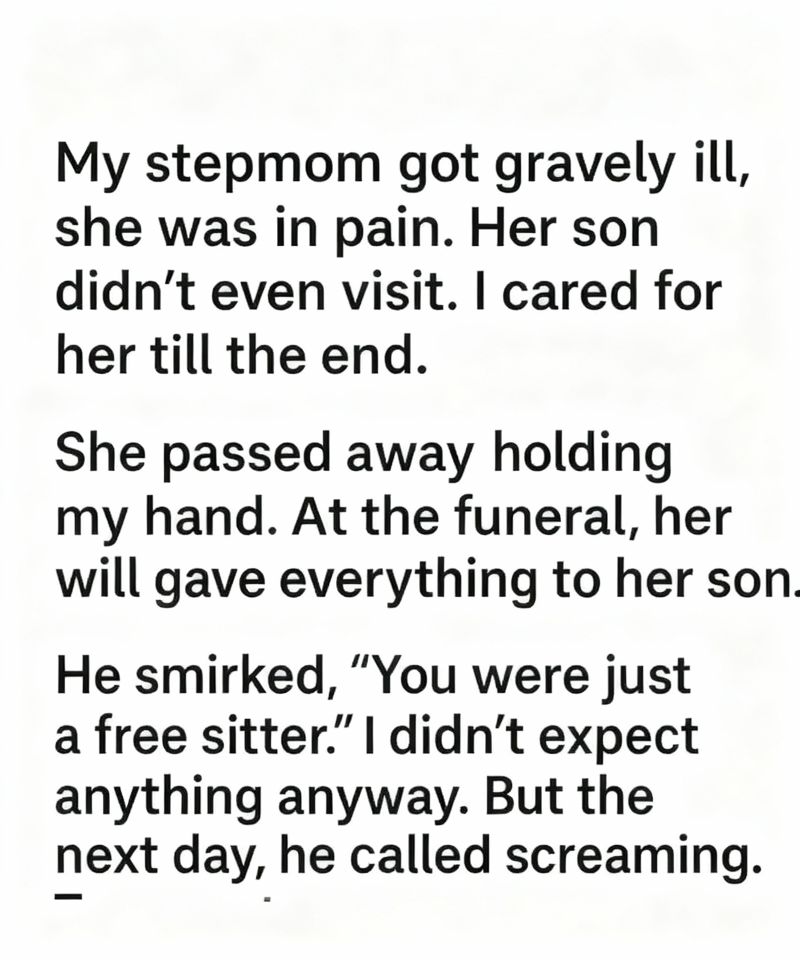
When my stepmother fell ill, it happened quietly, the way life sometimes shifts before anyone is ready. The doctors spoke gently, but her pain told the real story. Her son lived only a few towns away, yet days turned into weeks without a visit. At first, I made excuses for him—busy, scared, overwhelmed. So I stepped forward instead, filling the silence with care.
I cooked her meals, organized her medications, cleaned the house, and stayed beside her through long, restless nights. We talked about small, ordinary things—favorite recipes, old memories, moments from before sickness took over. In those hours, she wasn’t my stepmother. She was simply someone who needed company, and I was glad to give it.
As her strength faded, so did her expectations. She stopped asking about her son. On her final night, rain tapped softly against the window as she held my hand, gripping tightly as if anchoring herself. When she passed, it was calm and gentle. I felt only loss—and a quiet gratitude for being there.
The funeral was brief and formal. Her son arrived late, distant and composed. When the will was read, everything was left to him. I felt no anger. Later, he made a careless comment that reduced months of care to nothing. I didn’t respond. Some truths don’t need defending.
The next morning, he called in panic. He’d found a letter—her words, honest and clear—describing who stayed and who didn’t. It changed nothing legally, but it changed everything else. When I hung up, I understood: I hadn’t lost a thing. Compassion had already given me more than any inheritance ever could.