I still remember the way my fork froze halfway to my mouth.
I was sitting in a small Italian place on Maple Street, the kind with flickering candles and scratched wooden tables, when I saw her. My neighbor’s wife. Sarah. She was at a corner table with a man I’d never seen before. They were close—too close. His hand rested over hers. She laughed softly, leaning in like the rest of the world had disappeared.

My first thought was hot and immediate: How could she do this to him?
Her husband, Mark, was one of the good ones. The kind who shoveled everyone’s driveway after a snowstorm without being asked. The kind who fixed my fence when it blew over and refused payment. I felt anger rise in my chest on his behalf, sharp and righteous. By the time I left the restaurant, I’d already decided—I was going to tell him.
He deserved to know.
For days, I replayed the scene in my head, rehearsing how I’d say it. Calm. Honest. Protective. But before I could run into Mark, I ran into her.
The coffee shop was quiet that morning, rain tapping against the windows. I was waiting for my order when Sarah walked in. She looked thinner than I remembered. Paler. Our eyes met, and I know my face gave me away. Whatever I was thinking must have spilled straight out of my expression.
She hesitated, then walked over.
“I know you saw me last week,” she said quietly.

My stomach dropped. I opened my mouth, ready to defend myself or accuse her—I’m still not sure which—but she spoke again before I could.
“That was my brother,” she said. “He flew in from overseas.”
I felt a flicker of confusion, quickly followed by something worse—embarrassment.
“I have six months to live,” she continued, her voice steady in a way that scared me. “Stage four cancer.”
The world seemed to tilt.
“I haven’t told my husband yet,” she said. “I don’t know how. I don’t know how to look at him and take away his future.”
I couldn’t breathe. All that anger I’d been carrying collapsed into something sour and heavy. Shame.
She explained that her brother had come because she needed family around her—people who already knew, people she could fall apart in front of. They’d been going to dinners, talking late into the night, trying to figure out how to make the impossible survivable.
“I was trying to gather the courage,” she said. “Every day I wake up thinking, Today I’ll tell him. And every day I fail.”
I apologized right there, standing between the espresso machine and the pastry case. I told her I’d judged her. I told her I was wrong. She smiled sadly, like she’d already forgiven me long before I asked.

A week later, she told him.
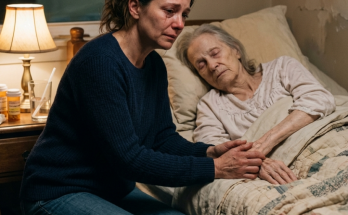
She asked me to be there—not to say anything, just to sit in the room so she wouldn’t be alone if she lost her nerve. We sat in their living room, sunlight spilling across the floor. Mark joked about dinner plans. He complained about work.
Then she told him.
I will never forget the sound he made. Not a word—just a broken, hollow noise, like something deep inside him had cracked. He held her as if he could keep her here by force of will alone. I stared at the floor, throat burning, realizing how close I’d come to shattering that moment before she was ready.
I’d been so sure of my moral clarity. So eager to act.
Now I know better.
Sometimes what looks like betrayal is actually grief in disguise. Sometimes the truth isn’t yours to deliver. And sometimes the most dangerous thing you can carry is the certainty that you’re right—without knowing the whole story.