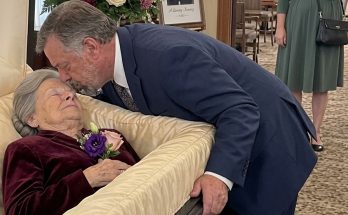
Mom collapsed at church.
Dehydration.
Blood-pressure medication issue.
Nothing catastrophic.
Still terrifying.
Shane arrived at the emergency room before me.
Misty had called him.
I came ten minutes later.
For the first time in months, he and I sat side by side without property papers between us.
Mom slept behind a curtain.
Shane stared at the floor.
“You think she’s okay?”
“Doctor says likely.”
He nodded.
Silence.
Then:
“She always calls you first.”
I looked at him.
“What?”
“When something is wrong.”
“That’s because I live with her.”
“No.”
His voice sharpened.
“Even before.”
I almost laughed.
“Shane, she has spent my whole life rescuing you.”
He looked at me.
“Rescuing me?”
“Yes.”
“Dad paid for your divorce lawyer.”
“What?”
“He did.”
I froze.
I had forgotten.
Dad had covered part of my legal fees.
Shane continued.
“They gave you forty-eight grand.”
“That was divorce equity.”
“I know that now.”
He rubbed his forehead.
“But growing up, I saw money go to you too.”
Interesting.
We began comparing memories.
Shane’s first car repair.
My college books.
His wedding.
My divorce lawyer.
His business startup.
My childcare help.
His roof repair.
My down payment—though really Dad structured it separately.
Each of us remembered the other receiving help more vividly.
Because other people’s support looks like advantage.
Our own support feels like necessity.
That realization embarrassed both of us.
Mom woke briefly.
Saw us.
“Don’t fight.”
We both laughed.
That was her expectation.
Her children together equals competition.
Maybe she had helped create it.
Maybe Dad too.
They often compared.
Michelle is responsible.
Shane is social.
Michelle saves.
Shane needs guidance.
Labels.
Roles.
Children grow around them.
I had become competence.
Shane became need.
Then both resented the other.
After Mom was admitted overnight for observation, Shane and I got coffee.
He said, “Dad’s note still bothers me.”
“I know.”
“He made me sound like a problem.”
“I’m sorry I read it like a verdict.”
He nodded.
Then surprised me.
“He wasn’t entirely wrong.”
That mattered.
“I did call them every time something broke.”
I smiled.
“You were good at asking.”
“You were terrible at it.”
Also true.
My competence had a hidden pride.
I liked not needing help.
Then resented people for not offering.
That was mine.
Shane said, “Maybe Mom thought you didn’t need the house.”
“She knew the deed.”
“I know.”
“Need doesn’t decide ownership.”
“I know.”
We were not reopening that.
Good.
Then he said, “I’m sorry I said you lived free.”
My throat tightened.
“Thank you.”
“You paid more than I knew.”
“Yes.”
“Mom let me think she paid.”
“Yes.”
He stared at the coffee.
“I wanted to believe it.”
That honesty mattered.
Because believing I was taking from Mom made his claim feel righteous.
He was not just greedy.
He had a story.
Wrong.
Convenient.
Still a story.
I had one too.
Shane never helps.
Not completely true.
He visited Dad in hospice every weekend.
Helped Mom after surgeries.
Fixed fences.
Handled some errands.
He did not pay the mortgage.
But “never helped with anything but eating” was anger, not full truth.
I admitted that.
He laughed.
“I do eat.”
“A lot.”
We smiled.
Not healed.
Different.
Mom recovered.
Medication adjusted.
More water.
She came home two days later.
Shane brought soup.
I did not make a joke about him finally contributing.
Growth.
Mom’s hospital stay also revealed how quickly old roles return under stress.
The nurse asked who handled Mom’s medications.
I answered automatically.
Then stopped.
Mom handled most herself now.
Shane knew some.
The pharmacy had records.
Why was I claiming the role?
Because competent daughter.
Default.
I corrected.
“She manages her own medication. I can help with the list.”
The nurse nodded.
Simple.
Shane noticed.
Later he said, “You almost took over.”
“Yes.”
“You always do.”
I bristled.
Then laughed.
He was right.
My complaint had always been that everyone expected me to handle things.
But sometimes I stepped in before anyone asked.
Control can feel like responsibility from the inside.
That was humbling.
During discharge, we divided tasks.
Shane drove.
I picked up medication.
Mom called her primary doctor herself.
No one person became coordinator of the universe.
It worked.
That experience changed how Shane and I cared for Mom in her final years.
We used a shared calendar with her permission.
Not one child holding everything.
We hired help when needed.
Mom chose.
Less resentment.
More transparency.
Ironically, the property fight taught us how to care for the person who caused it.
Families are strange that way.