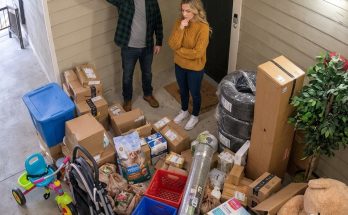
The buyers' lender completed its review, and the sale moved toward closing.
Dad called me with the date.
It was still weeks away.
There were final documents to sign, insurance questions to resolve, and a walk-through before the transaction could finish.
My parents found a smaller rental apartment with an elevator and a manageable monthly payment.
It was not the home Mom wanted.
It was a home they could afford without asking someone else to cover the difference.
Dad described the kitchen.
“Two windows,” he said.
“Your mother thinks it's too little.”
“Do you think it works?”
“I think we can pay for it.”
I let that answer stand.
Moving day fell in a week when I had a medical appointment and needed rest afterward.
I told Dad I could not carry boxes.
“I know,” he said.
“We've arranged movers for the heavy things. Jake and I can handle the smaller items within my restrictions.”
I heard papers rustle as he checked a list.
There was a plan.
It did not rely on me arriving with money or muscles.
Still, I wanted to collect one thing before they left.
The kitchen doorway had pencil marks recording our heights as children.
Dad had photographed them, but I wanted to see them once more.
I arranged a brief visit with Latoya.
The house smelled of cardboard and furniture polish.
The dining room was empty except for a folded moving blanket.
I walked to the kitchen doorway.
There were the pencil lines.
Robin, age nine.
Jake, age seven.
A later mark showed Jake taller than me.
I touched the wood beside my own name.
Mom came in carrying a roll of packing tape.
“We can't take the doorway,” she said.
“I know.”
Her voice changed.
“I hate this.”
“I know that too.”
She looked at my hand against the frame.
“You loved this house.”
“I still do.”
“Then why couldn't you help us keep it?”
I turned toward her.
“Because loving it doesn't mean I can finance it forever.”
She stared at me.
I waited for the familiar accusation.
Instead, she put the tape on a box.
“I don't know how to live somewhere else.”
“You'll learn,” I said.
She looked down.
For a moment we were two women standing in a mostly empty kitchen.
I almost reached for her.
Then she said, “Your brother didn't mean what he said about you dying.”
I stepped back.
The movers had been careful, but one of Mom's picture frames broke in transit.
She called me from the new apartment, upset about the shattered glass.
I almost offered to drive over and fix it.
Then I remembered my energy and my appointments.
“Can Dad help you replace the glass?” I asked.
“He's out getting groceries.”
“Then you can set it aside until he's home.”
She sighed.
“I know. I just wanted to tell someone.”
That surprised me.
She wasn't asking me to pay for a repair.
She was sad about an object that had traveled with her for years.
I listened while she described the photograph inside.
It showed her and Dad on their first anniversary.
They looked impossibly young.
I asked what restaurant they had gone to that evening.
She named a little place that had closed decades earlier.
We spoke about the music they heard and the dress she wore.
When Dad came home, she said she would ask him to help with the frame.
We ended the call pleasantly.
I sat for a while afterward, considering what had changed.
I had not solved the problem.
I had not sent money.
I had not driven across town.
Yet I had been present for her grief.
That was the kind of family support I had always wanted to give.
I had simply confused being available emotionally with being financially responsible for every difficulty.
The difference felt clearer now.
“Mom, he said it.”
“He was frightened.”
“So was I.”
My voice cracked.
“I was frightened in the treatment chair while you were taking pictures in Vegas.”
She pressed her lips together.
“Are you going to bring up Vegas forever?”
“No. But I will not pretend it didn't happen because you're tired of hearing about it.”
The week before closing, Mom found one final box of family photographs in the back of a closet.
She called to ask whether I wanted to spend an afternoon identifying the people in them.
I said I could manage a short video call instead.
We looked through the pictures together while I sat on my couch.
There was Dad as a young warehouse employee, standing beside a truck with three coworkers.
When the last box was unpacked, Dad sent me a photograph of the apartment door with their name on the little brass plate. He looked pleased with how it turned out. I wrote, Welcome home. It was the first time I had used that word about their new place. Dad replied with a small heart. I did not know whether Mom felt at home yet. I was willing to give her time to find out.
There was Mom holding me as a baby on the steps of their first apartment.
There was Jake asleep in a stroller.
A photograph of my grandmother made Mom stop talking.
She said she missed her mother's advice when life became difficult.
I asked what advice she thought Grandma would give now.
Mom considered that.
“She'd tell me to keep my receipts and stop being too proud to ask questions.”
I smiled.
“She sounds practical.”
“She was.”
We put a few photographs aside for copies.
Then I told Mom I needed to rest.
She thanked me for looking with her.
She did not ask me to stay on the call.
For one afternoon we had shared family history without turning it into a request for help that I could not give.
I was glad we'd tried.
She looked toward the boxes.
I picked up my coat.
The conversation was over.
Dad walked us to the door.
The move required choices that had nothing to do with the sale price.
Dad gave away a cabinet full of tools he no longer used safely.
Mom donated extra dishes to a neighborhood organization.
They scanned old photographs so they could keep the pictures without carrying every album.
I received an envelope containing copies of my childhood report cards.
Across one page a teacher had written, Robin takes care of others and rarely asks for assistance.
I sat with that sentence for a long time.
At nine, somebody had already noticed a pattern I would spend decades calling maturity.
I put the paper down and called Latoya.
She listened while I read it aloud.
“You were a kid,” she said.
“I know.”
“You should have gotten to be one.”
I folded the report card and placed it in the box with the bicycle bell.
At the new apartment, Dad installed lightweight shelves within the limits his doctor had discussed with him.
He sent me a photograph of a row of cookbooks beside a window.
Mom's favorite blue bowl sat on the top shelf.
I recognized it from the kitchen where we had baked birthday cakes.
The bowl looked smaller in the new room.
It also looked as though it belonged there.
A week after the move, Mom called to say she had made soup in it.
Dad asked whether he should buy new furniture for the apartment immediately.
I told him he and Mom could see how the rooms worked before spending money.
He laughed and said the counselor had suggested the same thing.
They moved in with a few familiar chairs, the smaller table, and the blue bowl Mom loved.
During their first week they discovered that the bedroom window let in a draft.
Dad reported it to the landlord rather than trying to repair the building himself.
The landlord arranged a routine maintenance visit.
It was such an ordinary process that Dad found it funny.
“No contractor quotes. No emergency loan. Just a work order,” he said.
Mom made curtains from fabric she already owned.
She sent me a photograph after hanging them.
The room looked modest and warm.
I told her I liked the color.
She asked whether I wanted to visit after the holidays.
I said I would see how my energy was.
Instead of insisting on a date, she told me to let her know.
It was a different kind of invitation.
It left me room to decide.
I hoped the small changes would last beyond the move.
I explained that the bowl was for mixing, not cooking.
She laughed and corrected herself.
“Served soup from it. You knew what I meant.”
For a moment the conversation was easy.
Then she asked how my health was.
I told her I was tired but managing with my team.
She did not turn the answer into a discussion of the move.
We said goodbye before either of us became upset.
He did not ask what Mom had said.
He asked whether I had gotten my photograph.
I nodded.
He said he had found the old bicycle bell from my first bike.
He handed me a small paper bag.
Inside was a scratched silver bell.
I remembered learning to ride in the church parking lot.
Dad had steadied the seat.
Then he had let go when I could balance.
“You kept it?” I asked.
“Apparently.”
His smile looked shy.
I thanked him.
When we left, I held the bag on my lap.
I was grieving more than a building.
I was grieving the family I had kept trying to earn.
At home I placed the bell beside my niece's paper owl.
Two tiny objects.
Neither could pay a mortgage.
Both had something to do with love.
Closing went ahead after the required signatures and funds were verified.
The settlement statement accounted for the first mortgage, the home-equity balance, fees, credits, and the remaining proceeds.
The secured loans were paid through closing.
My parents received less than Mom had imagined and more than Dad had feared.
Dad sent me the final statement because he wanted me to know the debts were cleared.
I congratulated him on completing the process.
Then I filed the message and went to sleep.
Click here to continue reading: PART 11: My Father and Brother Had to Demonstrate Change Without Asking Me to Pay
The Day My Family Chose Las Vegas Over My First Chemotherapy Appointment
Part 10 of 12