In the weeks before Rose's memorial, David worried about inviting Linda.
He called me one evening and asked whether excluding her would make him cruel.
I told him that honoring a person's memory and deciding who may attend a gathering were separate matters.
He could ask the funeral director for guidance.
He could consider what Rose would have wanted.
He could decide whether he felt comfortable with Linda there.
But he should not make the choice solely because he feared her reaction.
David was quiet.
“That's the hardest part,” he said.
“What is?”
“Knowing whether I'm choosing something because it's right or because I don't want Mom to be angry.”
I recognized the problem.
Emily had described almost the same feeling.
I reminded David that he didn't have to decide the whole future of their relationship before the memorial.
It was one event.
He could set boundaries for it without promising anything afterward.
He thanked me and said he'd think about it.
A few days later, he called with his decision.
Linda could attend, but she would not organize the ceremony or speak on behalf of the family.
The funeral home would handle the arrangements.
Peter would coordinate with the relatives.
David would read his own remembrance.
Linda agreed.
Emily told me the conversation had been difficult but surprisingly calm.
For once, everyone knew the expectations before the event.
I helped David choose flowers.
We went to a florist near the cemetery.
He asked for white daisies because Rose had grown them outside her kitchen window.
The florist showed him several arrangements.
He chose the simplest.
“It feels like her,” he said.
While we waited for the order, he told me about a time Rose had taken him fishing.
He was about ten and had been frightened of touching the bait.
Rose baited the hook for him without laughing.
Later, when he caught a small fish, she cheered as though he'd won a prize.
He smiled at the memory.
Then his expression grew serious.
“I keep feeling guilty about not visiting more.”
“I think most people wish they'd had more time with someone they loved,” I said.
“She was alive for years when I could have called.”
“Yes.”
I didn't erase the regret with a comforting lie.
“You can wish you'd done things differently without making every memory into a punishment.”
He looked at me.
“I hope so.”
On the morning of the memorial, I pressed a dark blue dress and checked the weather.
Rain was possible in the afternoon.
I packed a small umbrella and tissues.
I also brought a photograph of Rose laughing beside Robert at a backyard picnic.
It was not a formal portrait.
Her eyes were nearly closed from laughter.
Robert held a paper plate and looked as though he'd just told a joke.
I thought David might like it.
At the cemetery, I gave it to him before the ceremony.
He stared for a long time.
“I've never seen this.”
“Your grandmother visited us that summer. She had a wonderful laugh.”
He tucked it into his folder.
“Thank you.”
The ceremony began beneath a pale sky.
A light breeze moved through the trees.
I could hear traffic faintly in the distance.
It was an ordinary sound, strangely reassuring.
Death often seems to demand that the whole world become still.
But people continued driving, working, and going home.
Life was moving around us even as we remembered someone whose life had ended.
After the ceremony, Peter asked whether anyone wanted to share another memory.
Caroline couldn't attend, but Helen read a short note from her.
She described Rose's habit of bringing extra biscuits whenever a neighbor was ill.
She remembered Rose insisting that kindness was most meaningful when nobody could see it.
Several people laughed softly.
David wiped his eyes.
Linda stood quietly at the back.
I thought about approaching her, then decided not to.
This wasn't a day for me to manage anyone else's feelings.
On the way back from the cemetery, Emily asked whether I'd been afraid at my own husband's funeral.
“Of what?” I asked.
“That I'd never feel normal again.”
“Yes,” I admitted. “I was.”
“Does it go away?”
“It changes.”
I looked out at the passing trees.
“There are days I still wish I could tell him something ordinary. But I've learned to keep living while I miss him.”
Emily reached for my hand.
I let her hold it for the rest of the drive.
The week after the memorial, I received a letter from Caroline.
Her handwriting was shaky but careful.
She thanked me for helping the family arrange a respectful goodbye.
She wrote that Rose had loved blue flowers, warm biscuits, and the sound of rain against the porch roof.
Then she added that Rose would probably have been embarrassed by all the fuss.
I smiled when I read that.
I sent Caroline a photograph of the flowers near the grave.
In my note, I thanked her for protecting the urn when nobody else wanted to face the truth.
I didn't describe her as a hero.
I knew she might have wished she could do more.
I simply told her that keeping a promise for seven years was an act of care.
She wrote back two weeks later.
“Now I can remember the good things.”
I placed her card in the box with Robert's letters.
In the weeks that followed, Emily and I kept our conversations smaller and more ordinary.
She called to ask whether I wanted to see a film.
I said yes, and we went to a matinee on a rainy afternoon.
Afterward, we ate sandwiches in a café and discussed the ending.
There were no lawyers at the table.
No secret documents.
No requests for promises.
We disagreed cheerfully about whether the main character had made the right choice.
Then Emily laughed and said, “We don't have to agree about everything, do we?”
“No,” I answered. “We never did.”
When I got home, I realized how long it had been since we spent an afternoon together without worrying about another person's approval.
I put the cinema ticket in my keepsake box.
Not because it was an extraordinary day.
Because it was beautifully ordinary.
On the bus ride home, I watched other passengers reading, speaking quietly, or looking out of the window.
Nobody knew that my family had spent months arguing over an urn and old financial papers.
I liked that anonymity.
Our troubles were real, but they were not the whole world.
I wanted more days like that.
Always.
The memorial took place on a bright Saturday in early spring.
It was a small gathering.
David arranged it with the funeral home after confirming the necessary authorizations.
Rose's ashes were interred near her husband's grave, according to the wishes documented in the paperwork.
The ceremony was simple.
There were flowers from Helen and Caroline.
Peter brought a photograph of Rose standing beside an old yellow bicycle.
Emily carried a tin of the sugar cookies Rose used to make.
Linda came too.
David had allowed her to attend.
He had made it clear that he wasn't ready to speak privately afterward.
She accepted the condition.
I watched from a few steps away as the officiant read a short passage about remembrance.
David spoke next.
He described his grandmother's kitchen.
He remembered the biscuits she let him knead badly and the way she never laughed when he made a mistake.
He remembered her asking questions about his plans even when his mother had already decided what they should be.
Then he folded his notes.
“I wish I had known more about the end of her life,” he said. “But I knew she loved me. I hope I showed her that I loved her too.”
He did not mention the bank account.
He did not accuse Linda.
He let the memorial belong to Rose.
When the ceremony ended, people lingered by the graveside.
Peter told stories about Rose's terrible singing.
Emily laughed so hard that she wiped her eyes.
Linda stood a little apart.
I could see she wanted to approach David.
She stayed where she was.
For her, that restraint may have been harder than any speech.
Before leaving, I went to her.
“Thank you for respecting his request,” I said.
She nodded.
“I know I have a great deal to repair.”
“Yes.”
“I've made the first payment.”
“I'm glad you're following through.”
She looked toward David.
“Do you think he'll let me back into his life?”
“I don't know.”
Linda drew in a breath.
This time, she did not ask me to intervene.
Instead, she said, “Then I'll keep doing what I promised.”
On the flight home, Emily sat beside me.
It was the first trip we'd taken together in years.
We watched clouds drift past the window.
Then she asked whether I could forgive her for what had happened at the house.
“I am working toward that,” I told her.
She looked down.
“I know saying sorry doesn't fix it.”
“No. But I have seen you change how you act.”
She had returned the key.
She had paid the cleaning and lock bills after we reviewed them together.
She had told David the truth.
She had started counseling and stopped letting Linda make plans on her behalf.
None of those acts erased what she'd done.
Together, they made rebuilding trust possible.
“I want you to feel welcome here again,” I said. “But I need to know my house is mine to manage.”
She nodded.
“I won't make arrangements for you without asking.”
There was a pause.
“Not even a dinner reservation.”
I laughed.
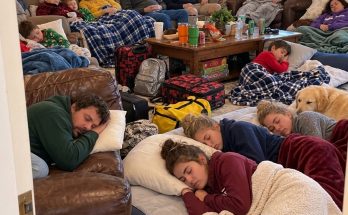
“Especially not one with fifteen overnight guests.”
She laughed too.
The sound felt unfamiliar and comforting.
When we landed, she offered to drive me home.
I accepted.
At the front door, she stopped and waited while I took out my keys.
I opened the door and asked whether she'd like tea.
Her whole face softened.
“Yes, Mom. I'd love that.”
We sat in the living room beneath Robert's photographs.
For a while, we talked about the ordinary things we'd missed.
A neighbor's new dog.
The library sale.
A recipe Helen wanted me to try.
Then Emily noticed the empty place on the shelf where I'd kept Rose's urn.
“It's strange,” she said. “That little container changed so much.”
I thought about Caroline carefully storing it for years.
About Robert hiding the papers.
About David finally asking questions.
“People made the changes,” I said. “The urn only reminded us that the questions weren't going away.”
A few weeks later, David and Emily invited me to a Sunday lunch.
They asked rather than assumed.
I arrived with a small bowl of fruit salad.
We ate together at the table.
Linda was not there.
David had chosen a period of limited contact while he considered what kind of relationship he could manage.
I respected that too.
After the meal, he walked me to my car.
“Thank you for not asking me to forgive her,” he said.
“That's yours to decide.”
He smiled faintly.
“Grandma used to say almost the same thing.”
Then he handed me a little paper packet.
Inside were seeds from Rose's favorite flowers.
“Emily said you might have room for these.”
I looked at the packet and thought of the bare strip of soil beside Robert's porch.
“I think I do,” I said.
Click here to continue reading: PART 12: The House Became My Home Again When Everyone Learned That Love Does Not Grant Permission
The Ashes on My Kitchen Table Made My Son-in-Law Forget His Carefully Prepared Story
Part 11 of 12