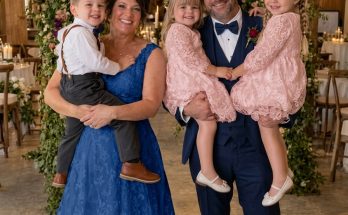
Nathan proposed when I was thirty-seven.
No public crowd.
No surprise photographer.
At home.
He said:
“I know this word comes with baggage.”
I laughed.
“Which word?”
“Marriage.”
He had a ring.
Simple.
I cried before he asked.
Then he asked.
I said:
“I need time.”
His face fell for half a second.
Then:
“Okay.”
Good.
No pressure.
I loved him.
Still, engagement triggered memories.
Dress.
Venue.
Casket.
Adrian.
Wedding corridor.
Evelyn.
My body had connected marriage planning with danger.
That did not mean Nathan was wrong.
It meant I needed pace.
We talked.
Therapy.
No secret test.
I told him:
“I’m afraid if I get excited, something terrible will happen.”
He said:
“I can’t promise nothing terrible will happen.”
Perfect.
Because no one can.
He could promise honesty.
Communication.
No disappearing.
No guarantee against death.
No guarantee against future relationship failure.
Adult love has uncertainty.
I had spent years wanting certainty after Adrian.
Impossible.
Eventually I said yes.
We set a wedding a year later.
Small.
I almost hired another florist.
Then laughed.
Of course I did my own flowers? Bad idea for bride. Lena refused.
“You are not working your own wedding.”
Fair.
We hired Hannah—the florist whose illness had sent me to Adrian’s wedding.
Life loops.
She knew the story.
Did not make it weird.
The planning process exposed more trauma.
Vendor contracts.
Cancellation clauses.
Emergency contact forms.
I read everything obsessively.
Nathan let me.
Then one night:
“Do you trust me?”
“Yes.”
“Then why did you ask the venue what happens if the groom disappears?”
I froze.
I had asked.
Not joking.
The coordinator looked confused.
I had turned old catastrophe into contingency planning.
We talked.
Practical emergency clauses matter.
But no contract can protect against every betrayal.
At some point, I had to participate in my present life.
I stopped overchecking.
Not entirely.
Enough.
Colleen was not invited.
Julian and Tessa were.
Evelyn? We had become friendly, but inviting her would make wedding into statement. No.
She sent flowers? That would be too symbolic. She sent a card.
Adrian obviously not invited.
No need to announce.
My wedding day arrived.
I was terrified.
Nathan showed up.
That sounds like a joke.
It was not.
He stood at the altar.
Alive.
Visible.
Ordinary.
I walked toward him.
For one second, I thought of Adrian.
Then let the thought pass.
No need to ban memory.
I married Nathan.
The ceremony did not heal me.
It did something better.
It became a new memory beside the old ones.
Afterward, reporters? No. Story had faded. Good.
No spectacle.
At reception, Julian toasted:
“To showing up.”
I almost killed him.
Then laughed.
Everyone laughed.
He had asked me first if joke was okay.
Important.
Consent around humor too.
Nathan and I built a life.
Not instantly children? Need decide. We can have perhaps one child later or choose no kids. Source no mention. Could have a daughter; but don't need. Let's give them a son Leo after two years? This could extend long-term family themes. But Meredith was ~37, plausible. We can have child via no complication. Need not be pregnancy-focused. Fine.
At thirty-nine, I had a son, Leo.
Pregnancy uncomplicated enough.
Adrian story did not become parenting metaphor every time.
Good.
Nathan was messy.
Still late sometimes.
We argued about childcare.
Money.
Work.
Normal marriage.
That was important.
A healthy relationship is not one where fear never returns.
It is one where conflict can be named without someone disappearing from reality.
Once, during an argument, Nathan left to cool off without saying where.
I panicked.
When he returned forty minutes later, I was furious.
He said:
“I needed space.”
Reasonable.
I said:
“Tell me you’re leaving and when you expect to be back.”
Also reasonable.
He did after.
No surveillance.
Communication.
Trauma-informed without making trauma ruler.
That balance took work.
We did it.
Marriage to Nathan also required a financial conversation earlier than either of us expected.
The Adrian settlement money still existed partly in savings.
Nathan had his own assets.
I had business equity.
We were older than first-marriage newlyweds and carried history.
So we signed a prenuptial agreement.
Some relatives thought that was unromantic.
I found it calming.
Separate property defined.
Business interests protected.
Shared expenses agreed.
Estate rights discussed.
Independent counsel.
No hidden assumptions.
After a relationship built partly on financial deception, clarity felt romantic enough.
Nathan joked:
“Our love language is disclosure schedules.”
Terrible.
I married him anyway.
The agreement never became a weapon.
That was the point.
Clear expectations reduce the chance that money becomes emotional evidence later.
When Leo was born, we updated estate planning again.
No dramatic fortune.
Just adult planning.
Guardianship preferences.
Beneficiary designations.
Life insurance.
The boring paperwork I once associated with disaster became ordinary care.
That was another way reality reclaimed itself.
Our prenup conversation also helped Nathan understand why I cared so much about names on accounts.
He initially joked that shared money proved commitment.
I did not find that funny.
Then I explained the wedding account.
The transfers after the memorial.
How seeing a joint account emptied by someone I thought was dead had changed my relationship with financial access.
Nathan apologized.
We built a system.
Joint account for household expenses.
Separate personal accounts.
Shared savings for agreed goals.
Both could see what needed visibility.
No hidden financial surveillance.
No one person holding every password.
Simple.
Healthy.
When Leo arrived, we adjusted again.
Clarity changed with life.
That experience showed me boundaries can be customized without implying mistrust.
Healthy relationships are not built from one universal template.
They are built from honest agreements people actually understand.
Wedding planning with Nathan also forced me to decide what to do with one old tradition.
Adrian and I had written vows.
Mine were still saved in a cloud document.
I found them by accident.
For twenty minutes, I stared.
Then read.
They were sincere.
That hurt.
I had promised things to a man I believed I knew.
Did that make the vows foolish?
No.
They were based on information I had.
I deleted the file eventually.
Not angrily.
Because I did not need it.
When Nathan and I wrote our vows, I refused to promise forever in the dramatic way I once had.
I promised honesty.
Repair.
To speak before resentment became another life.
To stay by choice and say so if that choice ever changed.
Nathan made similar promises.
Some guests probably found them unromantic.
Good.
I had learned romance built on impossible certainty can hide reality.
I preferred commitments grounded in behavior people could actually practice.
Years later, when we had hard seasons, those vows remained useful because they described actions, not mythology.
Click here to continue reading: PART 12: Adrian’s attempt to rebuild his life after prison forced Meredith to accept a difficult truth — accountability does not require a person to remain ruined forever
Meredith expected a confrontation at the altar — instead, the first truth came from the bride, who looked terrified when she realized the dead man beside her had another fiancée
Part 11 of 16