I sold my floral company at sixty-seven.
Not because it failed.
Because it succeeded enough to sell.
Lena had become minority owner years earlier.
She bought more through a structured management buyout with financing.
Another manager joined.
Lawyers.
Valuation.
Installments.
No handshake deal just because we loved each other.
Good.
I retained a small advisory role for one year.
Then left.
The business kept my name? It had a brand not my surname. Let's call Wild Fern Floral. No founder worship.
Wild Fern Floral continued.
New designs.
New staff.
No need for my permanent taste.
The first month of retirement felt strange.
For decades, flowers had structured time.
Wedding season.
Mother’s Day.
Holidays.
Events.
Now Saturday morning meant nothing.
Nathan still worked part-time by choice.
Leo was grown.
He became a teacher.
Not florist.
Not lighting.
His life.
Good.
I tried gardening.
Terrible.
Apparently arranging cut flowers and keeping plants alive are unrelated skills.
Nathan enjoyed that too much.
We traveled.
Not constantly.
I liked home.
One trip took us near the venue where I found Adrian.
I realized only after booking.
For a day, I considered changing route.
Then did not.
We drove past.
The venue looked ordinary.
Different sign.
Same hallway? I could not see.
No thunderbolt.
No panic.
Just a building.
Places do not preserve your worst moment for you.
That is comforting.
We stopped nearby for lunch.
Nathan asked:
“Do you want to go in?”
“No.”
Not fear.
No reason.
I did not need a pilgrimage.
The old wedding story had become something in my past, not a site requiring conquest.
Later, Leo married.
His partner, Hannah, was a nurse.
Their wedding planning amused me.
He asked if Wild Fern could do flowers.
I said:
“Ask them, not me.”
The company was no longer mine.
Important.
They hired Wild Fern.
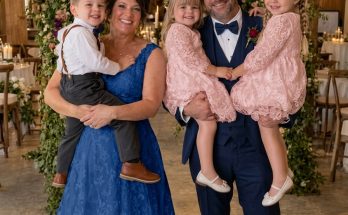
I attended as mother.
Not florist.
Harder than expected.
I kept seeing crooked arrangements and wanting to fix them.
Lena threatened to remove me.
I behaved.
At the ceremony, Leo stood waiting.
For one second, my mind flashed to Adrian.
Then Nathan squeezed my hand.
Not rescue.
Presence.
I watched my son marry.
No fear that grooms vanish.
No inherited superstition.
Good.
At reception, Leo toasted us.
He did not mention Adrian.
Thank God.
My life had become larger than the story that once dominated every introduction.
That was success.
Nathan and I aged.
He developed prostate cancer in his seventies.
Treatable initially.
Then recurrence years later.
Medical life.
Appointments.
Treatment choices.
I became caregiver some.
Paid help some.
Leo helped.
No dramatic parallel.
Still, I noticed old fear when Nathan underwent surgery.
Hospital called.
For one second, my mind went back to Adrian’s crash.
Then current facts.
Different person.
Different event.
I had learned to orient.
Nathan lived years after.
Eventually cancer progressed.
He chose hospice at seventy-nine.
We had conversations.
Real death.
No tricks.
No false casket.
I hated that some part of my brain noticed the contrast.
He died at home.
I held his hand.
This time death was real.
The grief was different.
Not easier.
Cleaner.
No suspicion.
No searching.
No wondering whether he might walk into a wedding.
Grief without betrayal is still devastating.
But reality supports mourning.
That is a strange gift I never understood until then.
After Nathan died, people told me:
“At least you had a good marriage.”
True.
Not consolation exactly.
I missed him.
I did not need the grief to teach me anything.
Loss does not always need a lesson.
Sometimes someone dies.
You hurt.
That is enough.
I kept living.
Widowhood in my late seventies was quiet.
Leo called.
I had friends.
I moved to a smaller condo.
No dramatic reinvention.
I did not date again.
Not because loyalty demanded it.
I did not want to.
Choice.
I kept one wedding photo.
Nathan laughing.
Me looking away from camera.
Real.
Ordinary.
That photo sat beside my chair.
Adrian’s engagement photo stayed in the archive box.
Different places.
Different meanings.
No need to burn one to honor the other.
After Nathan died, I briefly worried that grief would reopen the old false-death trauma completely.
Some parts did.
The first funeral-home call made my hands shake.
Signing cremation authorization made me nauseous.
I told the director why.
She slowed down.
Explained every step.
No embarrassment.
I viewed Nathan’s body privately before cremation because I wanted reality.
Not everyone needs that.
I did.
It helped.
There was no mystery.
No empty casket.
No hidden life.
He was dead.
Painful certainty.
My therapist later said I was allowed to use concrete confirmation because of my history without treating the need as pathology.
That mattered.
People often judge grief rituals from outside.
What helps one person may harm another.
I chose what I needed with full information.
Again, choice.
That theme had followed me farther than I expected.
Nathan’s real death also taught me how differently people behave when truth is painful but shared.
His doctors did not promise what they could not promise.
When treatment stopped helping, they said so.
When he chose hospice, everyone knew why.
Leo cried.
I cried.
Nathan cried once, then made a joke about finally escaping my flower opinions.
Painful honesty created closeness.
That contrast with Adrian’s false death was almost unbearable.
The truth did not make loss easy.
It made participation possible.
We could say goodbye.
Choose care.
Invite people.
Decline others.
Handle documents.
Tell Leo what was happening.
Reality gave us choices even when every available choice hurt.
That became perhaps the clearest expression of why Adrian’s deception had been so violating.
He did not merely make me sad.
He took choices away by replacing facts with fiction.
Nathan’s death returned those choices to me at the hardest possible moment.
I was grateful for that in a way I never expected.
After Nathan died, I also stopped one habit I had kept for decades.
I stopped checking emergency news alerts whenever someone I loved traveled.
I had done it quietly.
Flights.
Highway crashes.
Storms.
Not constant obsession.
Enough to notice.
His illness and death finally showed me the habit had never delivered safety.
Information can reduce uncertainty.
It cannot eliminate mortality.
I turned off several alerts.
Leo traveled.
I waited for his text.
Sometimes late.
I survived.
Trusting reality includes accepting that reality is not controllable.
That may have been the last lesson connected to Adrian’s disappearance.
He taught my nervous system that catastrophe could hide behind silence.
Life later taught me silence is often just silence.
I was glad that lesson eventually became stronger.
Click here to continue reading: PART 16: In Meredith’s final years, Adrian’s fake death became only one chapter in a much larger life, and the lesson that survived was not revenge but the right to reality itself
Meredith expected a confrontation at the altar — instead, the first truth came from the bride, who looked terrified when she realized the dead man beside her had another fiancée
Part 15 of 16