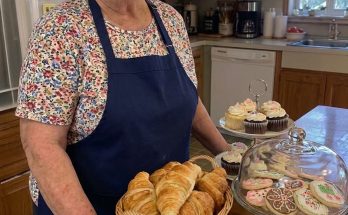
Grandma stopped taking wedding cakes at eighty-one.
Her decision.
Hands.
Back.
Too much lifting.
She still made birthday cakes.
Cookies.
Bread.
The occasional pie for church.
No one argued.
Her order spreadsheet stayed on the old laptop.
Ashley printed the last year’s list and put it in a folder.
Grandma called that dramatic.
Then kept it.
I visited one Sunday.
Daniel and Ashley were coming later with Sophie.
The kitchen smelled like butter and vanilla.
Grandma sat at the table instead of standing.
That was new.
She had taught me how to make her chocolate cake properly.
Not because she was dying.
She was simply tired of me pretending boxed mix was “basically the same.”
I mixed batter.
She criticized.
Too fast.
Too much flour on the counter.
Wrong spoon.
I said:
“You’re not paying me enough for this.”
She laughed.
“Family discount.”
We both stopped.
Then laughed harder.
The phrase had lost its sting.
Because now it was a joke inside consent.
Not a weapon.
Daniel arrived with groceries.
Ashley carried flowers.
Sophie carried a card.
No occasion.
Just Sunday.
We ate.
Afterward, Ashley washed dishes.
Not penance.
Habit.
Daniel dried.
Grandma sat.
I looked around the kitchen where this story began.
Same cabinets.
New mixer.
Older hands.
Different family.
The original wedding cake photograph hung near the pantry.
Ashley had eventually framed it for Grandma.
No note about apology.
Just the cake.
It was beautiful.
That was allowed.
The work itself had always been beautiful.
The conflict did not have to own it forever.
Sophie noticed the photo.
“Mommy, was that your wedding cake?”
“Yes.”
“Great-Grandma made it?”
“Yes.”
“Did you pay her?”
Silence.
Children.
Ashley looked at Grandma.
Then me.
Then Sophie.
“Not when I was supposed to.”
Sophie frowned.
“Why?”
Ashley answered simply.
“Because I made a selfish choice.”
No childhood-finance lecture.
No excuses.
“Then what?”
“I paid later and apologized.”
Sophie considered.
“Did Great-Grandma forgive you?”
Grandma answered.
“Eventually.”
I loved that word.
Not immediately.
Not never.
Eventually.
Sophie said:
“Okay.”
Then asked for cake.
Life.
After they left, I stayed to clean up.
Grandma watched.
“You know your wedding gift was rude.”
There it was.
Years later.
I laughed.
“Yes.”
“You wanted to embarrass her.”
“Some.”
“More than some.”
“Probably.”
She smiled.
“But you paid me.”
“Yes.”
“And you made Daniel look.”
“Yes.”
She nodded.
“Useful rude.”
I laughed.
“I’ll take that.”
Then she became serious.
“Do you know what mattered most?”
“What?”
“You did not let me say it was fine when it wasn’t.”
That stopped me.
For years, I had thought the gift box was about Ashley.
It was not.
Not primarily.
It was about Grandma.
She had been standing in her kitchen trying to make her own hurt smaller so the wedding could remain comfortable.
I refused to cooperate with that.
My method was imperfect.
Public.
Sharp.
But I had named the problem before everyone could smooth it away.
Then the better work happened.
Grandma learned to say no.
Daniel learned not to rescue secretly.
Ashley learned to pay and ask.
I learned not to protect Grandma by controlling her.
Our relatives learned gifts require a giver.
The five hundred dollars I had planned for Daniel and Ashley disappeared into cake reimbursement.
At the time, I thought that was the wedding gift they would never forget.
I was wrong.
Money was the least memorable part.
The real gift was interruption.
A pattern stopped.
Not instantly.
Not completely.
But enough.
Ashley’s promise was brought back into the open.
Daniel saw.
Grandma spoke.
The rest took years.
That is what change usually looks like.
Not one perfect reveal.
Repeated choices afterward.
Grandma opened the drawer beside her.
Pulled out the old printed order form.
At the bottom:
Family requests follow the same agreement unless Grandma explicitly says it is a gift.
She tapped the line.
“This is your fault.”
“You’re welcome.”
She laughed.
Then:
“I’m leaving the mixer to Ashley.”
I stared.
“Seriously?”
“She knows how to use it.”
That was true.
“What am I getting?”
“The old cake pans.”
“Wow.”
“Ungrateful.”
We laughed again.
Estate planning through bakeware.
Very Grandma.
Then she said:
“And the recipe box.”
That quieted me.
The recipe box mattered.
Handwritten cards.
Her mother’s recipes.
Grandpa’s favorite pie.
Notes in margins.
Years of family food.
“Why me?”
“Because you’ll keep the stories.”
I almost cried.
She pointed a finger.
“Not the dramatic version.”
I laughed through tears.
“Which version?”
“The true one.”
That became my promise.
So here is the true version.
Ashley behaved badly.
She lied because she wanted certainty without paying the cost.
I reacted with anger and a public-facing gift I knew could shame her.
Daniel had enabled smaller patterns for years.
Grandma had made generosity so automatic that all of us sometimes forgot it was still hers to choose.
Then everyone had to change.
Not equally.
Not for equal wrongs.
But honestly.
The wedding itself survived.
The marriage survived.
Grandma’s relationship with Ashley survived.
More importantly, Grandma’s kindness survived without remaining available for exploitation.
That was what I feared losing.
When people are taken advantage of, sometimes they harden.
They stop giving.
Stop trusting.
Grandma did not.
She learned boundaries instead.
That is harder.
Anyone can close a door.
She learned to open it deliberately.
Ashley learned to knock.
Daniel learned not to stand behind her paying for whatever broke.
I learned not to barge in and call that protection.
Years later, when Grandma gave Sophie a free unicorn cake, nobody thought:
There she goes letting people use her again.
We knew.
She chose it.
That made all the difference.
The original gift box is gone.
I have no idea who threw it away.
The printed screenshot disappeared too.
Good.
Nobody needed a relic.
The cake photo remains.
The order form remains.
The recipe box remains.
And one family sentence remains stronger than everything else:
Ask like no is possible.
That was the lesson.
Not:
Never help family.
Not:
Always charge.
Not:
Humiliate people who break promises.
Ask.
Tell the truth.
Let the other person choose.
If they say yes, be grateful.
If they say no, accept it.
If you promise to pay, pay.
Simple rules.
Harder than they sound.
I packed the leftover cake into a container.
Grandma said:
“Take it.”
“Free?”
She gave me a look.
“Yes.”
“Just checking.”
She laughed.
I carried it to my car.
No receipt.
No invoice.
No guilt.
A gift.
Exactly because she said it was.
When Grandma talked about leaving me the recipe box, I finally understood why the wedding story had lasted.
Not because it was our most dramatic family event.
It was a turning point in how we valued invisible work.
Recipes look simple on cards.
One cup.
Two cups.
Bake.
They do not contain years of practice.
Taste.
Failure.
Timing.
The person.
Just like family favors.
A line on a calendar can say:
Grandma makes cake.
It does not show what that costs.
The recipe box became a symbol for things that look easy because someone practiced long enough to make them look easy.
Caregiving.
Cooking.
Driving.
Planning.
Emotional smoothing.
All invisible until the person stops.
Ashley had looked at Grandma’s skill and seen free capacity.
Afterward, we learned to see the person.
That was the change worth keeping.
I told Grandma:
“I think that’s the story.”
She said:
“What story?”
“The cake.”
She rolled her eyes.
“You’re still thinking about that?”
Apparently.
She had moved on more fully than I had.
That was humbling.
The person wronged does not owe the family a permanent lesson.
We can learn without making them carry the teaching forever.
So I stopped bringing it up unless Grandma did.
Years later, she rarely did.
Her life contained more than one wedding cake.
That may be the most respectful ending of all.
In the end, the old recipe box mattered because it represented chosen inheritance. Grandma decided who received it. No assumption. No contest. No one saying family should get it free. She laughed when I pointed that out. Then she said, “If you sell my recipes, I’ll haunt you.” I promised. That was a promise worth keeping. The family had learned that promises are not decorations. They are small contracts of trust, whether about cake ingredients or handwritten recipes.
The recipe box felt like the right final symbol: care, labor, memory, and trust all written down clearly enough that nobody had to pretend they were free.
In the end, the family kept the recipes, the cake photos, and the lesson that promises only matter when people honor the choice behind them.
That is why the recipe box mattered most to me: it held work, memory, love, and choice in the same small place.
Years later, nobody in the family remembered the exact dollar amounts as clearly as they remembered Grandma saying, “Ask like no is possible.” That sentence lasted because it applied to more than cake. It applied to time, rides, childcare, money, affection, forgiveness, and every favor people are tempted to treat as automatic once love is involved.
THE END
The End
Read more original stories on Feel Every Story.
Three days of careful baking ended with Ashley laughing at the woman she had promised to pay
Part 16 of 16