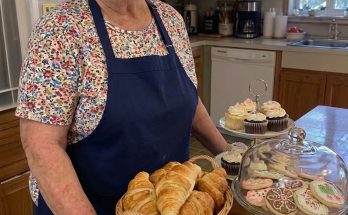
Ashley came back to Grandma’s kitchen more than once.
That surprised me.
The first baking day could have been penance.
The second was choice.
She asked to learn buttercream.
Grandma said yes.
Then charged her for ingredients.
Ashley laughed when she saw the handwritten amount.
“Seriously?”
Grandma looked over her glasses.
“You said you wanted rules.”
Ashley paid.
Twelve dollars and eighty cents.
No one died.
They spent an afternoon piping borders onto practice boards.
Ashley improved.
Not enough to open a bakery.
Enough to understand the skill.
Grandma explained temperature.
Humidity.
Butter ratios.
Cake supports.
Transport.
How wedding cakes are assembled at venues when possible.
How sugar flowers can take hours before baking even begins.
Ashley had thought:
Cake.
She learned:
Design.
Shopping.
Baking.
Cooling.
Filling.
Crumb coat.
Final coat.
Decorations.
Structural supports.
Packaging.
Transport.
Setup.
Cleanup.
Labor appears invisible when finished work looks effortless.
That was the lesson.
Ashley asked:
“Why did you agree to mine if it was that much?”
Grandma answered:
“Because Daniel is my grandson.”
“And me?”
“You were about to be family.”
Ashley flinched.
Past tense sounded dangerous.
Grandma corrected:
“You are family now too. I’m explaining then.”
Good.
Ashley asked:
“Did you want to say no?”
“No.”
That mattered.
Grandma genuinely wanted to make the cake.
The wrong was not asking.
It was changing payment after the work was done.
Ashley said:
“So if I had asked for it as a gift upfront?”
“I might have said yes.”
Ashley stared.
That realization hurt.
She had lied to secure something Grandma may have freely given anyway.
Fear of hearing no drove dishonesty.
Control costs more than asking.
Grandma said:
“You wanted certainty.”
“Yes.”
“So you removed my choice.”
Exactly.
That sentence became Ashley’s own therapy insight later.
She hated financial uncertainty because of childhood instability.
Instead of tolerating another person’s choice, she tried to lock in outcomes.
Promising payment to Grandma got the cake started.
Refusing later shifted risk away from her.
Daniel paying other debts did the same.
She felt safe because someone else absorbed uncertainty.
Counseling focused on tolerating discomfort.
What if a friend says no?
Then no.
What if the cake costs too much?
Choose another cake.
What if the wedding budget cannot cover everything?
Reduce something.
Adult choices.
Not manipulate.
Grandma taught those lessons through frosting better than any therapist could.
Still, Grandma was not Ashley’s therapist.
Important.
When conversations drifted too deep, she said:
“Talk to your counselor.”
Ashley respected that.
Kitchen could repair relationship without becoming treatment.
One afternoon, they baked cupcakes for a school fundraiser.
Ashley volunteered to buy all ingredients.
Grandma said:
“This one is my donation.”
Ashley stopped.
“Okay.”
No argument.
Then offered labor.
Grandma said:
“Fine. Wash dishes.”
Ashley groaned.
Real repair.
At the fundraiser, people asked who made cupcakes.
Grandma pointed at Ashley.
“We did.”
Shared credit.
Ashley looked shocked.
Then proud.
No one knew wedding history.
Good.
A relationship can create new memories not controlled by the worst one.
Later, Ashley asked if Grandma wanted to sell cakes again.
“No.”
“Why not?”
“I’m retired.”
“You love it.”
“I also love sleeping.”
Fair.
Then Grandma considered occasional orders.
Only ones she wanted.
Maybe.
The idea came from Ashley, ironically.
She offered to help price.
Grandma laughed.
“You are the last person I’m letting price anything.”
Ashley laughed too.
Safe joke.
Eventually, Ashley helped build a simple spreadsheet.
Ingredients.
Labor estimate.
Deposit.
Delivery.
Grandma adjusted every number.
Her business.
Ashley’s skill useful.
No control.
That collaboration changed their relationship more than apology.
Ashley used her attention to money in a constructive direction.
She was good at spreadsheets.
Cost comparison.
Tracking.
The trait itself was not evil.
Stinginess had been fear and entitlement mixed with skill.
Now skill could serve consent.
I watched from the doorway once while they argued over whether vanilla should be costed per teaspoon.
Grandma said:
“Nobody is paying me seven cents for vanilla.”
Ashley said:
“That’s not how costing works.”
I laughed.
They both told me to leave.
Perfect.
The wedding cake still existed in photographs.
The humiliation faded.
The kitchen had new stories.
That was the real repair.
Grandma’s little cake spreadsheet eventually contained notes about non-money costs too.
Delivery distance.
Refrigerator space.
Weekend time.
Whether a design required supplies she did not enjoy using.
Ashley added a dropdown labeled:
DO I ACTUALLY WANT TO MAKE THIS?
Grandma laughed for five minutes.
Then kept it.
That question became the most important line.
Profit did not matter if the order made her miserable.
She declined a beautiful but complicated fondant cake because she hated fondant.
The customer offered more.
Still no.
Ashley was delighted.
“You turned down money.”
“Yes.”
“Who are you?”
Grandma smiled.
“Retired.”
That taught Ashley another lesson.
Money is not always the highest value.
Her childhood had made financial security feel like the answer to everything.
Sometimes time.
Ease.
Enjoyment.
Health.
Relationship.
Matter more.
Grandma’s small baking work became a place where both women corrected each other.
Ashley helped her see cost.
Grandma helped Ashley see value beyond price.
That mutuality repaired the power imbalance.
Ashley was no longer only the offender learning from wise Grandma.
She had useful skills too.
Grandma respected them.
Repair became relationship, not permanent penance.
Grandma’s paid order system also gave her a reason to keep better records for herself. She could see which cakes she enjoyed, which took too long, and which customers caused stress. After six months, she stopped accepting one style entirely because it required hours of fondant work she hated. Nobody had to persuade her. Data helped her choose. Ashley was delighted that a spreadsheet had improved quality of life instead of just squeezing cost.
The kitchen lessons made Ashley respect work she had previously seen only as a finished product. That change showed up in how she treated many people afterward.
Ashley learned that invisible labor becomes obvious once you stand beside someone doing it for hours.
Ashley’s respect for craft grew into respect for time, preparation, and the people behind finished work.
Click here to continue reading: PART 12: The first real repair came when Ashley paid for labor without asking for forgiveness in return
Three days of careful baking ended with Ashley laughing at the woman she had promised to pay
Part 11 of 16