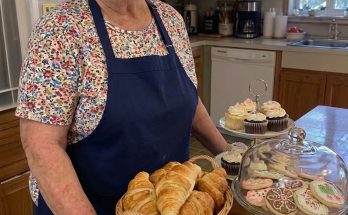
Grandma started taking cake orders again at seventy-five.
Not many.
Two or three a month.
Only if she wanted them.
That distinction mattered more than the money.
Ashley helped build the order form.
Not because Grandma could not.
Because Ashley genuinely enjoyed spreadsheets.
The first version was too detailed.
Grandma looked at it.
“Why do I need a cancellation policy for a six-inch chocolate cake?”
Ashley answered:
“Because people cancel.”
Grandma stared.
“Then I eat chocolate cake.”
Fair.
They simplified.
Name.
Date.
Cake size.
Flavor.
Decorations.
Price.
Deposit.
Pickup or delivery.
One line at the bottom:
Family requests follow the same agreement unless Grandma explicitly says it is a gift.
That line made everyone laugh the first time they saw it.
Then it became normal.
If Aunt Susan wanted cupcakes for a shower, she filled the form.
Grandma might write:
GIFT — $0.
Her choice.
If Cousin Mark wanted a retirement cake for a coworker, full price.
No awkwardness.
No guessing.
Written rules did not make family cold.
They removed assumptions.
Grandma enjoyed that.
She also learned to price better.
Ingredients had risen.
Butter alone made her complain weekly.
Ashley showed her how to calculate approximate cost without counting every grain of sugar.
Grandma still undercharged labor.
Deliberately.
“I’m not trying to build an empire.”
Ashley said:
“You’re leaving money on the table.”
“I am seventy-five. I am allowed.”
Good.
The new stand mixer became busy.
The kitchen filled with cake boards again.
I visited one afternoon and found Grandma piping white roses.
I said:
“You’re working too much.”
She did not even look up.
“You’re not my manager.”
Right.
I sat down.
She had a calendar now.
No more than one major cake per weekend.
No orders during weeks with medical appointments.
Deposits paid before ingredient shopping.
No unpaid custom work unless she personally chose it as gift.
Those were boundaries she designed.
Not me.
Not Ashley.
Her.
The first difficult customer was a neighbor’s daughter.
She ordered a baby-shower cake.
Then changed design three times.
Grandma finally said:
“The third change costs twenty-five dollars.”
The woman complained.
“But it’s just a few flowers.”
Grandma answered:
“Then keep the second design.”
No apology.
The woman paid.
I nearly clapped when Grandma told me.
She said:
“Do not make me into a hero for charging twenty-five dollars.”
Fair.
Boundaries should become ordinary eventually.
Ashley helped with bookkeeping for six months.
Then Grandma learned the spreadsheet herself.
That transition mattered.
Help should build capability when possible.
Not dependency.
She entered orders.
Marked deposits.
Saved receipts for taxes because even small paid income has rules.
A tax preparer helped her report appropriately.
Realistic.
No cash-under-the-table fantasy.
She did not make enough for a business empire.
Enough to cover ingredients, earn some spending money, and feel professional again.
The emotional benefit was bigger.
People stopped saying:
Grandma made it.
They began saying:
Grandma’s cake order.
That tiny language shift gave labor shape.
At the same time, she continued giving food freely.
Sunday rolls.
Birthday cookies for grandchildren.
Soup for sick neighbors.
No form.
No invoice.
Choice.
This prevented the family from learning the wrong lesson.
The cake conflict was not about monetizing love.
It was about consent around cost.
Grandma said it best:
“A gift is only a gift if the giver decides.”
I wrote that down too.
My phone notes were becoming a collection of Grandma sayings.
She found out.
“Are you writing a book?”
“No.”
“Good. I want royalties.”
I laughed.
“Written agreement first.”
She pointed a frosting spatula at me.
Exactly.
Ashley and Grandma grew closer through the small business.
Not mother-daughter.
Not best friends.
Something specific.
Ashley respected Grandma’s skill.
Grandma appreciated Ashley’s organizational brain once it stopped being used to squeeze costs.
Traits can change purpose.
Ashley was still careful with money.
She compared grocery prices.
Used coupons.
Returned things.
That did not make her bad.
The difference was she stopped treating other people’s resources as the place to save.
That was huge.
Daniel noticed.
He once told me:
“She’s still cheap.”
I said:
“So?”
He laughed.
“Fair.”
Frugality was never the sin.
Dishonesty and entitlement were.
We had finally separated them.
At seventy-six, Grandma accepted another wedding cake.
Smaller.
Eighty guests.
The bride paid fifty percent deposit.
Signed the order sheet.
Paid balance before pickup.
Grandma sent me a photo.
Beautiful.
I called.
“How do you feel?”
“Tired.”
“Any drama?”
“No.”
“Disappointing.”
She laughed.
The cake left.
Payment cleared.
Grandma took her medication.
Bought groceries.
Then used part of the profit to go to lunch with friends.
Ordinary transaction.
That ordinariness was the victory.
The wedding cake that started all this had been treated as family magic.
Love would somehow erase cost.
Now cake could be love.
Or work.
Or both.
But nobody else got to decide which.
Grandma’s order form also reduced family conflict in a surprising way.
No one had to guess whether something was a favor.
If the form said gift, gift.
If price, price.
Clarity removed the little resentment that comes from mismatched assumptions.
One cousin once showed up for a cake and said:
“I thought Grandma was giving it to us.”
Grandma pointed at the signed form.
Price.
The cousin paid.
No fight.
Paper can protect relationships when memory gets convenient.
That made Ashley laugh.
“I created a contract grandmother.”
Grandma replied:
“You created nothing. I can read.”
Good.
The system belonged to Grandma.
Not to the conflict.
Eventually, relatives stopped commenting on the form.
It was just how orders worked.
That normalization mattered most.
A boundary is strongest when it stops feeling dramatic.
No speeches.
No reminders of betrayal.
Just process.
Grandma could preserve warmth because the rules held the awkwardness for her.
She did not have to renegotiate value every time.
That is one reason written agreements help even among people who love each other.
Once Grandma began taking orders again, younger relatives started learning baking from her. Not as unpaid assistants by default. She asked. Sometimes paid. Sometimes called it family time. Clear language prevented resentment on both sides. One granddaughter loved decorating but hated cleanup. Grandma said cleanup came with the lesson. The girl complained, then washed bowls. Boundaries can teach skill without draining warmth from a kitchen.
Written rules eventually made the cake business warmer, not colder, because no one had to guess whether generosity was being offered or assumed.
The written order sheet became routine enough that nobody associated it only with conflict after a while.
Grandma’s little order system outlasted the conflict because it solved a practical problem beyond one wedding.
Click here to continue reading: PART 14: Daniel finally admitted he had protected peace with Ashley by letting other people absorb the cost
Three days of careful baking ended with Ashley laughing at the woman she had promised to pay
Part 13 of 16