The first real repair came without a speech.
No tears.
No framed photo.
No family audience.
Ashley handed Grandma an envelope.
Three hundred dollars.
Grandma accepted.
We already knew that part.
What mattered came later.
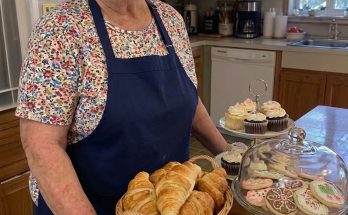
A month after, Grandma received a request from a woman at church for a retirement cake.
Large sheet cake.
Decorated.
Paid.
Grandma quoted a price using the new spreadsheet.
The woman accepted.
Then Grandma called Ashley.
“Can you help me Saturday?”
Ashley said:
“Sure.”
Then:
“Paid help or family help?”
Grandma laughed.
“Paid.”
“How much?”
They agreed.
Fifteen dollars an hour.
Not market bakery wage.
Not free.
Clear.
Ashley came at nine.
Worked four hours.
Grandma paid sixty dollars.
Ashley tried to refuse.
Grandma raised an eyebrow.
“You want me to respect labor but not yours?”
Ashley took the money.
That was repair.
Reciprocity.
Same rule both directions.
Ashley later told me the sixty dollars meant more than the three hundred she gave Grandma.
Why?
Because Grandma trusted her enough to work beside her and pay her fairly.
No permanent debtor role.
Accountability can become unhealthy if one person must stay guilty forever.
Grandma refused that.
Once Ashley made restitution and changed behavior, Grandma let the relationship evolve.
Not forget.
Evolve.
Daniel noticed.
He was still more guarded.
That surprised me.
I thought Grandma would hold hurt longer.
Daniel did.
He had discovered years of hidden behavior.
The cake was only one item.
Marriage counseling surfaced resentment.
Ashley resented Daniel’s “rescues” because they made him feel morally superior.
Daniel resented Ashley creating expenses.
Both had participated.
Again, no single villain solves a marriage.
Ashley had lied to Grandma.
Clear.
But Daniel’s private cleanup helped patterns continue.
He had to own that.
At one session, the counselor asked Daniel what happened when he told Ashley no.
He said:
“She gets upset.”
“And?”
“I hate it.”
There.
Daniel avoided other people’s upset.
That made boundaries weak.
Grandma heard this later and laughed.
“He got that from me.”
Maybe.
Family patterns travel.
Daniel began practicing no.
Not cruel.
Simple.
Ashley wanted to upgrade their honeymoon anniversary trip.
“No, not this year.”
She was disappointed.
They survived.
Daniel wanted to buy expensive golf equipment.
Ashley said:
“Not from joint.”
He used personal savings.
They survived.
Marriage became less smooth and more honest.
That sounds worse.
It was better.
The cake money stopped being a recurring fight because they had resolved it financially.
What remained was pattern work.
I saw them at a family dinner about a year after the wedding.
Ashley asked Daniel:
“Can we stay another hour?”
He said:
“I’m tired. I want to go.”
Old Daniel would stay to avoid conflict.
Ashley looked disappointed.
Then:
“Okay.”
No punishment.
I noticed because I had become obsessed with boundaries.
Maybe too much.
I told Grandma.
She said:
“Stop studying them.”
Correct.
Their marriage was not my project.
I stepped back.
That was part of my repair too.
My gift box had inserted me into their wedding conflict.
Necessary maybe.
Messy definitely.
I did not need to stay referee forever.
Ashley and I slowly became normal sisters-in-law.
Not close friends.
No need.
We texted about family plans.
Sent birthday wishes.
Occasionally argued.
She once forgot to reimburse me for concert tickets.
I waited three days.
Then texted:
You still owe me $86.
She replied:
OH GOD. Sending now.
Money arrived in one minute.
Then:
I swear I’m not doing the cake thing.
I laughed.
That joke worked because she paid.
Behavior changed the meaning.
I replied:
Receipt saved for next wedding.
She sent a middle-finger emoji.
Fine.
Ordinary.
Grandma heard and said we were both childish.
True.
Two years after the wedding, Ashley brought Grandma a cake for her birthday.
Store-bought.
Paid full price.
The bakery wrote:
HAPPY 75TH, GRANDMA.
Grandma ate one bite.
Then whispered to me:
“Mine is better.”
I said:
“Obviously.”
Ashley heard.
“Then next year you can make your own.”
Grandma laughed.
Nobody flinched.
The old wound had become safe enough for teasing.
That did not happen because everyone decided to forget.
It happened because Ashley paid.
Changed.
Accepted no.
Stopped using family as a discount code.
And Grandma stopped treating forgiveness like an obligation that had to arrive before evidence of change.
When Ashley helped on that paid retirement cake, Grandma gave her the sixty dollars in cash.
Ashley stared at it.
“I have a job.”
“So?”
“I don’t need this.”
“Neither did I need to be paid because I was poor.”
Ashley went still.
Exactly.
Pay is not charity.
It recognizes agreement.
Grandma had been trying to teach that since the wedding.
She pressed the bills into Ashley’s hand.
“You worked four hours.”
Ashley accepted.
Later she told me she spent twenty dollars on lunch and put forty into savings.
I laughed.
“Of course you saved it.”
She smiled.
“Still me.”
That mattered.
Change does not require personality replacement.
Ashley remained frugal.
Sometimes aggressively.
She still compared gas stations.
Still returned things.
Still packed snacks instead of buying airport food.
Fine.
Her growth was learning not to make thrift somebody else’s unpaid problem.
That distinction made her less defensive because we stopped attacking the trait itself.
“Cheap” had become a lazy label.
Better questions:
Did she keep the agreement?
Did she ask?
Did she pay?
Did she accept no?
Behavior.
Labels freeze people.
Behavior can change.
The three-hundred-dollar labor payment stayed emotionally important because Ashley never asked what Grandma did with it. That restraint made the payment feel cleaner. No claim. No expectation that Grandma buy something sentimental or mention it later. Money transferred, obligation ended. Relationship moved separately. Grandma noticed. She told me: “She finally paid without buying a result.” That may have been Ashley’s clearest change.
Grandma accepted the labor payment because it recognized the original agreement, not because she wanted Ashley to suffer.
Paying Grandma fairly closed the debt. Rebuilding trust remained separate, slower, and voluntary.
Once labor was paid, forgiveness could become emotional instead of transactional.
Click here to continue reading: PART 13: Grandma started taking paid cake orders again, but this time every family request went through the same written rules
Three days of careful baking ended with Ashley laughing at the woman she had promised to pay
Part 12 of 16