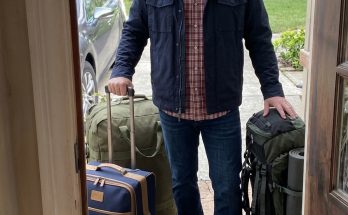
The appraiser arrived with a clipboard and a laser measuring device.
His name was Mr. Reeves.
He shook my hand and explained what he needed to see.
I walked him through the rooms.
He noted the roof age, the furnace replacement, and the kitchen renovations.
He photographed the bathrooms and checked the basement for water damage.
He didn't ask whose fault the divorce was.
He didn't care that the dining-room wall had been painted blue for nineteen years.
He wanted measurements and comparable sales.
For the first time, I understood that our house had two different values.
There was the number a buyer might pay.
And there was the life we had lived inside it.
Only one of those numbers belonged in the property settlement.
When Mr. Reeves asked whether there were any unfinished repairs, I showed him the loose step leading to the patio.
Gary had promised to fix it the previous summer.
I had been waiting ever since.
After the appraiser left, I found the toolbox Gary had not collected.
Then I called a local carpenter and scheduled the repair.
I could have done it myself if I knew how.
I didn't.
There was no shame in hiring someone who did.
Linda found me examining the shed roof that afternoon.
“Are you planning to renovate the whole neighborhood?” she asked.
“Just making a list of what needs doing.”
“That's a big list.”
“It was big before Gary left. I just didn't write it down.”
She leaned against the fence.
“Are you keeping the house?”
“I don't know.”
“That's an honest answer.”
We stood under the pear tree.
A small fruit had fallen into the grass.
I picked it up and turned it in my hand.
“I feel as though leaving would mean he pushed me out.”
“And staying?”
“Sometimes staying feels like keeping myself inside the worst year of my life.”
Linda didn't tell me what to do.
Instead, she invited me to a weekend craft fair.
I had already signed up for watercolor classes at the community center.
I went to the fair and bought a cheap ceramic bowl painted with green leaves.
It had a tiny flaw along the rim.
The woman selling it apologized.
I told her I liked it anyway.
At home I filled it with pears.
That bowl became the first thing I bought without wondering what Gary would say about its price, color, or usefulness.
Three days later, Meredith emailed the appraisal.
The house was worth more than I'd expected.
That was good news in theory.
In practice, it made a buyout more expensive.
Celia recalculated the financing possibilities.
She showed me the monthly payment I'd face if I refinanced enough to buy Gary's share and resolve the associated debts.
I studied the figures.
I could manage them if everything went perfectly.
But the numbers left too little room for illness, a car repair, or retirement.
I had spent twenty-two years telling myself things would work out if I was careful enough.
Now I wanted a plan that didn't depend on perfect conditions.
“Selling is financially safer,” I said.
Celia nodded.
“Based on these assumptions, yes.”
I asked her to explain the closing costs again.
She did.
We discussed tax issues that would need review by a qualified tax professional and the division of proceeds required by the final settlement.
I wrote down questions for Meredith.
Nothing was decided that afternoon.
But I walked to my car knowing which option I wanted examined seriously.
When Gary learned I was open to selling, he was furious.
“You'd sell our whole history?”
“I'd sell a house neither of us can comfortably keep under the current terms.”
“You're doing this to punish me.”
“I'm doing this because I have to live on my income after the divorce.”
He changed tactics.
He said I was making an emotional decision.
Then he said I was being cold.
I couldn't be both to his satisfaction.
I stopped trying.
He asked me to meet him in the garden.
I declined.
Important property discussions could happen with the lawyers.
That evening, Hannah called.
“Dad says you're selling the house.”
“It's one option. We're still reviewing the numbers.”
“But it's where I grew up.”
“I know.”
She was quiet for a long time.
Then she asked whether the height marks were still on the shed door.
“They are.”
“Could I have that board if you move?”
My throat tightened.
“I'll ask a carpenter whether we can remove it safely.”
“Thanks, Mom.”
We made a plan for her to come next month and choose some things to keep.
Not because she had to take sides.
Because memories deserved a place even when buildings changed owners.
The next weekend, my watercolor instructor asked us to paint an ordinary object.
I painted the green bowl.
The edges ran together.
The pears looked more like lemons.
I took the painting home anyway and put it on the refrigerator.
That night Gary came by for a scheduled exchange of paperwork.
He saw the painting and laughed.
“What's that supposed to be?”
“A bowl of pears.”
“Maybe don't quit your job.”
He said it with the old easy cruelty that used to make me hide whatever I was proud of.
I looked at the painting.
“I don't plan to quit my job. And I like it.”
He stared at me.
Then he glanced away.
For years I had thought the problem was that Gary didn't understand me.
I was beginning to think he understood perfectly well which comments could make me smaller.
The following week, Meredith called with another update.
Gary had agreed in principle to list the house if we could settle the disputed debts and the timing.
There would be inspections, repairs, negotiations, and likely months of uncertainty.
I accepted that.
A real ending wasn't a single dramatic moment.
It was a list of things done in the right order.
I opened my notebook and wrote a new heading.
“Next Home.”
For the first time, those two words made me feel curious instead of afraid.
Before I told Gary that selling might be the best option, I visited the town library.
I went to use a quiet table, but I ended up in the gardening section.
A book about fruit trees reminded me of the first summer in our house.
Hannah was two.
We bought the pear sapling at a weekend nursery sale.
Gary insisted it would never survive the winter.
I watered it every morning.
The following spring, tiny leaves appeared, and he called me into the garden as though he'd discovered them himself.
We laughed and took a photograph.
I remembered that happiness clearly.
It made the idea of selling harder, not easier.
At the library table, I opened my notebook and drew two columns.
Reasons to stay.
Reasons to move.
The first column filled with memories.
Hannah's childhood.
The garden.
The neighborhood.
Linda next door.
The second filled with numbers.
Mortgage payment.
Repairs.
Insurance.
The cost of buying out Gary.
I stared at the lists.
They weren't talking about the same thing.
I needed to decide how much I could reasonably pay to keep a place full of memories.
That question deserved more than a sentimental answer.
When I returned home, I measured how far I'd have to drive from the house to the places I now visited often.
The library was fifteen minutes away.
The community center was twenty.
The dental practice was closer.
A move would change some routines and improve others.
I asked Teresa whether occasional changes in my schedule would be possible if I moved across town.
She assured me we could review the hours when I knew more.
I appreciated that she didn't say I should or shouldn't move.
Everyone around me seemed finally willing to let my decision remain mine.
One evening, Hannah sent a photograph of her own apartment.
She had rearranged the living room and added a yellow lamp.
“Too bright?” she asked.
I typed, “Do you like it?”
“Yes.”
“Then it's perfect.”
She replied with a heart.
I looked at the blue wall in my own dining room.
I'd spent years imagining how it would look in cream.
When I finally painted it, I felt embarrassed by how happy a can of paint made me.
Now I understood that the color wasn't the important part.
I had decided.
I had bought the paint.
I had lived with the result.
Even if I moved, nobody could take that experience away.
The following morning, I made another appointment with Celia and brought my questions in writing.
She showed me a scenario in which I bought the house and later faced a costly roof replacement.
The numbers were tight.
Then she showed me a scenario in which I sold and rented somewhere smaller while preserving savings.
The difference wasn't only about money.
The second scenario gave me more flexibility.
I had underestimated how much I wanted that.
When I returned home, I stood by the shed and studied Hannah's height marks.
I called a carpenter and asked whether the marked board could be removed without damaging the structure.
He said he'd inspect it before promising.
For the first time, I imagined taking the most precious part of the place with us, rather than trying to keep every wall.
It was not a complete solution.
It was enough to help me move forward.
Later, I went into the shed to inspect the old gardening tools. A rake had a loose handle. Two pairs of gloves were stiff with age. I filled a box for donation and set aside what I still used. The work gave my hands something to do while I thought about the house. I had been treating the decision as a test of loyalty to our past. It was really a question of what I could afford and how I wanted to live. I took a photograph of the pear tree for my album. It would not produce fruit in a picture, but the photograph would remind me of the summers when Hannah ran barefoot through the grass. I could keep that memory without owning the ground beneath it.
The decision felt clearer after a quiet night.
Click here to continue reading: PART 7: A Buyer Came Through the House While Gary Tried to Rewrite Their Past
Gary Returned With His Golf Clubs and Found a Reception He Had Never Imagined
Part 6 of 12