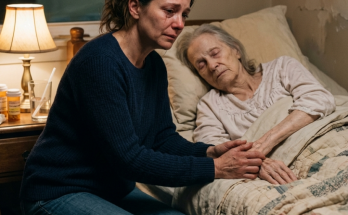
My husband, Eric, was given weeks to live due to cancer.
The doctor didn’t sugarcoat it. Stage four. Aggressive. Treatment wasn’t working. They used phrases like “make him comfortable” and “prepare yourself.” I nodded like I understood, but inside, something shattered that I never knew could break.
I walked out of the hospital and sat on a cold bench, staring at nothing. I don’t remember crying. I think I’d gone numb.
That’s when a woman sat beside me.
She looked ordinary. Mid-40s maybe. No badge. No clipboard. Just tired eyes and a calm voice.
She said, “Set up a hidden camera in his room. He’s not dying.”
I remember laughing — a sharp, broken sound.
“What are you talking about?” I asked. “The doctors said he has weeks.”
She didn’t argue. She didn’t explain.
She just said, “Trust me. You deserve to know the truth.”
Then she stood up and walked away.
I never saw her again.
But her words stayed with me.
That night, I sat beside Eric’s bed while machines hummed softly. He looked weak. Pale. He squeezed my hand and whispered, “I’m sorry.”
Sorry for dying.
Sorry for leaving me alone.
I wanted to forget the woman. I really did. But something felt… off.
Eric’s condition seemed to change depending on who was in the room. When doctors came in, he moaned, clutched his side, barely spoke. When nurses checked vitals, he looked exhausted.
But late at night, when he thought I was asleep, I noticed small things.
His breathing evened out too quickly.
His pain seemed to vanish the moment no one was watching.
Once, I opened my eyes and saw him sitting up straight, scrolling on his phone — then instantly collapsing back into bed when he heard footsteps.
My stomach dropped.
A few days later, while Eric was taken for another scan, I made a decision I never thought I’d make.
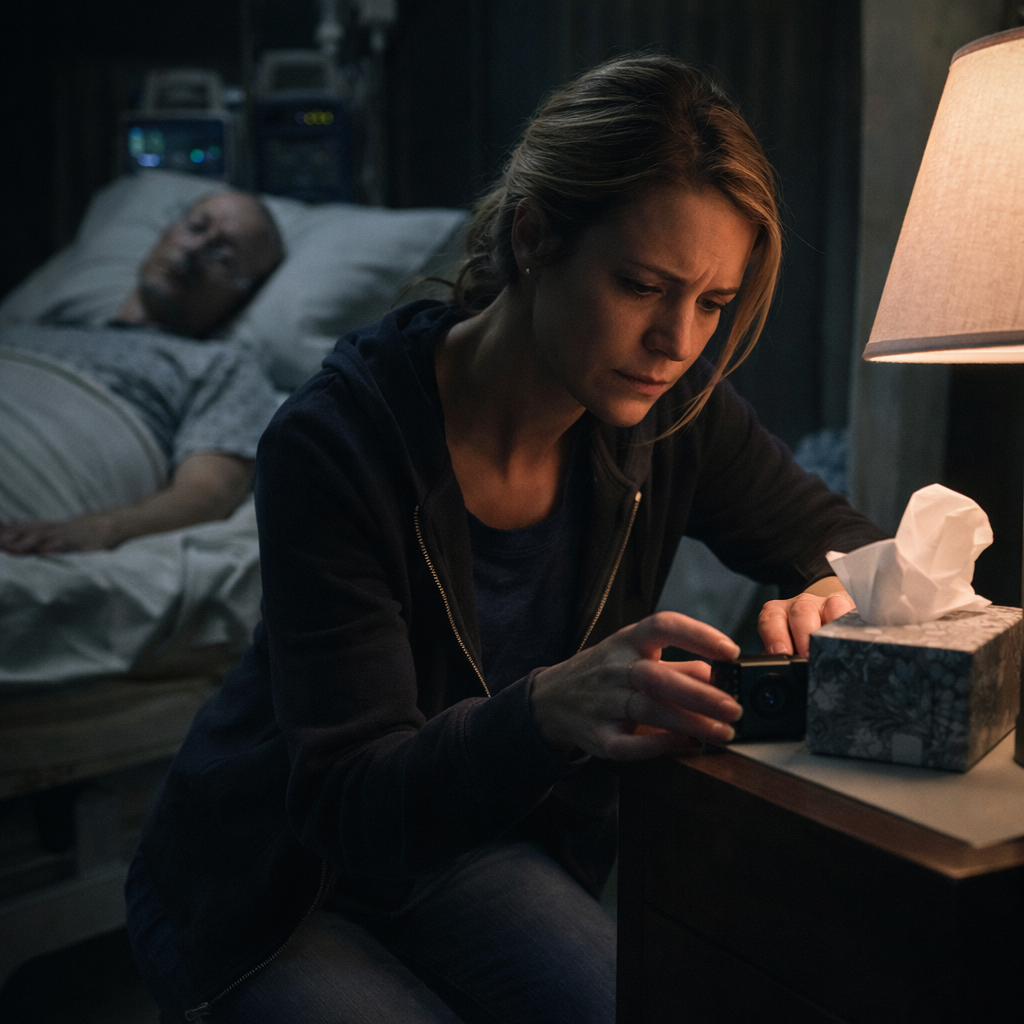
I set up a small camera in the corner of his hospital room. I told myself I was paranoid. That I’d feel guilty forever.
But I needed to know.
That night, I watched the footage.
At first, nothing. Eric sleeping. Nurses coming and going.
Then, around 2:17 a.m., everything changed.
Eric sat up.
Not slowly. Not painfully.
He swung his legs off the bed like a healthy man. He stretched. He walked around the room. He did push-ups on the floor.
Then he pulled out his phone and made a call.
I’ll never forget his voice — strong, relaxed, almost cheerful.
“She still believes it,” he said.
“Yeah, the inheritance will be clean. Hospice papers are already being discussed.”
My ears rang.
He laughed.
“I know, right? Weeks to live. Oscar-level performance.”
I couldn’t breathe.
Over the next few nights, I recorded everything.
Phone calls with his brother.
Messages about insurance payouts.
Plans about moving in with another woman once I was “done grieving.”
One message froze my blood:
“Once she signs the medical consent, I’m free. She’ll never question it.”
I took the footage to a lawyer.
Then another.
Then hospital administration.
What I discovered was worse than I imagined.
Eric had bribed a private lab technician to alter test results. He exaggerated symptoms. He researched medical jargon obsessively. He learned exactly how to act like a dying man.
The cancer was real.
But it was early-stage.
Treatable.
Nowhere near terminal.
The hospital launched an investigation. Doctors were horrified. The lab technician confessed.
And Eric?
He woke up one morning to police officers at his bedside.
Fraud. Conspiracy. Insurance manipulation. Emotional abuse.
When he saw me standing behind them, holding my phone, he didn’t beg.
He just stared.
“You set me up,” he whispered.
I looked at the man I loved for ten years — the man who kissed my forehead every night, who let me cry into his chest, who thanked me for “staying” — and I felt nothing.
“No,” I said quietly.
“You did.”
Eric was discharged — straight into custody.
The woman he planned to run away with disappeared the moment the money vanished.
The insurance company froze everything.
As for me?
I filed for divorce before the paperwork from his arrest was even processed.
Months later, I returned to that same hospital bench.
Sometimes I think about the stranger who sat beside me that day. Maybe she was someone he tried this on before. Maybe she was just someone who saw through him.
I’ll never know.
But she was right about one thing.
I deserved the truth.
And finding it saved my life — even if it destroyed the illusion of his.