I’ve been married to my husband, Jake, for eight years. From the very beginning, his mom, Linda, was generous—almost aggressively so. When we were newlyweds with a half-empty apartment and a tight budget, she showed up one Saturday with a truck and surprised us with an entire living room set. A couch, two armchairs, a coffee table—brand new, tags still on. I cried that day. It felt like someone finally believed we’d be okay.

When our first child was born, she did it again. A crib. A changing table. A rocking chair that squeaked softly every time I rocked our baby to sleep. At the time, I thought, How lucky am I to have a mother-in-law like this?
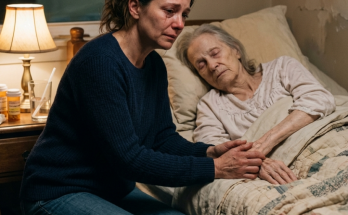
Six months ago, her husband, George, died suddenly. A heart attack. No warning. One moment she was planning a weekend trip with him, the next she was picking out a casket. I genuinely felt awful for her. I held her hand at the funeral while she sobbed into a black handkerchief, and I meant it when I said, “We’re here for you.”
I didn’t realize she would take that literally.
After the funeral, she started coming over constantly. Not once in a while—three, sometimes four times a week. She always stayed for dinner. Always sat at our kitchen table, clutching her mug, retelling the same stories about George. “George used to sit right there.” “George loved roast chicken.” Sometimes she cried. Sometimes she just stared into space.
At first, I was patient. Then tired. Then quietly resentful.
The kids started to notice. They’d exchange looks when she cried. My youngest asked me once, “Why is Grandma always sad here?” I didn’t have a good answer.
Two weeks before Christmas, Jake got a call from her. I could hear her through the phone, even from across the room. She was sobbing. Saying she couldn’t bear the thought of spending Christmas Eve alone in her house. Begging him to let her come over for dinner.
Jake didn’t hesitate. “Of course, Mom,” he said immediately.
He didn’t ask me. He didn’t even look at me.

I was annoyed—more than I wanted to admit. I had planned this Christmas Eve carefully. A quiet night. Matching pajamas. Just us and the kids. But when Jake told me, “She has no one,” I swallowed my frustration and said, “Fine.”
The week before Christmas, I vented to my sister. I told her everything—the constant visits, the emotional weight, the way Linda never brought anything but sadness to our table.
My sister said, “If she’s coming to your house for your Christmas dinner that you’re cooking, she should at least contribute.”
That stuck with me. Linda wasn’t struggling financially. She had George’s pension. Life insurance. A paid-off house. Meanwhile, groceries were expensive, and Christmas dinner wasn’t cheap.
Christmas Eve came. Linda arrived right on time. No dish. No bottle of wine. Not even a card. She hugged the kids, sat down, ate everything I put in front of her, and kept saying how much better this was than being alone.
After dinner, while Jake put the kids to bed, I finally said it.
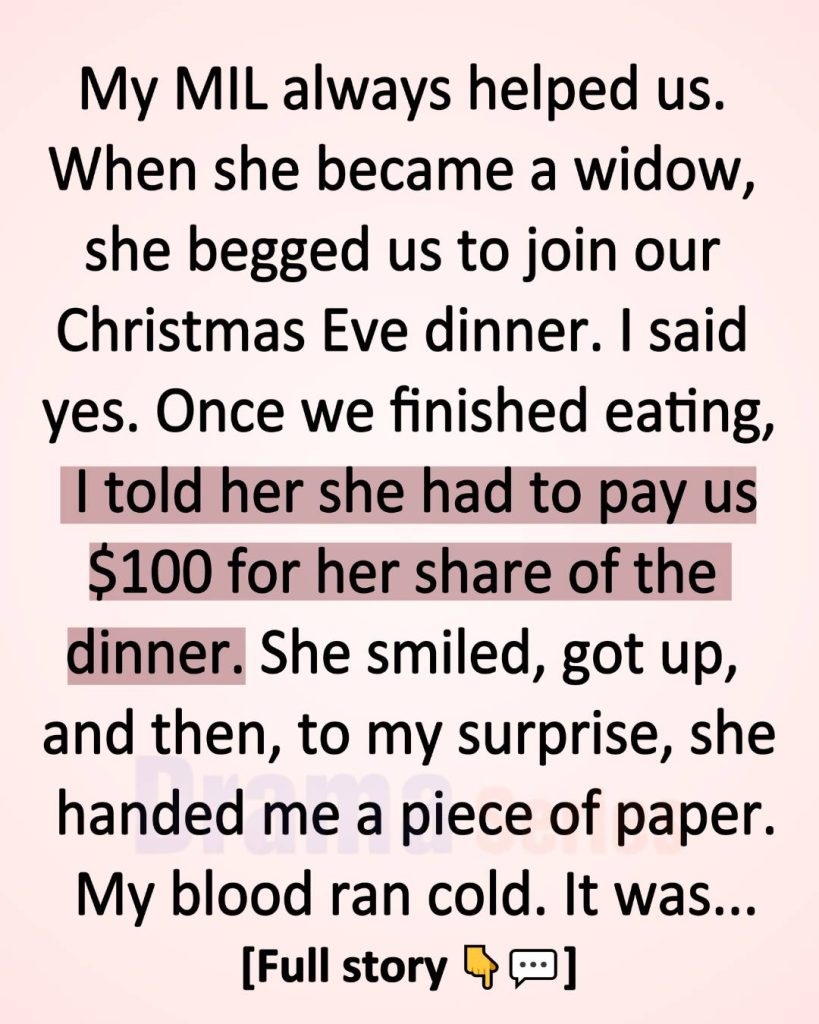
“Since you enjoyed the meal so much,” I said, trying to keep my voice calm, “your share comes to $100.”
I even showed her the list. Groceries. Meat. Dessert.
She stared at me for a long moment. Then she smiled—a tight, strange smile.
“Of course,” she said softly. “Let me get my purse.”
She put on her coat and left. I assumed she’d gone to her car.

An hour passed.
Then headlights flooded our living room. I opened the door to see Linda standing there—with two moving guys behind her.
She didn’t look at me. She just pointed.
They took the couch first. Then the armchairs. The coffee table. Our dining table and all six chairs. The bedroom dresser. The kids’ beds. The TV stand. Everything she had ever bought us.
I stood there frozen, my heart pounding, unable to speak.
When they were done, she handed me a piece of paper. A donation receipt. $15,000 worth of furniture.
“Now we’re even,” she said. “Merry Christmas.”
Then she left.
Our house is empty now. We’re sleeping on an air mattress. The kids think it’s camping, but they keep asking when Grandma is bringing their beds back.
Jake hasn’t spoken to me in three days—except once, to say, “I hope that $100 was worth it.”
I never thought asking her to contribute to one meal would cost us everything. I thought I was being reasonable.
Now I don’t even know what to do anymore.