I lent my sister and her husband $750,000 to save their home. They cried. Begged. Said they would lose everything. So I trusted them. No contract. No signatures. Just family.
Three years later, I asked for my money back. They looked me in the eye and said, “We don’t owe anything.”
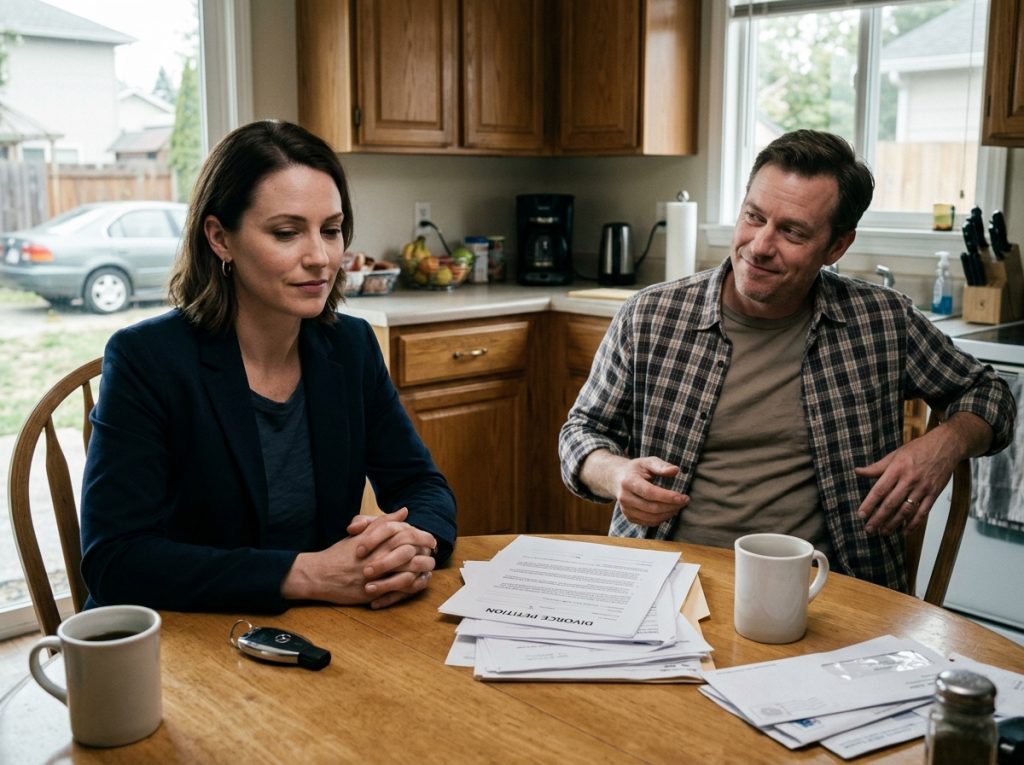
Silence.
“You never made us sign.”
That was the last time I saw them. No calls. No messages. No family. Just betrayal.
Then a few weeks later, I ran into a mutual friend. He looked shocked.
“Wait… you seriously don’t know?”
My stomach dropped.
“Know what?”
He leaned in and said, “What happened to your sister and her husband… after they took your money!”
I froze.
Because what he told me…
was that they had never been in danger of losing their house.
Not really.
My friend, Paul, lowered his voice.
“They sold it six months after you gave them the money.”
I stared at him.
“No. They still live there.”
“That’s what they want people to think.”
He pulled out his phone.
The property record showed the house had been transferred to a private company.
Then leased back to my sister, Emily, and her husband, Grant.
For almost exactly what their old mortgage payment had been.
“Why would they do that?”
Paul looked uncomfortable.
“Because the $750,000 wasn’t used to save the house.”
My mouth went dry.
“What was it used for?”
He hesitated.
Then showed me a photograph.
Grant standing in front of a large commercial building.
Beside him was Emily.
A sign behind them read:
COMING SOON — HARTWELL SENIOR LIVING
My last name.
I felt sick.
“What is that?”
Paul said, “Their business.”
I laughed once, because it sounded impossible.
“My business?”
“No. Theirs.”
The truth came out piece by piece.
Three years earlier, Grant had found an investment opportunity involving an old assisted-living property.
He needed a massive down payment.
Banks wouldn’t lend him enough.
So he and Emily came to me with a story about foreclosure.
Crying.
Begging.
Telling me their children would be homeless.
I wired the money the next morning.
They used it to buy the property.
Then sold their house, freed up more cash, and built the business.
And they had named part of it after our family to make it look sentimental.
I couldn’t breathe.
“How much is it worth now?”
Paul looked away.
“Probably four or five million.”
I stood there in silence.
They had taken my trust and turned it into equity.
Then, when I asked for my money back, they told me I had no proof.
I went home and searched everything.
Public records.
Company registrations.
Old emails.
Bank transfers.
And then I found something.
A message from Emily sent the night before I wired the money.
I swear we will pay you back as soon as we’re stable. You are saving our family.
I stared at those words for a long time.
No contract.
But maybe not no evidence.
The next morning, I called an attorney.
He read the messages, bank records, and timeline.
Then he looked at me.
“They may have made one very serious mistake.”
“What?”
“They put their lie in writing.”
For the first time in weeks, I felt something other than betrayal.
Hope.
Then my phone rang.
Emily.
I almost didn’t answer.
When I did, she didn’t say hello.
She said, “If you’re talking to lawyers, stop now.”
My blood ran cold.
“How do you know?”
Silence.
Then she whispered:
“Because Grant knows things about your money too.”
Part 2 — The Price of Betrayal
I sat down slowly.
“What does that mean?”
Emily’s voice was trembling.
“Grant says if you sue us, he’ll tell everyone how you got the $750,000.”
I almost laughed.
“I earned it.”
“No. Not all of it.”
That stopped me.
Years earlier, after our father died, I had received a larger share of his company because I had worked there for fifteen years.
Emily had always resented it.
But everything had been legal.
Everything documented.
I told her so.
She went quiet.
Then said, “Grant told me Dad changed the paperwork before he died.”
My stomach turned.
“What paperwork?”
“He says your shares were supposed to be split with me.”
Now I understood.
Grant wasn’t just threatening me.
He had been feeding Emily another story.
Another grievance.
Another reason to justify what they had done.
I asked her one question.
“Have you ever seen proof?”
Silence.
“No.”
“Then come see me without Grant.”
She refused.
At first.
Three days later, she showed up at my office alone.
She looked exhausted.
I put the documents on the table.
Her texts.
The bank transfer.
The property purchase.
The company filing.
She stared at them.
Then I asked, “Did you know from the beginning?”
She started crying.
Not dramatically.
Just quietly.
“Yes.”
That hurt more than anything.
Grant hadn’t manipulated her into it.
She had agreed.
“Why?”
“Because you had so much.”
“And that made stealing from me okay?”
She flinched.
“We were going to pay you back.”
“When?”
“When the business took off.”
“It did.”
She had no answer.
Then she admitted something worse.
Grant had convinced her that because there was no formal contract, they could treat the money as a gift if things got complicated.
The moment I asked for repayment, he told her to deny everything.
“If we admitted it once,” she said, “he said we’d lose leverage.”
I stared at my sister.
“You chose leverage over me.”
She cried harder.
“I know.”
My attorney filed the case.
Emily wanted to settle.
Grant wanted to fight.
That decision destroyed him.
During discovery, financial records showed exactly where my money had gone.
Into the down payment.
Into renovations.
Into the company.
There were emails between Grant and the broker referring to my transfer as “the family loan.”
Those two words changed everything.
The court never had to decide the full case.
Grant’s attorney pushed for settlement almost immediately.
I got my $750,000 back.
Plus a share of the appreciation tied directly to the original investment.
Not half the company.
Not revenge money.
Just enough that they couldn’t profit entirely from pretending my loan never existed.
Grant was furious.
Emily was devastated.
And their marriage cracked under the pressure.
Six months later, she called me.
I didn’t answer.
Then she sent a letter.
A real letter.
Not a text.
She wrote:
I thought because you had more, taking from you would hurt less. I understand now that the money wasn’t the worst thing I took. I took your trust and then acted like you were stupid for giving it.
I read that sentence three times.
She was right.
The $750,000 mattered.
But the betrayal mattered more.
For almost a year, I didn’t contact her.
Then our mother became ill.
Emily and I ended up sitting in the same hospital room for the first time since the lawsuit.
Neither of us knew what to say.
Finally she whispered, “I don’t expect you to forgive me.”
I looked at her.
“Good.”
She nodded.
Then I added, “But I don’t want Mom’s last months to become another battlefield.”
So we made a truce.
Not reconciliation.
Not yet.
A truce.
After Mom died, Emily started therapy.
Grant and she eventually divorced.
The business was sold.
She got far less than she had expected after debts and settlement costs.
Years later, she asked if we could meet for coffee.
I agreed.
She brought a folder.
Inside was a check.
Not huge.
$25,000.
“I know I don’t owe you anymore legally,” she said. “But this is from my share of the business sale. I want you to have it.”
I pushed it back.
“The debt is paid.”
Her eyes filled.
“This isn’t debt.”
“Then what is it?”
She took a breath.
“Proof that I finally understand I should’ve paid you before you ever had to ask.”
I looked at the check.
Then at her.
I didn’t take it.
Instead, I told her to put it into college accounts for her children.
“They didn’t do this.”
She started crying.
That was the beginning of us speaking again.
Slowly.
Carefully.
Never the same.
Trust doesn’t grow back just because money changes hands.
But sometimes accountability creates a place where something new can grow.
Looking back, the biggest mistake I made wasn’t lending my sister $750,000 without a contract.
It was believing family made paperwork unnecessary.
Love can be unconditional.
Money shouldn’t be.
And when someone says, “You never made me sign anything,” after begging you to save them…
they’re not just telling you they won’t repay a debt.
They’re telling you exactly what your trust was worth to them.
THE END