By the following spring, the emergency felt both distant and close.
I no longer flinched each time my phone rang at work.
I had learned the coalition's budget cycle.
The staff had trusted me to supervise a small campaign.
I still made mistakes, but I didn't take every correction as a warning that I might lose my job.
Melissa and I resumed our retirement contributions gradually.
We paid for Nora's orthodontic treatment on the plan we had arranged.
June got a new winter coat before the weather turned cold again.
It wasn't an extravagant coat.
She chose one with yellow buttons.
She wore it to bed the first night.
We still hadn't taken the spring trip.
Instead, we spent a weekend at a state park an hour away.
The girls complained about mosquitoes.
I burned the pancakes on the camp stove.
Melissa took a photograph of me standing beside the smoking pan.
It became her favorite picture of the year.
One afternoon, Miriam Hart contacted me again.
North River was planning a public education campaign and wanted to invite the coalition to a partnership meeting.
This time the conversation went through official channels.
Sonya reviewed the scope.
The organizations agreed on responsibilities and a modest budget.
I attended the first planning session as the coalition's communications manager.
Miriam greeted me politely.
Neither of us mentioned Gavin.
There was no need.
After the meeting, she said, “I'm glad you found a place to do good work.”
“Me too.”
I thought about the presentation I had missed.
At the time, I believed it was the most important opportunity of my career.
Now I knew a single morning didn't get to decide the rest of my life.
I still wished the firing hadn't happened.
I still wished I could have explained the delay without being humiliated.
A better outcome would have been Eleanor receiving help and my employer responding reasonably.
The fact that something good followed did not make Gavin's decision acceptable.
But I wasn't living inside that decision anymore.
On an ordinary Tuesday, Nora brought home an assignment about someone who had made an important choice.
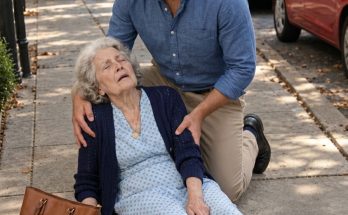
She asked whether she could write about the roadside incident.
I said yes, if she wrote it in her own words.
She asked what I had been thinking when I stopped.
“I was thinking that someone needed help.”
“Were you afraid of being late?”
“Yes.”
“Did you know you might get fired?”
“No.”
She wrote for a while.
Then she looked up.
“I'm glad you stopped anyway.”
During my first annual review at the coalition, Sonya asked what had been hardest about the year.
I wanted to give a polished answer about learning nonprofit systems.
Instead, I told her I sometimes feared a mistake more than the situation warranted.
“Because of the last job?” she asked.
“Yes.”
She nodded.
“Is there something we're doing that makes that worse?”
The question surprised me.
I had expected advice about developing confidence.
She was also examining her own management.
I told her that sudden changes in a deadline made me anxious, even when they were reasonable.
We agreed to clarify priorities in writing when a project shifted.
She said she'd welcome similar feedback from the whole team.
I left the review feeling respected.
Not because every comment had been flattering.
Because the conversation had been specific.
Sonya identified a presentation I had handled well.
She also told me that my first draft of a budget proposal had contained an error.
We discussed how I would catch similar mistakes earlier.
Then we set goals for the next quarter.
It was accountability without humiliation.
At home, I shared the review with Melissa.
She asked whether I believed I could stay at the coalition for several years.
“I think so.”
“Even with a lower salary?”
“We're making it work.”
We reviewed the numbers again.
The emergency fund was recovering.
The car still needed maintenance.
We had not stopped worrying about money entirely.
But we no longer treated every expense as a threat to our future.
On a Sunday afternoon, Nora asked to see the place where I worked.
I took her to the library during public hours.
She watched a tutoring session from a respectful distance and asked about the different programs.
I told her why adults sometimes returned to learn skills they had missed earlier.
She frowned.
“Isn't it embarrassing?”
“It can feel that way. But learning something takes courage at any age.”
We went to the children's section afterward.
She chose a novel that was longer than anything she had read before.
I offered to help her get started.
She said she wanted to try it alone.
I nodded.
She was growing.
So was I.
That evening, I checked my work email only once.
Then I put my phone on the shelf and joined the family movie.
The ending was ridiculous.
June loved it.
I stayed until the credits finished.
The first time I led a difficult performance conversation at the coalition, I thought about my own dismissal.
A new employee had missed a deadline for updating program information.
The delay had caused confusion for a partner school.
We needed to address it.
I scheduled a private meeting and gathered the relevant dates.
I described the missed work without exaggerating it.
Then I asked what had happened.
She explained that two supervisors had assigned conflicting priorities.
I checked the project board.
She was right.
We clarified ownership, revised the workflow, and set a follow-up date.
She still had work to correct.
I still needed to hold her accountable.
But she left knowing what was expected and why.
Afterward, Sonya asked how the conversation went.
I told her about the conflicting instructions and what we had changed.
She thanked me for noticing the process problem.
On the drive home, I understood something I hadn't expected.
I didn't need to become a manager who never criticized anyone.
I needed to become a manager who could criticize work without diminishing the person doing it.
It wasn't dramatic.
It was a standard I could practice on an ordinary Wednesday.
Click here to continue reading: PART 15: The Roadside Shoulder Where I Finally Understood What I Wanted My Daughters to Learn
The Eight-Thirty Presentation I Missed Because a Stranger Collapsed Beside the Highway
Part 14 of 16