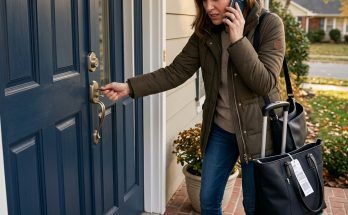
Liam did not move back into the beach house immediately.
That surprised David’s side more than anyone else. They had spent months treating the property as if possession were the only thing that mattered. But once we had legal control again, Liam stood in the foyer and looked at the rooms as though they belonged to somebody else.
He chose the hotel for another week. I stayed too. We went to the house during the day.
Never at night at first. We replaced furniture.
Recovered boxes. Reviewed inventory.
Some of Liam’s belongings eventually turned up at Chloe’s storage unit. She returned everything she had. Other things were missing.
His desk.
A camera. Two textbooks.
The original house binder. The binder mattered most.
Maya assumed law enforcement might recover it during searches connected to David or Kevin. Until then, we treated it as evidence gone. Liam began seeing a therapist recommended by Detective Morales.
He hated the first session.
“How was it?”
“Awful.”
“Good sign?”
“No.”
“You going back?”
He stared at me. “Yes.” That was enough.
The therapist’s name was Dr. Renee Foster. She explained something to me only after Liam gave permission. Hypervigilance can continue after a real threat is gone.
The brain learns the pattern.
Car outside. Window. Footsteps.
Password reset. Unexpected knock. Danger.
Then danger stops. The body does not immediately believe it.
The first night Liam slept at the beach house again, I stayed in the guest room. At 2:17 a.m., I heard movement.
I found him downstairs checking the camera feed.
“Someone there?”
“No.”
“Then what?”
“I heard a car.”
A car had passed.
Nothing more. He looked embarrassed. I sat beside him.
“Do you want me to tell you it’s fine?”
“No.”
“Good.”
We watched the screen for another minute.
Then I said, “The cameras are recording.” He nodded.
“The locks are new.”
Another nod.
“And if something happens, we document it.”
His shoulders relaxed slightly. Evidence had become a form of safety for him. I understood.
The next morning, he slept until ten. That was progress. Meanwhile, the criminal investigation continued. David’s attorney issued a statement saying he denied knowingly participating in fraud.
According to him, Kevin had mishandled paperwork during a legitimate family transaction. Maya read the statement once. Then deleted the email.
“Does that matter?”
“In the criminal case, yes. To us right now, no.” The civil title issue was nearly resolved.
The lender’s title insurer negotiated with the lender. Because the deed to Mercer Coastal Holdings was void, the insurer accepted responsibility for addressing the lender’s loss rather than allowing the burden to remain on my property. I signed nothing until Maya reviewed it.
Weeks later, the lien was released from the beach house.
I printed the updated record. My name. No Mercer Coastal Holdings. No lender lien.
Just my title.
Liam looked at it. “Can we frame that?” I laughed.
“No.”
“Why?”
“Because we are not decorating with trauma.”
He smiled.
That was progress too. Chloe came to the house once. Alone. She asked first.
Liam almost said no. Then changed his mind. We sat on the back deck.
She looked exhausted.
“I should have questioned David.”
“Yes,” Liam said.
She flinched. I did not rescue her.
“I believed him because Dad backed him up.”
Liam looked toward the ocean. “That made it worse.”
“I know.”
She swallowed.
“I thought you were being dramatic about the house records.”
He turned. “You thought I was crazy.”
“No.”
“You told Grandpa I was obsessing.”
She closed her eyes.
“Yes.”
The word came quietly.
“I’m sorry.”
Liam did not answer. Chloe continued.
“I didn’t know he hired Derek.”
“I believe you.”
“I didn’t know about Kevin.”
“I believe you.”
She looked at him. “Then what don’t you believe?” He took a long breath. “That you had no choice.”
Chloe stared. “I could have called your mom.” “Yes.”
“I could have asked Sarah directly.”
“Yes.”
“I could have left when the story stopped making sense.”
“Yes.”
She looked down.
“I know.”
That was the end of the conversation for that day. No hug. No instant family restoration.
Truth first.
Repair later. Helen took longer. She wrote Liam a letter.
Four pages. He left it unopened for two weeks. Then one evening he read it.
He did not show me. That boundary mattered.
“What do you think?”
“I think she’s sorry.”
“Do you want to see her?”
“Not yet.”
“Okay.”
Richard remained defiant. No charges had been filed against him at that point, though investigators continued reviewing his role. He told relatives I had “weaponized lawyers” against the family.
I heard about it through Chloe. I did nothing. For years, I had tried to correct every story David’s family told about me.
Divorce teaches you how exhausting that becomes. This time, the court record could exist without me chasing every dinner-table version. Then a stranger knocked on the beach-house door.
Liam froze. I checked the camera.
A delivery driver. Package.
No danger. Liam laughed shakily. “I hate this.”
“I know.”
He opened the door himself. Signed.
Closed it. Locked it.
Then stood there. I waited. He turned.
“Okay.”
“Okay?”
“Okay.”
Small victory. Later, we opened the package.
It was from Maya. A fireproof document box. Inside was a note.
For the papers nobody gets to borrow.
Liam laughed. Then he placed the black notebook inside.
Not hidden under a mattress. Not carried everywhere.
Stored. That was the first night he did not sleep with it beside him. Dr.
Foster also encouraged Liam to rebuild routines that had nothing to do with safety.
Morning run. Class.
Cooking. Calling friends.
Surfing. He resisted because routine itself had once helped Derek follow him. “If I do the same things every day, I’m predictable.”
She answered, “Predictable is not the same as unsafe.”
That distinction took time. The first morning he ran again, he changed route three times.
The second week, twice. Then eventually he ran the same waterfront path because he liked it.
No white sedan. No report. No one waiting at the restaurant.
Just a run.
I watched myself too. I had begun checking the county deed portal every morning even after title monitoring was active.
Maya finally asked why. “To make sure nothing changed.”
“You already receive alerts.”
“I know.”
“Then what are you checking?”
Fear. I stopped.
Not immediately.
Gradually. First every other day. Then once a week.
Then never unless an alert arrived. Healing was embarrassingly administrative. Less dramatic than fear.
More repetitive. But it worked.
The house became quieter inside us before it became normal on paper. The first time Liam invited friends over again, he almost canceled.
“What if somebody mentions Dad?”
“Then they mention him.”
“What if they ask about the house?”
“Answer or don’t.”
He stared at me. That was new too.
He had spent months believing every question required a defensive explanation. His friends came. They ordered pizza.
Played video games. Left soda cans on the table. One forgot a jacket.
Nothing happened. The cameras recorded a boring evening.
Liam told Dr. Foster later that boredom felt like evidence too.
Evidence that ordinary life had returned.