In September, the school year began with new schedules and crowded mornings.
Leo moved into a higher grade.
Mia started kindergarten.
Rachel sent me a photograph of them standing on the front steps with their backpacks.
I printed it and slipped it into a frame.
For once, I didn't have to be there before dawn to braid Mia's hair or locate missing shoes.
David and Rachel handled the routine themselves.
I was invited to come for pancakes the following Saturday.
I accepted.
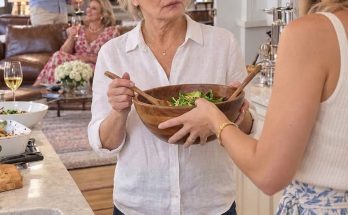
When I arrived, David was flipping pancakes at the stove.
Rachel was cutting fruit.
Brenda sat at the table with coffee.
She looked up when I entered.
“Good morning, Patricia.”
“Good morning.”
Her tone was polite but cool.
I sat beside Mia and admired her new school folder.
Brenda asked about my painting classes.
I told her I'd completed a little landscape of the pond.
She said she had seen a similar painting at a craft fair.
There was something dismissive in the comparison.
I chose not to turn it into a fight.
Instead I asked Leo how he liked his teacher.
He said she had a classroom hamster named Pickles.
That started a conversation about whether hamsters needed recess.
Everyone laughed.
After breakfast, David cleared the table.
I offered to dry the glasses because I had time and wanted to help.
Rachel said, “Only if you want to.”
“I do.”
We worked side by side for a few minutes.
It felt different from the night I left.
There was no stack of plates thrust into my arms.
There was no announcement that someone else's comfort mattered more.
When we finished, Rachel thanked me.
We sat outside with the children.
Brenda remained inside for a while, then joined us with her coat over one arm.
“I suppose you have plans,” she said to me.
“I do. June and I are going to the art museum.”
Brenda nodded.
“Rachel used to love going with me.”
“We could all go another time,” Rachel offered.
I didn't know whether she meant it.
Brenda's expression softened.
For a few minutes we discussed exhibits and parking.
Then Brenda said she had always felt unwelcome around my side of the family.
I was surprised.
“Why?”
She looked toward David.
“I never knew where I stood with your mother.”
David raised his eyebrows.
I considered whether it was worth revisiting years of awkward dinners.
“I wanted us to get along,” I said.
“I still do.”
Brenda looked skeptical.
“But we don't have to become best friends to treat each other well.”
She turned the thought over.
Then she said, “I can agree with that.”
The words were not warm.
They were enough.
At the museum, June and I moved from room to room without a schedule.
We studied a portrait of a woman holding a book.
June thought she looked stern.
I thought she looked tired.
We read the artist's notes and discovered she was neither.
The sitter had apparently been laughing moments before the painting began.
The days after the literacy workshop were unexpectedly busy.
Two participants had asked where they could find more practice materials.
The library coordinator sent me a list of resources to recommend.
I spent an afternoon organizing them into a simple handout.
At first I caught myself wondering whether this counted as real work now that I was retired.
Then I remembered the faces around the workshop table.
One man had been nervous about filling out a job application.
A woman wanted to read letters from her granddaughter without asking for help.
Their reasons for learning were deeply personal.
I had something useful to offer them.
The difference was that the workshop had a beginning and an end.
I could agree to the next one or decline.
The coordinator asked whether I wanted to make it a monthly event.
I thought about my calendar before answering.
Once a month would be manageable, I decided, provided someone else handled registration.
She agreed.
We settled the arrangement by email.
I printed a copy and tucked it into my volunteer folder.
Later, when Rachel asked about the project, I explained the structure.
She was impressed by how clearly everything had been arranged.
I smiled.
“It's easier when everybody knows what's expected.”
She laughed.
“I feel like you're telling me something.”
“Maybe I'm reminding both of us.”
Rachel asked whether she could help prepare refreshments for the next session.
I thanked her and told her the community center already handled them.
She didn't insist.
Instead she asked if she could see the materials.
We spent half an hour at my kitchen table reviewing them.
She pointed out one instruction that could be clearer.
I changed it.
It felt good to accept her help in something that mattered to me.
We spent several minutes imagining what had happened in the room.
I told June about breakfast.
She asked whether I had washed the dishes.
“A few glasses,” I said.
She stared at me with exaggerated horror.
I laughed.
“I chose to.”
“Ah,” she said.
“Then we have a very different story.”
A week later, I received a call from the library where I used to work.
They were organizing a community literacy event.
They wanted me to lead a small workshop for adults returning to education.
I hesitated at first.
Public speaking had always made me nervous.
Then I remembered Mrs. Alvarez and her recipe card.
I agreed.
Preparing the workshop filled my afternoons.
I made handouts and found examples of forms people actually encountered.
I practiced the introduction in my kitchen.
Alan's photograph stood on the mantel.
I could imagine him clapping from the doorway.
David called while I was arranging the materials.
He asked whether I wanted the family to attend.
“It's aimed at adult learners,” I said.
“But I'd love to have you there for the opening.”
He promised to come.
Rachel said she would try to adjust her schedule.
I did not ask them to change everything to support me.
Still, the thought that they wanted to see something from my life was unexpectedly moving.
On the day of the event, David arrived before the session began.
He carried a paper cup of tea.
“Thought you might be nervous,” he said.
“I am.”
“You'll be good.”
I looked at him.
“You haven't seen my notes.”
“I've watched you help people my whole life.”
He smiled.
“Trust me.”
I stood at the front of the room and welcomed the participants.
The first few sentences came out shakily.
Then a woman in the front row asked how to fill in an online appointment form.
I knew how to answer.
The room settled.
For the next hour, I was not the person everyone expected to wash up after dinner.
I was a woman with useful experience who had chosen to share it.
That evening, David sent me a message.
I'm proud of you, Mom.
I read it twice before going to bed.
Click here to continue reading: PART 14: The Sunflower Costume and the Budget Trouble I Chose Not to Solve for Them
The Sunday I Put Down the Greasy Plates and Walked Out Without an Explanation
Part 13 of 16