The medication issue came back two months after the wedding.
Not because Grandma had missed a dose.
She had not.
That distinction matters.
She had enough money to buy her prescription.
But she had been planning to postpone another expense to cover it.
A utility bill.
Not shutoff territory.
Just timing.
She had told Ashley:
Every dollar matters.
Ashley heard:
Grandma is exaggerating.
That assumption bothered Daniel more over time.
He asked Grandma to show him the wedding-week budget.
She refused.
Good.
Her finances were not suddenly family property because somebody mistreated her.
Then she changed her mind about one thing.
She showed him the pharmacy receipt.
Not her bank statement.
Not pension details.
Just the medication cost.
Two hundred and sixteen dollars after insurance.
Daniel stared.
“That much?”
“Yes.”
“For one month?”
“For this one.”
He sat quietly.
The cake ingredients had been three hundred forty-two dollars.
More than a month of one medication.
That comparison finally landed physically.
Not:
Grandma could not survive.
She could.
But Ashley had taken a meaningful amount of a fixed-income person’s monthly flexibility.
Then mocked her for naming it.
Daniel said:
“I didn’t understand.”
Grandma replied:
“You didn’t ask.”
Same lesson.
He looked ashamed.
“Did I do this too?”
Grandma knew what he meant.
Assume.
Ask for favors.
Let her cover.
She thought.
“Sometimes.”
Daniel closed his eyes.
Grandma laughed softly.
“You were not Ashley.”
“No.”
“But you liked free pie.”
He smiled.
“Everybody likes free pie.”
“Exactly.”
The problem was not accepting gifts.
It was assuming the gift before the giver offered.
Daniel started paying attention differently.
At family gatherings, when Grandma brought food, he asked:
“Did you buy everything?”
Sometimes yes.
Sometimes:
“Stop. I wanted to.”
That was enough.
No reimbursement campaign.
No turning Grandma into a vendor.
Just awareness.
Ashley learned the medication number too.
Not from Grandma directly.
Daniel told her with permission.
Ashley cried.
Grandma did not want crying.
She told Daniel:
“Tell her not to make this about nearly killing me.”
Good.
No exaggeration.
The medication scare had not become medical harm.
That would be dishonest.
It had revealed financial disregard.
Different.
Ashley later said:
“I thought fixed income meant she had savings too.”
Maybe.
That assumption was common.
Pension does not mean poor.
Fixed income does not mean helpless.
But it does mean surprise expenses can crowd something else.
Grandma wanted one thing clear:
“I am not poor because I budget.”
That sentence mattered to her.
Ashley’s insult had hit more than money.
Stop acting poor.
It framed budgeting as shameful.
Grandma had lived carefully her whole life.
She paid bills.
Saved small amounts.
Avoided debt.
She was not embarrassed by her pension until Ashley made frugality sound like performance.
We helped undo that by not treating her like a charity case afterward.
No pity envelopes.
No public fundraiser.
No family collection.
She had been reimbursed.
Compensated.
Done.
When she wanted help, she asked.
When she did not, we stopped hovering.
The medication moment also changed Daniel’s view of hidden costs.
He and Ashley began a household rule in counseling:
Before asking family for anything that costs money or substantial time, ask:
What does this cost you?
That question sounds obvious.
It was not.
People are good at seeing price tags attached to businesses.
Less good at seeing price when love is involved.
A weekend babysitting has time.
Airport pickup has gas and hours.
Homemade cake has ingredients and labor.
A place to stay has utilities and privacy.
Family can still give freely.
But cost exists even when invoice does not.
Ashley became almost rigid about this for a while.
She tried to Venmo Grandma seventeen dollars for soup ingredients.
Grandma sent it back.
Then Ashley sent again.
Grandma called Daniel.
“Control your wife.”
He laughed.
“No. You two handle it.”
Good.
No rescuer.
Grandma texted Ashley:
The soup was my gift. Stop paying me.
Ashley replied:
Okay.
That tiny exchange showed more change than any counseling summary.
Ashley could receive a gift without forcing payment.
Grandma could give without being exploited.
Both directions required choice.
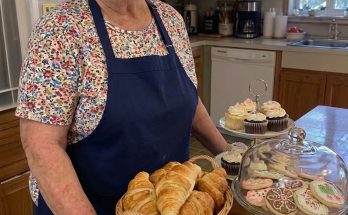
Months later, Grandma’s prescription changed to a cheaper generic.
She celebrated by buying better vanilla.
“That’s not how savings works,” I told her.
“It is now.”
She used the vanilla in a cake for herself.
Not birthday.
No event.
Just because.
She cut one slice.
Sat at the kitchen table.
Said:
“Best medicine I bought all year.”
Ridiculous.
Perfect.
The cake story had begun with money threatening her medication budget.
It evolved into something less dramatic and more useful.
Our family learned to stop confusing budgeting with weakness.
Grandma learned that saying:
I need reimbursement
was not shameful.
Daniel learned paying behind Ashley did not solve the pattern.
Ashley learned another person’s financial caution was not an invitation to override an agreement.
No one nearly died.
No one became rich.
A few hundred dollars forced us to examine habits worth far more.
That was enough.
The medication conversation also changed how we handled Grandma’s health generally.
Before, someone would notice a bill or appointment and overreact.
“Do you need money?”
“Do you need a ride?”
“Should you still be driving?”
After, we asked more specifically.
“Do you want a ride?”
“No.”
Okay.
“Want me to pick up the prescription?”
“Yes.”
Done.
Choice.
Grandma appreciated that.
She was aging.
That was real.
Her independence would change over time.
But age does not erase decision-making overnight.
The cake conflict had accidentally sharpened our respect for that.
At seventy-seven, she gave up highway driving herself.
Not because we took keys.
She said:
“I hate it now.”
We arranged rides for longer trips.
At seventy-nine, she asked Daniel to review insurance paperwork.
He did.
Did not take over the account.
At eighty, Ashley helped compare prescription plans.
Grandma chose.
Support without takeover.
That balance is hard in aging families.
The wedding had taught us early.
Do not assume vulnerability equals permission.
Money.
Time.
Body.
Driving.
All connected by choice.
Grandma joked:
“At least Ashley made me train all of you before I got really old.”
Ashley groaned.
“Can we retire this story?”
“No,” Grandma said. “It’s useful.”
Then she winked.
The story belonged to Grandma as much as anyone.
She chose when to use it.
That was right.
Grandma also stopped explaining her medication budget to anyone after that first conversation. She had shown enough. Her healthcare costs were private. If she said an expense mattered, family did not need bank statements to believe her. That was another correction. We had nearly turned one financial violation into entitlement to her whole financial life. She closed that door quickly, and we learned to respect it.
Grandma’s budget remained private after that. Family learned to believe a boundary without demanding proof that she truly needed it.
Grandma never again felt required to explain why a few hundred dollars mattered to her monthly budget.
Grandma’s health remained hers to manage, with help offered instead of imposed.
Click here to continue reading: PART 10: Family members who had laughed at the cake dispute started admitting how often they had expected Grandma to give for free
Three days of careful baking ended with Ashley laughing at the woman she had promised to pay
Part 9 of 16