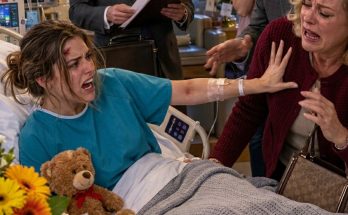
Lauren came to the hospital before visiting hours officially began.
She must have argued her way in.
Her hair was in a messy bun.
No makeup.
No polished move-in video voice.
She looked furious.
“You removed me?”
Not hello.
Not how are you.
I stared.
“Good morning.”
“Miranda.”
“What?”
“Mom said you changed everything.”
“Yes.”
“Because they helped me move?”
“Because I was in critical recovery and none of you came.”
“I didn’t know it was that serious.”
“You were in the family group chat.”
“I was unpacking.”
I closed my eyes.
“You posted a video.”
She stopped.
That was the problem with social media.
It leaves receipts.
Lauren pulled chair closer.
“You could have called me directly.”
“I did.”
She checked phone reflexively.
Nine calls had included two to her.
She looked away.
“I had it on silent.”
“Fine.”
“Why are you acting like I wanted you hurt?”
“I am not.”
“You’re taking away things from children I don’t even have.”
There.
The education trusts.
I said:
“They were never your children’s property.”
“You told me you planned them.”
“I changed the plan.”
“That’s cruel.”
“No. Cruel would be promising money to an actual child and taking it back to punish them. There are no children.”
She flinched.
I regretted the sharpness but not the fact.
Lauren had talked about the future trusts as if already assets.
That was my fault partly.
I had discussed too much.
I asked:
“What did you think those trusts meant?”
She looked confused.
“That you wanted to help my kids someday.”
“Yes.”
“And now you don’t?”
“I do not know what my future relationship with your family will look like.”
“So this is blackmail.”
“No.”
“How is it not?”
“Because I am not saying do X and you get money.”
She went quiet.
Important.
I was not offering restoration in exchange for visits.
I was changing my own plan.
No conditions.
No transaction.
Lauren said:
“Mom and Dad are devastated.”
“I was in surgery.”
“You keep saying that.”
“Yes.”
“Because you want us to feel guilty.”
“No. Because it happened.”
She stood.
“You’ve always thought I was the favorite.”
“I know you were.”
“That is not the same.”
I almost laughed.
“Fine. Tell me I’m wrong.”
She folded arms.
“Mom and Dad helped me more because I needed more.”
There.
The family doctrine.
Miranda handles herself.
Lauren needs.
I asked:
“Do you know what happens when a family labels one child capable and the other needy?”
She rolled eyes.
“Here we go.”
“No. Answer.”
She did not.
“The capable child stops being allowed to need.”
“That’s not fair.”
“You all left me in a hospital after surgery because you assumed I was handled.”
“You had nurses.”
“And you had movers.”
Silence.
That landed.
Lauren sat again.
“I didn’t ask them to stay all day.”
“Did you tell them to go see me?”
She looked down.
“No.”
“Why?”
“Because I needed help.”
The words were honest.
I could work with honesty.
“What did you need?”
“Unpacking. Caleb’s back was hurting. We had the delivery window. There were so many boxes.”
“And what did you think I needed?”
“I don’t know.”
Exactly.
She had not asked.
I said:
“You did not need to predict death. You needed to care enough to find out.”
Lauren started crying.
My body wanted to comfort because older sister habits never die.
I did not move.
Not punishment.
My ribs hurt.
Also, I needed her to sit with emotion without me fixing.
She said:
“I’m sorry.”
I waited.
“For what?”
She looked frustrated.
“Everything.”
“Specific.”
She hated that.
Then:
“I’m sorry I ignored your calls. I’m sorry I saw Mom’s text and didn’t call you. I’m sorry I posted that stupid video while you were there.”
Better.
“I’m sorry I’m talking about inheritance before asking how you feel.”
That surprised me.
“Thank you.”
She wiped face.
“How do you feel?”
“Terrible.”
She laughed once through tears.
“Fair.”
Then she asked what doctors said.
Finally.
We talked medical.
No money.
That mattered.
The surgeons expected recovery if no complications.
Physical therapy.
Weeks of pain.
No driving for a while.
My fractured wrist made basic tasks difficult.
I would need support.
Lauren immediately said:
“I can help.”
I hesitated.
Was help sincere or inheritance panic?
I could not know.
That is the poison money creates.
So I said:
“You can help if you want. It will not change the estate.”
She looked hurt.
“I know.”
“Do you?”
“Yes.”
Good.
That became the test—not a secret test of love, but clarity.
No financial reward attached.
If she helped, it was because she chose.
If not, I would arrange professionals.
I could afford.
I had already asked Julian to help coordinate a care manager if needed.
Lauren said:
“I’ll come tomorrow.”
She did.
For two hours.
Then again the next day.
Mom and Dad came too, but every visit carried tension.
Dad wanted to discuss the estate.
I refused.
“Not in the hospital.”
He said:
“When?”
“When I am ready.”
Mom said:
“You can’t expect us to pretend this isn’t happening.”
“I can expect you not to argue while I’m recovering.”
She cried.
Dad called me controlling.
I called the nurse.
Visiting ended.
That was the first boundary I enforced without explanation.
The hospital became easier after.
Then Julian called with another issue.
My emergency financial authority had been revoked from my parents, but I still needed someone if I became incapacitated before discharge.
I could appoint a professional fiduciary temporarily.
Or a trusted friend.
Or Julian’s firm could help coordinate within ethical limits but not serve every role automatically.
I had a longtime friend, Naomi Chen, my former chief operating officer at the software company.
She lived fifteen minutes away.
Why had I not called her during the accident?
Because family came first in my head.
I called now.
Naomi answered on second ring.
“Miranda?”
“I need a favor.”
“What hospital?”
She did not ask whether urgent.
She came.
That difference hurt.
Not because friends should outrank family.
Because care had been available outside the narrow system I kept insisting on.
Naomi agreed to be healthcare backup and help coordinate practical matters during recovery, after talking with my lawyer and understanding scope.
Not forever.
Specific.
She brought a charger.
Clean clothes.
My reading glasses.
No drama.
I realized I had spent years excusing family because I believed they were all I had.
They were not.
That was another inheritance I changed from the accident:
not money.
My definition of support.
Naomi’s arrival also forced me to notice another habit I had built around family hierarchy.
I had dozens of competent people in my life from years running a company.
Friends.
Former colleagues.
A neighbor who had a key.
Yet when the accident happened, I called family first because I believed asking anyone else meant admitting family had failed.
That belief trapped me.
Support does not become less real because it comes from a friend.
Naomi did not replace my parents.
She filled a role they had not filled.
That distinction helped me later build a wider network without turning every relationship into competition.
I could love my parents and still list Naomi as emergency contact.
I could trust Lauren emotionally and still use a professional fiduciary financially.
No single person needed to be everything.
That made future crises far less frightening than the hospital night when I had treated three people as my entire world.
Click here to continue reading: PART 3: When I went home, my parents tried to turn caregiving into proof they deserved their inheritance back, and I learned to accept help without letting it purchase authority over my decisions
I changed my estate from a hospital bed, but the real decision was not punishment — it was admitting that being family had never guaranteed they would show up when I truly needed them
Part 2 of 16